

The key idea: organize your lead side at the top
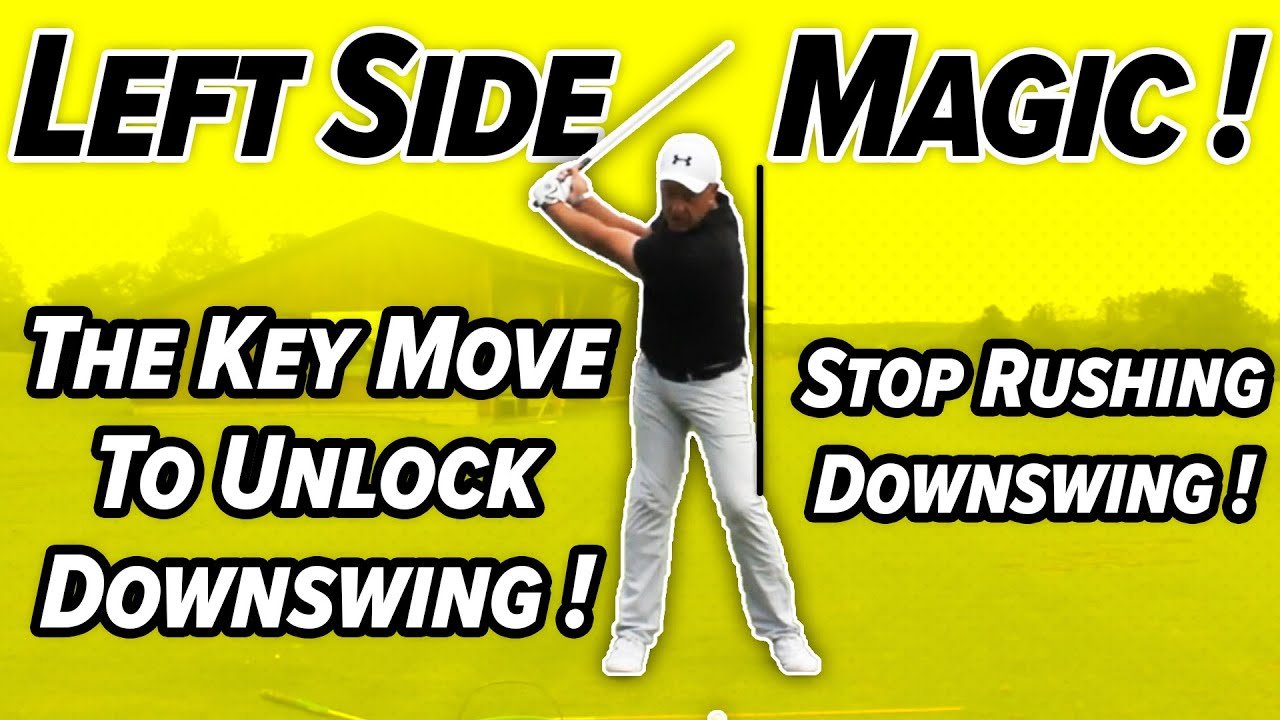
A centered, organized backswing can give you a more useful starting point for the downswing. In the opening of this WorldClassGolf video, Craig Hanson and Dr. Rob Neal focus on how your lead side is arranged at the top: the side of your body from the lead knee or thigh toward your upper body should appear organized, while your head stays relatively centered. The idea is to build body structure that makes it easier to control the golf ball, not to force a picture-perfect pose.
The creator says arm height can vary. You might have higher or lower arms depending on your swing style; the priority is how your body turns and maintains its structure around them. To explore the cue, notice whether your lead hip moves slightly back or underneath you as you turn, rather than letting your head drift well off center.
This movement is a cue to test, not a guaranteed fix for every golf swing problem. If you want to improve your golf swing, start by rehearsing the body movement slowly and checking whether you can stay balanced. To improve your golf swing, focus on the quality of the position rather than copying a professional’s exact shape. You can improve your golf swing by testing one change at a time and keeping it only if it helps your strike or ball flight.


Key takeaways for a more consistent golf swing
The video identifies three broad priorities for striking shots: control the low point, manage the clubface, and direct the club path appropriately. These aren’t three separate fixes to apply all at once. They’re useful categories for swing diagnosis: where the club reaches the ground, how the face is oriented at impact, and the direction the club is moving through the ball can each affect the result.
Hanson’s movement cue is to feel the lead hip shift slightly back or underneath you while keeping your head centered. He notes that this can feel like a slight reverse pivot, but the intended result is a balanced turn and a collected position at the top—not an exaggerated sway or a forced lean. Try this brief practice sequence:
- Rehearse the motion without a golf ball, at a pace slow enough to notice your balance.
- Check that your head remains relatively centered and your lead side feels organized.
- Hit controlled shots and observe contact and ball flight before deciding whether the cue helps.
For a player trying to improve your golf swing, these priorities help keep practice focused on observable results. To improve your golf swing, note whether your contact and direction change when you rehearse the cue. You can improve your golf swing more systematically by giving low point, clubface control, and club path separate attention instead of changing all three at once.

How backswing structure supports the downswing
According to the video, the body structure you create at the top affects how readily you can organize the downswing. A centered head and a controlled pivot can make it easier to return the club to the ball, while excessive upward movement, a raised lead shoulder, or a head drifting off center may make the motion harder to coordinate. These are movement clues to investigate, not diagnoses that apply to every golfer.
The creator connects staying centered with making it easier to strike nearer the middle of the clubface. That doesn’t mean you should freeze your head or eliminate all natural movement. Instead, use a comfortable turn and check whether your body can move into a balanced impact position without a last-second lunge or loss of posture. Fat or thin contact can also involve low-point control, your golf setup, or other changes; the backswing cue alone can’t identify the cause.
Coaches may also talk about the swing arc—the club’s curved path through the swing—or a 45-degree swing plane. These concepts can help describe motion, but this video doesn’t prescribe a particular plane angle. If you’re trying to improve your golf swing, treat those terms as ways to describe what you observe, not numbers you must force your club to match. To improve your golf swing, first check balance and contact. You can improve your golf swing by using the video’s body-structure cue as one possible route to a more repeatable downswing.
What elite-player examples show—and what they don’t
Hanson compares swings from Sam Snead, whose toys (as transcribed), Sergio Garcia, Tiger Woods, and Justin Thomas to illustrate different appearances of lead-side organization. The examples show the lead hip moving back or underneath the player as the body turns, with the head remaining relatively centered. The creator points to these patterns as evidence that the move can appear in accomplished players, not as proof that every elite golfer uses an identical backswing.
He explicitly acknowledges variation: some players appear to reverse their pivot slightly near the top, while others don’t show the same visible action. The useful common theme is a centered head and an organized turn—not a requirement to recreate the exact hip position, arm height, or timing of any one player. Professional swings are examples to study, but your mobility, setup, and existing movement patterns matter.
When watching a comparison, pick one feature at a time. For instance, notice whether the lead hip moves as the torso turns, then check whether the head stays relatively centered. Don’t assume a still image tells the full story of how the club moved. If you want to improve your golf swing, borrow a movement idea rather than an elite player’s entire swing. To improve your golf swing, test the cue at a comfortable speed. You can improve your golf swing without forcing your body into positions that feel strained or unnatural.
Diagnose a miss without changing everything
A useful swing diagnosis starts with what happened to the shot, then works backward. Ball flight can offer clues about clubface control and club path, but it doesn’t prove the cause by itself. A shot that starts off line or curves may involve an open clubface, a closed clubface, the club’s direction through impact, or a combination. Your setup, strike location, and body movement can also influence the result.
- Record the result: note the starting direction, curve, and whether contact felt solid.
- Check the strike and setup: distinguish a centered strike from fat or thin contact, and notice whether your stance or ball position changed.
- Choose one area to investigate: consider clubface control, club path, low-point control, or the backswing body cue—one at a time.
- Test comparable shots: use the same club and a consistent target, then record whether the change affects contact or flight.
Fat and thin strikes can relate to low-point control, swing arc, or setup changes; don’t assume the backswing is the only cause. If you’re checking face control, your lead hand and trail hand grip are worth reviewing, but the video doesn’t prescribe a particular grip. To improve your golf swing, resist reacting to one odd shot. You can improve your golf swing by testing one adjustment across a small set of similar shots, and improve your golf swing diagnosis by writing down what changed and what stayed consistent.
Practice the movement with purpose
The drill shown in the video is simple: feel the lead hip move slightly back, keep your head relatively centered, and let your body turn into a collected position at the top. Begin without a ball so you can sense balance rather than chase a result. If the motion feels comfortable, progress to a few half-speed strikes; move to normal shots only if your balance and contact remain comfortable.
Here’s a suggested 20-minute range session, twice a week. This schedule is a practical plan, not a duration or frequency stated by the creator:
- 5 minutes: slow rehearsals without a ball, checking head position and lead-side organization.
- 10 minutes: focused practice with one consistent club and target; use the cue on controlled shots.
- 5 minutes: track strike quality and ball-flight patterns, including how many strikes feel centered.
Keep the same simple measure over several weeks, such as the number of centered strikes in a fixed set of attempts. That gives you more useful feedback than judging progress by one excellent shot. Good golf practice habits make the session repeatable: decide on the cue, club, target, and observation before you begin. If you want to improve your golf swing, practice with purpose by testing a clear cue against an observable result. To improve your golf swing, avoid hitting balls without a target or plan. You can improve your golf swing more reliably by reviewing the pattern across sessions rather than chasing each individual miss.

Take the swing cue to the golf course
On the golf course, keep your attention on the shot you need to play rather than trying to rebuild your motion mid-round. First assess the lie and target selection. Then follow your familiar pre-shot routine and choose one swing cue you’ve already rehearsed. The lead-side cue is worth using during play only if it feels comfortable and doesn’t distract you; a round isn’t the ideal time to introduce a major technique change.
After a miss, separate the result from the process. Was the contact poor, did the ball start in the wrong direction, or did it curve unexpectedly? Make a brief note and decide what you might test at your next driving range session. Don’t make several swing changes based on a single outcome: an awkward lie or a change in setup may explain more than your backswing.
The supplied transcript doesn’t identify or discuss Danny Maude, so this instruction shouldn’t be attributed to him. It identifies WorldClassGolf – Craig Hanson & Dr. Rob Neal as the channel. If you’re trying to improve your golf swing, take one familiar cue to the course rather than a list of mechanical thoughts. You can improve your golf swing over time by using rounds to gather observations and the range to test them. To improve your golf swing, keep your on-course routine focused on the target, a comfortable rehearsal, and a committed shot.
Adapt the move to your body and get feedback when needed
Your swing cue should fit your body. If you’re a beginner, start with balance, a comfortable turn, and a relatively centered head before trying to reproduce the appearance of an elite player. If you’re a senior golfer or have mobility or injury limitations, use a smaller, pain-free movement. Don’t force the hip or shoulder action shown in the video, and stop if the rehearsal causes discomfort.
A launch monitor can add context about ball flight and club delivery, but a handful of inconsistent swings isn’t a reason to overhaul your technique. Look for a repeated pattern under comparable conditions, then connect the numbers to what you feel and see in the strike. If you can’t tell whether a recurring problem is linked to your golf setup, body movement, club path, clubface control, or low-point control, a qualified coach can help you distinguish among possibilities.
The creator describes WorldClassGolf’s instruction and practice resources and mentions online lessons at craighansongolf.com and worldclassgolf.com. To improve your golf swing, use feedback to narrow down a question rather than to chase every reading. You can improve your golf swing by choosing an adjustment that suits your movement capacity. If you want to improve your golf swing, seek coaching when repeated experimentation isn’t revealing a clear cause.
Common golf improvement questions
Golf advice often arrives as rules, ratios, or short lists. The video takes a more movement-focused approach: organize the lead side, keep the head relatively centered, and pay attention to low point, face, and path. It doesn’t define percentage rules or a three-C framework, so those shouldn’t be mistaken for the creator’s instruction.
What is the fastest way to improve at golf? Identify one repeatable issue, practice one specific cue with feedback, and take it to the course only after you’ve rehearsed it. A clear test is more useful than changing several parts of your swing at once.
What’s the/30 rule in golf? The video doesn’t define a/30 rule. Don’t treat a percentage split as part of this creator’s instruction.
What’s the/40 rule in golf? The transcript provides no/40 weight or pressure ratio and prescribes none. The backswing cue is about lead-side organization and centered movement, not a stated percentage.
What are the three C’s of golf? The video doesn’t name a three-C framework. Keep that separate from its stated priorities: low-point control, clubface control, and club path.
If you’re looking to improve your golf swing, begin with one issue you can observe. To improve your golf swing, track whether the chosen cue changes contact or flight. You can improve your golf swing without treating an unrelated rule of thumb as a substitute for a measured practice test.

A practical next step for your swing
The central lesson from Hanson and Neal is straightforward: a well-organized backswing can make the downswing easier to arrange. Rehearse a slight lead-hip move back or underneath you while keeping your head relatively centered, then check whether you can turn into a balanced position. Arm height can vary, and the examples of Snead, Garcia, Woods, and Thomas illustrate variation rather than a single model to copy.
At your next range session, choose one club and target, make several slow rehearsals, and hit controlled shots only if the movement feels comfortable. Track contact and ball flight, then decide whether the cue helped before changing anything else. If the pattern remains unclear, consider coaching rather than stacking more swing thoughts.
For the original demonstration and the creator’s practice-resource details, watch Possibly the EASIEST way to Improve any golf swing! from WorldClassGolf – Craig Hanson & Dr. Rob Neal. The supplied transcript includes no time-coded chapters, so the key timestamp is the opening discussion at 0:00. To improve your golf swing, turn the cue into a small, observable practice test. You can improve your golf swing by recording what happens across sessions, and improve your golf swing without expecting one backswing adjustment to solve every miss.
Key Takeaways
- Organize your lead side at the top while keeping your head relatively centered; arm height can vary.
- The video’s three practical priorities are low-point control, clubface control, and club path.
- Treat ball flight and strike quality as clues, not proof; test one adjustment at a time.
- Rehearse the lead-hip cue slowly before using it in controlled shots or on the course.
- Adapt the movement to your body and seek coaching when the cause of a recurring miss is unclear.
Frequently Asked Questions
What is the fastest way to improve at golf?
Identify one repeatable issue, then practice one specific cue with feedback. Take that cue to the course only after you’ve rehearsed it and it feels comfortable.
What’s the/30 rule in golf?
The video doesn’t define a/30 rule, so it shouldn’t be treated as part of the creator’s instruction. The video instead emphasizes low-point control, clubface control, and club path.
What’s the/40 rule in golf?
The transcript provides no/40 weight or pressure ratio and doesn’t prescribe one. Its backswing cue concerns lead-side organization and keeping the head relatively centered.
What are the three C’s of golf?
The video doesn’t name a three-C framework. It identifies low-point control, clubface control, and club path as priorities for hitting shots.
Should you change your swing during a round?
Avoid major technique changes during play. Use only a familiar cue you’ve rehearsed, and save diagnosis and testing for a focused practice session.