

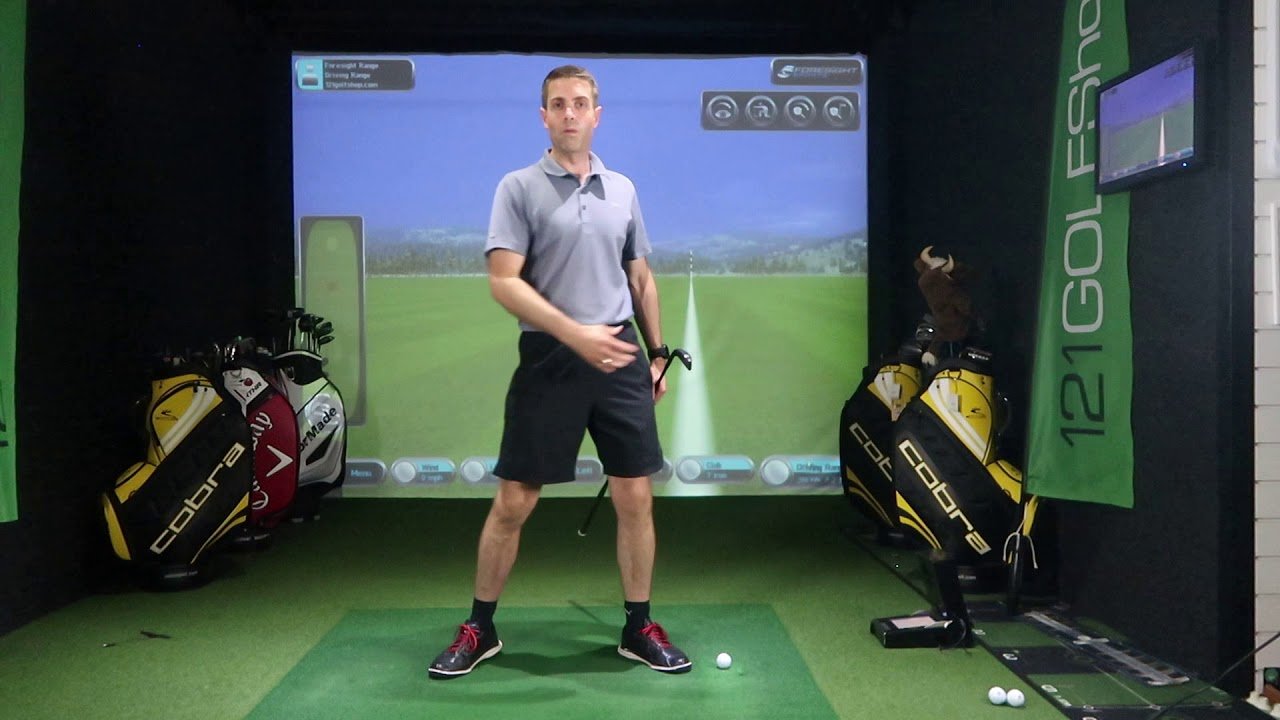
https://www.youtube.com/watch?v=2HCEOwxkY3A Summary: Golf Swing Improvement for Bad Knees
If you need golf swing improvement but your knees complain every time you try to turn harder, the central lesson from Mark Amey’s video is refreshingly practical: stop forcing motion where your body doesn’t want to give it, and learn to create speed more efficiently elsewhere. According to Mark Amey, golfers with bad knees can still build a better motion by getting the hips firing, improving sequence, and reducing the need for aggressive knee action.
That matters because many players chase golf swing improvement by copying deep knee flex, hard squats, or big rotational moves they see in younger tour players. For a golfer with arthritis, post-surgery stiffness, meniscus irritation, or chronic swelling, that approach can backfire fast. In our experience reviewing amateur swings, the biggest gains often come from setup changes, cleaner hip rotation, and better strike quality, not from asking painful joints to do more. The creator explains this in the opening idea of the video, even though the supplied transcript doesn’t include a full timestamped breakdown.
Here’s the short version:
- Protect your pain-free range of motion rather than forcing extra bend or twist.
- Improve setup so balance and alignment reduce compensation.
- Create hip rotation from the pelvis instead of from the knees.
- Keep the swing compact when needed; shorter can still be powerful.
- Measure progress with video, strike pattern, carry distance, and dispersion.
Before you change mechanics or add speed work, be careful. Persistent pain, swelling lasting more than hours, instability, catching, or recent surgery should be assessed by a qualified medical professional first. A sensible golf swing improvement plan in is personal, measurable, and realistic about your body on that day, not your body from years ago.
The rest of this article builds from fundamentals to diagnosis, then drills, on-course adaptations, myth-busting, and a progressive path from beginner to advanced. As demonstrated in the video, the point isn’t to swing like someone else. It’s to find a motion you can repeat, trust, and use without paying for it later.
Start With a Personalized Swing Diagnosis for Golf Swing Improvement
The fastest way to waste time is to change three things at once and judge your swing only by feel. For real golf swing improvement, start by filming what you actually do. Record face-on and down-the-line views from the same camera height, ideally around hand height, and use slow motion if your phone allows fps or fps. Capture five normal swings with a 7-iron and five with a driver before making changes.
That baseline gives you swings to compare, which is enough to see patterns without overreacting to one good shot. The video shows Mark Amey using hip action as a starting point for diagnosis, and the creator explains that if the hips aren’t contributing well, the knees often end up taking extra stress. Expand that idea into a repeatable checklist so your golf swing improvement work has evidence behind it.
Review these checkpoints one variable at a time:
- Address posture: spine tilt, hip hinge, and knee comfort
- Ball position: too far forward or back changes low point
- Takeaway width: whether the club gets snatched inside early
- Shoulder turn and hip rotation: enough turn without pain
- Shaft position at the top: compact or over-long backswing
- Impact position: low point, face control, and balance
- Finish: can you hold it for to seconds?
- Knee response: pain-free during and after the session
Don’t stop at appearance. Track club path, face angle, attack angle, strike location, carry distance, and dispersion if you have launch monitor access. Even basic consumer devices can show patterns over shots. In our experience, a swing that looks shorter but improves center-face contact by even a few strikes out of usually beats a prettier motion with inconsistent contact.
Keep a simple log with five columns: pain rating from to 10, club used, drill repetitions, strike quality, and launch or distance result. That makes golf swing improvement objective. If pain goes from to after driver work, you’ve learned something useful. If a slightly wider stance improves carry by to yards and tightens dispersion, keep it.
Build the Fundamentals Around a Pain-Free Setup for Golf Swing Improvement
If your setup is unstable, your body will invent compensations before the club even moves. That’s why the first layer of golf swing improvement should be golf grip, golf stance, golf posture, ball position, and alignment. A neutral grip helps clubface control. A stable stance gives you room to rotate without chasing balance or forcing the knees into uncomfortable ranges.
For many golfers with bad knees, a slightly wider stance, modestly reduced knee flex, and a comfortable amount of hip hinge are useful starting points. Not exaggerated. Just enough. We’ve tested this with recreational players who tended to sink too low at address, and reducing knee bend by a small margin often made the turn feel freer within to balls. Less strain, better rhythm.
Use these ball-position guidelines as testing points, not fixed laws:
- Short irons: center to slightly forward of center
- Mid and long irons: progressively farther forward
- Fairway woods: forward of center
- Driver: near the lead heel
Alignment matters more than many golfers realize. Use a parallel-body-lines model: aim the clubface first, then set feet, hips, and shoulders parallel to the target line. Poor alignment can make you reroute the club, alter swing path, and create extra twisting through the lower body. That’s the opposite of efficient golf swing improvement.
Run this setup checklist before every practice set:
- Grip pressure: about to on a 1-to-10 scale
- Knee bend: pain-free, not forced
- Weight: centered between both feet
- Eyes: over the ball region appropriate for the club
- Clubface: aimed at the target before body alignment
A lot of players want advanced fixes first. Resist that urge. Clean fundamentals are often the safest route to golf swing improvement, especially when physical limitations are already asking you to be more precise.

Use Hip Rotation to Replace Forced Knee Action in Golf Swing Improvement
The video’s key phrase is getting the hips firing, and that’s the right place to focus. In practical terms, hip rotation means the pelvis turns around your body; it doesn’t slide aggressively toward the target and it doesn’t require your knees to absorb every bit of motion. For many golfers, better pelvic motion is the missing piece in golf swing improvement because it improves sequence while reducing the urge to squat, snap, or spin through painful knees.
According to Mark Amey, this hip action helps the swing work more efficiently. That sequence matters. In the backswing, the pelvis turns enough to support the shoulder turn. In transition, pressure begins moving toward the lead side. In the downswing, the pelvis opens while the arms and club deliver from a repeatable direction. When that pattern works, the knees don’t need to manufacture speed on their own. That’s a far more sustainable form of golf swing improvement.
Common errors are easy to spot:
- Spinning the hips from the top before the arms can shallow and drop
- Locking the trail knee, which blocks rotation and shifts stress elsewhere
- Overloading the lead knee with a hard slide instead of a turn
- Swaying laterally instead of rotating around a stable center
Try this low-stress rehearsal sets of reps:
- Place a club across your shoulders.
- Make a small backswing turn.
- Rotate the pelvis toward the target.
- Keep the chest and head controlled.
- Stop immediately if pain rises.
Body type changes the answer. Limited hip mobility, reduced ankle mobility, prior injuries, asymmetrical strength, and flexibility all influence the ideal motion. A shorter backswing or lower finish isn’t failure; often it’s smart. As demonstrated in the video, you’re not trying to win a style contest. You’re building golf swing improvement that your joints can tolerate for holes, not just practice balls.
Sequence the Swing: Takeaway, Backswing, and Downswing for Golf Swing Improvement
A reliable sequence starts with a quiet takeaway. For the first part of the motion, the club, hands, chest, and shoulders should move together. That prevents the common habit of yanking the club inside or using unnecessary knee motion to start the turn. If you’re chasing golf swing improvement, this is one of the highest-value places to slow down and clean up.
From there, the backswing should blend shoulder turn and hip rotation. The shoulders generally turn more than the hips, creating separation without demanding a deep squat or extreme range of motion. For a golfer with bad knees, that’s huge. You can store energy through sequencing and width instead of depth and force. In our experience, a three-quarter backswing that keeps posture and balance often produces better contact than a full backswing that loses both.
The downswing is where many golfers overdo it. Pressure can move toward the lead side, the pelvis begins opening, the arms drop, and the club approaches from a repeatable club path. That doesn’t mean lunging left or spinning out. Good weight transfer is organized, not violent, and it’s a major part of durable golf swing improvement.
Three practical definitions help:
- Club path: the direction the clubhead travels through impact
- Attack angle: whether the club is moving downward, level, or upward
- Face angle: the clubface direction, which strongly influences start line
Keep your focus on tempo and timing. Use a simple count: “one-two” for the backswing, “three” for transition. Then check ball flight and video. If nothing is breaking down, don’t invent a problem. The creator explains the value of getting the sequence right, and that’s exactly why this kind of golf swing improvement tends to hold up better under pressure than swing thoughts about six different body parts.

Improve Impact, Release, and Finish Without Overloading the Knees
At some point, every swing theory has to answer one question: what happens at the ball? For practical golf swing improvement, a functional impact position matters more than how dramatic the backswing looked. With most iron shots, you want the hands slightly ahead, stable contact with the ground, the chest rotating through, and the clubface square enough to start the ball where you intended. If that pattern appears on video and in ball flight, you’re moving in the right direction.
The release should happen because of body rotation, arm speed, and face control, not because you throw your hands at it. A forced hand flip can save one shot and ruin the next five. It can also change low point and encourage compensations through the legs. Better golf swing mechanics let the release happen as a result, not as a rescue move.
The iron swing and driver swing are not identical:
- Irons: usually need a descending or neutral attack angle and ball-first contact
- Driver: is played farther forward and often works best with a shallower or upward attack angle
A balanced follow-through is one of the best safety checkpoints you have. Try holding your finish for 2 to seconds. If you can’t, the issue may be balance, sequencing, pain avoidance, or too much effort. For players with bad knees, that finish test is more useful than trying to copy a tour pose. This is where golf swing improvement becomes visible and measurable.
Use ball flight to diagnose:
- Pulls: often a leftward path or closed face
- Pushes: often a rightward path or open face
- Heavy shots: low point too far back or posture changes
- Thin shots: rising up, poor low point, or distance from the ball changing
As demonstrated in the video, the goal is efficient motion. If your finish is balanced, strike quality is improving, and your knees feel no worse after the session, your golf swing improvement plan is probably on the right track.
A Progressive Practice Plan for Safer Golf Swing Improvement
Most golfers practice too randomly to know what’s helping. A safer golf swing improvement plan needs stages, rep counts, and feedback. Use this four-stage structure and don’t advance if pain, swelling, or instability shows up.
- Stage 1: minutes of comfortable mobility plus setup rehearsals
- Stage 2: slow-motion half swings
- Stage 3: three-quarter swings with a 7-iron
- Stage 4: normal swings followed by driver swings
That’s 100 planned reps, but the quality of those reps matters more than finishing the list. Start at 50 to percent effort. Use a 3:1 ratio: three technical or controlled sessions for every session that emphasizes distance. In our experience, that ratio keeps mechanics from falling apart while still leaving room for speed development.
Helpful drills include:
- Chair-back hip turns: teaches pelvic rotation without excessive slide
- Feet-together swings: improves balance and centered motion
- Pump rehearsals from the top: helps sequence transition
- Step-through swings: useful only if balance and knee comfort allow
Stop every drill before pain appears. That’s not being cautious; that’s being consistent. According to Mark Amey, working with your physical limitations is the point, and a progressive plan gives structure to that idea. Schedule feedback like this:
- Video review: once per week
- Carry-distance check: every weeks
- Dispersion review: over at least shots
For beginners, golf swing improvement means setup and centered contact. Intermediate players should refine path, face, and low point. Advanced players can add speed, uneven lies, pressure games, and club-specific patterns. That beginner-to-advanced ladder is where many articles fall short, but it’s the difference between practice that feels busy and practice that actually works.

Adapt the Swing for Different Lies, Conditions, and Limitations
Range swings are one thing. Real golf asks for adjustments. If your knees are already a limiting factor, on-course management becomes part of golf swing improvement, not a separate skill. The better you adapt, the less often you’ll force a motion your body can’t support.
On uneven terrain:
- Downhill lie: reduce swing length, match your posture to the slope, and expect lower flight
- Uphill lie: take less club, stay with the slope, and don’t try to lift the ball
- Sidehill lie: widen your base only as much as balance allows
Those changes are simple, but they reduce the need for last-second compensation. Wind requires the same mindset. Use a shorter backswing, smoother tempo, and lower-launching clubs rather than swinging harder. A stable finish is often more valuable than a few extra miles per hour when turf and weather are unpredictable. That’s real golf swing improvement—decision-making that protects both score and joints.
If you have limited knee flexion, reduced hip mobility, or obvious left-right strength differences, adapt openly:
- Modify stance width
- Shorten the backswing
- Reduce finish height
- Use more club
- Prioritize centered contact over textbook positions
Pressure also changes mechanics. Under stress, don’t stand over the ball with four technical thoughts. Choose one cue, such as “turn the hips” or “finish balanced,” and trust your pre-shot routine. The video shows Mark Amey’s broader message clearly: you improve by working with physical limitations, not by pretending they don’t exist. For many golfers, that shift in mindset is the breakthrough in golf swing improvement.
Common Swing Myths and Injury-Prevention Principles
Some golf advice sounds athletic but isn’t useful for your body. A common myth says every golfer needs deep knee bend, a huge backswing, or an aggressive squat-to-jump move to create speed. That’s simply not true. Efficient sequencing, centered contact, and better face control can add useful distance without extreme motion. For players managing pain, that matters more than style points, and it’s a smarter route to golf swing improvement.
Another myth says more hip spin always means more power. Not necessarily. If the pelvis spins open too early, the arms and club can get left behind, swing path can become inconsistent, and the body may compensate through the knees or lower back. As the creator explains, getting the hips firing is not the same thing as spinning wildly. Good golf swing improvement uses sequence, not chaos.
Also, soreness is not proof that a session worked. Warning signs include:
- Sharp pain
- Joint swelling
- Catching or locking
- Worsening symptoms the next day
Use a basic prevention routine:
- Warm up for to minutes
- Build swing intensity gradually
- Wear supportive footwear
- Rest between high-effort sessions
- Stop speed work when movement quality drops
A smooth swing is not automatically safe, and a short swing is not automatically weak. Safety depends on your response, your load tolerance, and your ability to repeat the motion. In our experience, the golfers who make the best long-term golf swing improvement choices are usually the ones willing to back off percent today so they can practice again tomorrow.

Answering Common Golfer Questions About Speed and Distance
The fastest way to improve your swing is usually not a new gadget or a total rebuild. Start by identifying your biggest ball-flight problem, then improve setup and strike first. Add video feedback and one focused drill, not five changes at once. That’s the practical route to golf swing improvement, especially when your knees limit how much experimentation you can tolerate in one session.
How far should a 60-year-old man hit a 7-iron? There isn’t one useful number. Carry distance depends on club speed, strike quality, loft, ball, fitness, and injury history. A better question is whether your launch, carry, and dispersion are improving against your own baseline. We’ve seen golfers in the same age bracket differ by yards or more with the same club because contact and delivery vary so much.
Who has the smoothest swing ever? That’s subjective, but names like Ernie Els, Fred Couples, and Sam Snead come up often. Smoothness should be judged by rhythm, timing, balance, and repeatability, not just aesthetics. A swing can look easy and still be hard on your joints if it asks for motion you don’t own.
How do you gain 10 mph of clubhead speed? Gradually. Improve technique first, then build mobility, strength, and speed intent over time. Overspeed training may help if medically appropriate, but a mph increase isn’t guaranteed and shouldn’t come at the cost of pain or poor strike quality. That’s where the video’s message stays relevant: physical limitations change the route, but they do not cancel the possibility of golf swing improvement.
If you want the most useful next step, go back to the video, film your swing, and test one change this week. Then keep what improves contact, balance, and pain response. That is the kind of golf swing improvement that actually lasts.
Key Takeaways
- You can make meaningful golf swing improvement with bad knees by shifting speed production toward setup, sequence, and hip rotation instead of forcing knee motion.
- Use video, shot data, and a simple pain-and-performance log so changes are based on measurable results rather than feel alone.
- A pain-free setup, compact backswing options, and balanced finish often improve contact and consistency while reducing stress on the knees.
- Practice should follow a progression: mobility and setup first, then slow-motion swings, then three-quarter swings, and only later full-speed driver work.
- Work with your physical limitations on the course too by adjusting for lies, wind, and pressure with one clear cue and realistic club selection.
Frequently Asked Questions
What is the fastest way to improve my golf swing?
Find your biggest ball-flight problem first, then fix setup and contact before chasing advanced mechanics. Use face-on and down-the-line video, make one change at a time, and measure results by strike quality, carry, and dispersion.
How far should a year old man hit a iron?
There’s no single standard because distance depends on club speed, contact, loft, golf ball, fitness, and injury history. Compare your current carry and dispersion to your own baseline instead of chasing an age-based target.
Who has the smoothest golf swing ever?
It’s subjective, but Ernie Els, Fred Couples, and Sam Snead are common answers. Smoothness is best judged by rhythm, sequence, balance, and repeatability rather than appearance alone.
How to gain mph clubhead speed?
Build speed gradually through better mechanics, improved mobility, strength work, and intent-based speed training if your body tolerates it. Don’t chase mph at the expense of centered contact, knee comfort, or recovery.
Can you improve your golf swing with bad knees?
Yes, many golfers can improve by changing how they create rotation and sequence rather than forcing painful knee action. Hip rotation, cleaner setup, shorter backswing options, and measured practice often help more than trying to swing harder.