
Golf Exercises for Seniors: The Key Takeaways
Golf exercises for seniors don’t need to be complicated to be useful as a warm-up. In the video, Alex Elliott of AlexElliottGolf demonstrates three repeatable movements intended to help the swing feel more fluid and connect the body’s movement with the arms. The creator presents them as ways to rehearse positions and sensations—not as a medical treatment or a replacement for individualized strength training.
The drills are: a wall-supported hip and side-body stretch, an arm-and-shoulder tension exercise for posture, and a resistance-band rehearsal of a hip-led downswing. Each has a different job. One encourages a gentle side-body stretch, another engages the back of the shoulders and shoulder blades, and the band gives you resistance as you practice moving from the hips rather than immediately pulling with the arms.
Use golf exercises for seniors as a comfortable pre-practice routine, not a test of how far you can rotate or stretch. Begin within a pain-free range, move deliberately, and stop if a drill causes pain, dizziness, or loss of balance. A wall or other stable support can help you feel secure; a lighter band—or no band—can make the final drill easier.
Try these golf exercises for seniors before a range session or round, when you have room to stand and move safely. They may help you prepare for golf movements, but they can’t guarantee more distance, prevent injury, or resolve an existing back or shoulder problem. If a movement feels unsuitable, skip it and ask a qualified professional for a version that fits your needs.
The practical starting point is simple: learn the setup, keep the effort light, and focus on the intended swing sensation. Repeating golf exercises for seniors with control is more valuable than forcing extra range or resistance.
Why Mobility and Swing Sequencing Matter for Senior Golfers
The video’s central swing point is that relying too heavily on the arms and hands can make it harder to coordinate the downswing. Elliott explains that the body’s larger muscle groups also have a role: rehearsing how the hips begin to move can help a golfer feel a more connected sequence. That is a point about swing mechanics, not a promise that a particular exercise will fix every swing fault.
For senior golfers, comfortable hip mobility and shoulder mobility can matter because the drills ask you to reach, hold a golf posture, and move the hips while the arms remain comparatively quiet. Flexibility and range of motion influence how easily you can approach those positions. Posture matters too: in the shoulder drill, you maintain a golf posture while creating light tension, rather than standing rigidly or rounding forward.
These golf exercises for seniors are meant to explore comfortable movement, not force rotation through the lower back. The instructor describes gentle bending and turning to create a stretch, and the band drill emphasizes moving through the lower body instead of yanking with the arms. If your hips or upper back move only a little, use that smaller range. Do not compensate by twisting hard through your lumbar spine.
Mobility work can be one part of getting ready to move, but the transcript does not claim that it treats lower back pain, prevents injury, or guarantees more clubhead speed. Treat those outcomes as separate questions for a qualified clinician or golf professional. A useful approach is to keep these golf exercises for seniors pain-free and notice whether the positions feel more familiar, not to chase a dramatic stretch.
In that sense, golf exercises for seniors can serve as movement practice: they give you a simple way to pay attention to posture, hip movement, and the relationship between the body and arms. The goal is a clearer feel for the swing, not maximum rotation.

Three Golf Swing Drills from the Video
Alex Elliott recommends these three golf exercises for seniors for use at home, at the driving range, or before playing. They need little equipment: a wall or stable support for the first movement, no equipment for the second, and a resistance band attached to a secure anchor for the third. The video describes the band as a familiar tool, but it doesn’t prescribe a particular brand or resistance level.
Keep the setup repeatable. Use a comfortable stance, make a small controlled movement, and stop before the stretch becomes a strain. The point isn’t to reach farther than the instructor or add force. Instead, notice what each drill rehearses:
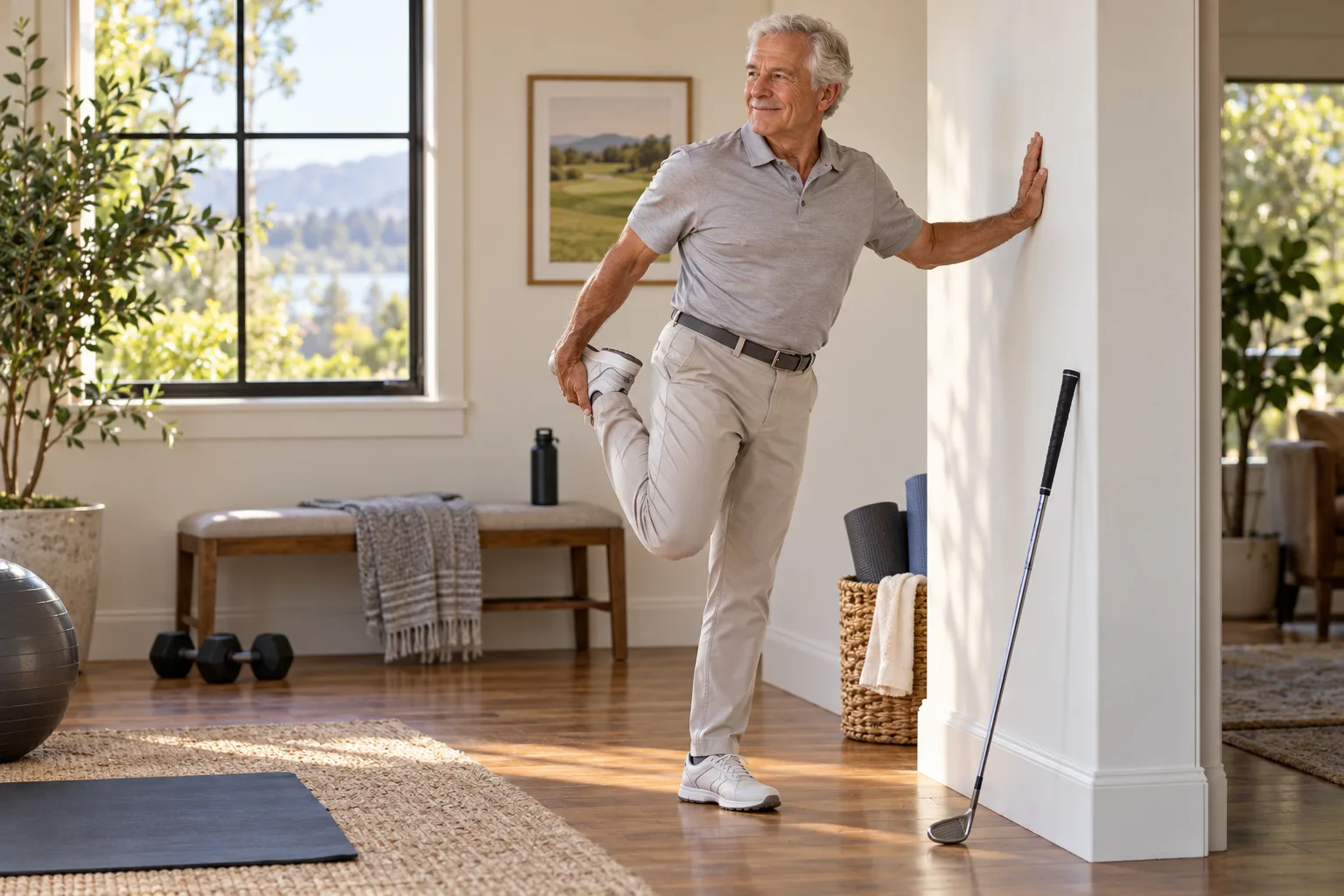
- Wall-supported stretch: side-body length and a gentle hip movement.
- Arm-and-shoulder tension: engagement around the back of the shoulders and shoulder blades while maintaining posture.
- Resistance band: a hip-led downswing sensation with the arms relatively quiet.
As demonstrated in the video, the first drill is not meant to recreate a technically exact backswing position. Elliott says the aim is to create lines of stretch and tension through the body. The second is a warm-up for the range, and the third is intended to connect a movement feeling to swing mechanics.
For golf exercises for seniors, repeatability matters more than intensity. Before each drill, check that you have stable footing and enough space. Move slowly enough to notice whether the hips, shoulders, and arms are doing what you intend. If balance is uncertain, stand near a wall or use a chair for support. The directions below follow the creator’s demonstration while adding practical ways to scale the movements.
Think of these golf exercises for seniors as options, not a compulsory circuit. If one doesn’t suit your body, omit it rather than forcing a substitute movement.
Wall-Supported Hip and Side-Body Stretch
This drill combines a supported reach with a small hip movement. Stand just beyond arm’s reach from a wall, range stanchion, or other stable support. If you can’t comfortably reach the support with a straight arm, move closer. Raise the arm nearest the wall, keep its elbow straight but not locked, and press the opposite hand into the wall. The support should feel stable before you begin.
- Settle into a comfortable golf posture and keep your feet steady.
- Reach the closest arm upward and press the other hand gently into the support.
- Bend forward slightly from a comfortable position, then draw the left hip gently back, as the instructor demonstrates.
- Hold the resulting line of stretch and tension for about 20–30 seconds, then ease out rather than snapping upright.
- Repeat on the other side, as Elliott recommends.
The intended sensation is a stretch along the side of the body, with some movement around the hips. The creator acknowledges that the position isn’t an exact representation of the backswing; it’s a way to explore a line of stretch and the feeling of drawing the hip away. Keep the effort mild. You shouldn’t need to pull hard on the wall or force your torso into a deeper bend.
If reaching strains your shoulder, stand closer or lower the reach to a comfortable height. A chair or solid counter may be easier to use than a wall, provided it won’t shift. If balance or back comfort is limited, reduce the bend and hip movement, or skip the drill. The purpose is a controlled warm-up position—not a test of flexibility.

Arm-and-Shoulder Tension Drill for Posture
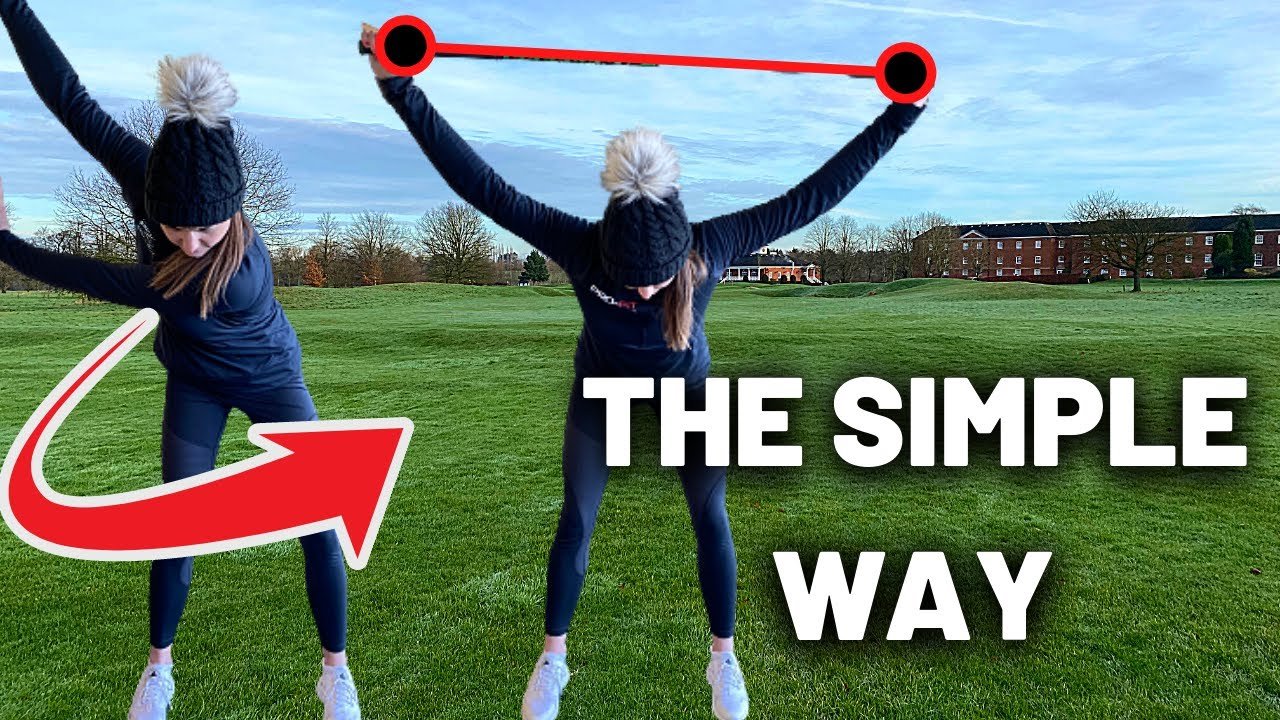
The second drill uses light opposing tension to bring attention to posture and the back of the shoulders. Begin in a comfortable golf posture. Raise your arms, then gently pull the left arm toward the left and the right arm toward the right, as if each is resisting the other. Keep your shoulders relaxed enough to avoid pinching or shrugging. The movement should feel like moderate engagement, not a maximal effort.
- Stand with your feet steady and adopt a comfortable golf posture.
- Raise your arms to a height that feels easy for your shoulders.
- Create light opposing tension by drawing the arms apart.
- Hold for about 10 seconds, then slowly release the arms.
- Stand upright and rest between repetitions if your lower back feels tired. Elliott suggests about five repetitions as a range warm-up.
In the video, the instructor connects the sensation around the back of the shoulders and shoulder blades with maintaining angles in the golf swing. Think of that as a cue to notice posture and shoulder-blade engagement—not as a claim that the drill treats a shoulder condition or builds strength by itself. Keep your breathing easy and reduce the arm height if you feel uncomfortable.
Anyone with shoulder pain, a rotator-cuff condition, a recent shoulder procedure, or a restriction on raising the arms should use a smaller range or ask a clinician whether this movement is suitable. Stop if you feel sharp pain, numbness, or a worsening symptom. If standing posture tires your lower back, rest upright before continuing; the video specifically allows for standing tall between repetitions.
Resistance-Band Drill for Hip-Led Downswing Sequencing
The band drill rehearses a different element: beginning the downswing with a small hip movement while the arms stay relatively quiet. Secure a resistance band to a stable anchor that won’t move under light tension. Take a comfortable golf posture, hold the band, and start from a position that feels like a backswing. Before moving, check the anchor, your grip, and your footing.
- Settle into posture with the band held securely and only light tension.
- From the backswing-like position, gently draw the left hip back first.
- Let the body create the movement; don’t yank the band with your arms.
- Return slowly to the start and repeat only while the movement remains comfortable and controlled.
Elliott emphasizes that the goal isn’t to stretch the band far. He asks the golfer to keep the arm relatively straight and feel the movement through the lower body. The tension offers feedback, helping you notice separation between the body and arms and rehearse a sequence that you can later try with a club. This is a swing-feel drill, not a guarantee of improved distance or ball striking.
If you have limited mobility or strength, use a lighter band and make the movement smaller. If you don’t have a band, rehearse the same slow hip-led movement without resistance. For limited spinal rotation, let the hips and upper back move only as comfortably tolerated; don’t force the lower back to twist. Stop if you feel pain, lose balance, or can’t control the band. The band should provide a gentle cue, not pull you out of posture.
How to Build a Safe, Progressive Routine
You can turn the video’s three golf exercises for seniors into a brief, low-equipment warm-up without adding unsupported training targets. Start with easy movement and a stable stance. Then perform the wall-supported stretch on both sides, holding each side for the instructor’s suggested 20–30 seconds. Move on to the shoulder-tension drill for about five repetitions, holding each for roughly 10 seconds and resting upright as needed. Finish with controlled band rehearsals; the video doesn’t specify a number of sets, repetitions, or weekly schedule for that drill, so don’t treat one as a prescription from the creator.
Use this progression principle: first make the movement comfortable and controlled; only then consider a little more range or resistance, and only if it remains comfortable. You don’t have to increase either. A chair or wall can provide balance support, and a lighter band reduces resistance. Rest between movements if your standing posture or lower back starts to feel tired.
Additional gentle warm-up exercises might include ankle rotations, calf raises, or a quad stretch with torso rotation, but those movements aren’t demonstrated in this video. Keep them easy and skip any position that requires forced twisting. The same caution applies to shoulder rolls: they may be a simple way to move the shoulders gently, but they aren’t one of Elliott’s three drills.
These golf exercises for seniors are best viewed as a preparation sequence, not a full strength-training plan. For golfers who want to develop balance, core strength, or general strength, those goals may call for separately tailored training. Don’t add extra sets or resistance simply because a warm-up feels easy; the creator’s specific timing applies to the two holds and shoulder repetitions, while the band drill is shown as a controlled rehearsal.
Keep golf exercises for seniors short enough that you still feel ready to practice. Before a round, use the time to settle into the positions and swing intention rather than tiring yourself out. Afterward, allow yourself to stand comfortably and move easily; the transcript doesn’t provide a prescribed cooldown, so don’t mistake additional exercises for part of the video’s routine.

Safety, Strength Training, and Alternatives for Older Golfers
These golf exercises for seniors are low-equipment swing and warm-up drills, not a complete conditioning program. The video does not demonstrate kettlebell swings or rotational medicine-ball throws. Those are separate strength or power exercises, not necessary additions to the three drills. Fast swings or throws shouldn’t be substituted for the slow, controlled movements shown, especially if you have balance concerns or a movement restriction.
Strength training, balance work, and core strength can complement golf practice, but the video doesn’t claim that these three exercises develop those qualities on their own. Other movements sometimes used in exercise programs—such as dumbbell rows, wall push-ups, hip drops, or gentle lunges—are not demonstrated here and shouldn’t be added automatically if you have pain or restrictions. Similarly, “Flare & Turn Drill” isn’t a drill taught in this video. Keep the difference clear: Elliott’s three movements are intended to rehearse mobility, posture, and swing sequencing.
Before starting or changing exercise, seek guidance from a clinician or qualified exercise professional if you have arthritis, osteoporosis, a balance disorder, a joint replacement, chronic back or shoulder pain, wrist tendinitis, or another relevant restriction. That advice is particularly useful when deciding whether a reach, band tension, or rotation is appropriate for you. A rotator-cuff problem, for example, may make the raised-arm position unsuitable without modification.
For limited spinal rotation, keep the movement small and comfortable. Allow the hips and upper back to contribute only as tolerated; don’t force a twist through the lower back. Choose a wall or chair for balance, use a lighter band, or rehearse the hip-led movement without resistance. Skip any exercise that triggers pain, dizziness, or loss of balance. The practical aim of golf exercises for seniors is comfortable preparation—not pushing through warning signs.
When considering golf exercises for seniors alongside strength work, treat each activity according to its purpose. A golf-feel drill helps you rehearse a movement; it isn’t the same thing as a progressive strength program. If you want to add rotational power work, including medicine-ball throws, get individual guidance rather than assuming a more forceful drill is a better version of the band exercise.
Apply the Drills Before Practice and Track Progress
The band drill is most useful when you connect it to a movement you can recognize with a club. In the video, Elliott describes keeping the club high and feeling the body draw the hands in, rather than immediately pulling the club over with the arms. After the band rehearsal, pick up a club and make a few slow practice movements without hitting a ball. Notice whether you can recall the hip-led sensation while keeping the arms comparatively quiet.
Try the sequence in this order: first rehearse the movement slowly without a club; next use the band, if available and comfortable; then make a slow club rehearsal; finally, see whether the same intention is accessible during ordinary practice. Don’t force a new swing position or judge the drill by a single shot. The creator presents the band as a way for the body and brain to notice tension and remember a feeling—not as a guarantee that the swing will change immediately.
You can track practical observations in a simple notebook: whether your comfortable range of motion feels different, whether you feel steady during the warm-up, whether your swing feels consistent, and how your stamina feels during a round. If you already measure clubhead speed, you can record it too, but a change in one measure doesn’t prove that these drills caused it. Note pain or discomfort as well; worsening symptoms are a reason to stop and seek appropriate advice, not to increase effort.
These golf exercises for seniors work best when they have a clear purpose: prepare gently, rehearse a position, and carry one swing intention into practice. Keep the movements controlled and repeatable. If pain or a persistent swing limitation is present, get tailored guidance from a qualified clinician or golf professional rather than trying to solve it by stretching farther.
For the original demonstration and the creator’s complete explanations, watch “The best swing exercises for senior golfers! Simple, easy and repeatable!” by AlexElliottGolf. The video description mentions a website link, but no separate website address is included in the supplied material, so this article links to the video itself.

A Practical Next Step for Your Golf Warm-Up
Start with the version you can perform comfortably today. Use a stable support for the side-body stretch, keep the shoulder drill light, and reduce the band tension—or remove the band—if you can’t move smoothly. The creator’s specific guidance is to hold the wall-supported stretch for about 20–30 seconds on both sides and to perform about five shoulder-tension repetitions with 10-second holds. For the band exercise, keep the movement controlled; the video doesn’t give a prescribed set count.
Before your next practice session, try the drills in that order and then make a slow club rehearsal. Look for a familiar hip-led sensation, not a dramatic change in how far you turn. If you feel pain, dizziness, or unsteadiness, stop and choose a more suitable option. If you have a health condition or persistent limitation, ask a qualified professional to tailor your movement choices.
The useful takeaway from Alex Elliott’s demonstration is modest and practical: warm up gently, repeat movements you can control, and connect each drill to a clear swing intention. That gives you a sensible starting point for practice without confusing a mobility drill with medical care or a full strength program.
Key Takeaways
- The video presents three low-equipment movements: a wall-supported side-body stretch, an arm-and-shoulder tension drill, and a resistance-band rehearsal of hip-led downswing sequencing.
- Use comfortable, controlled movement rather than forcing a deeper stretch, harder rotation, or stronger band pull.
- The instructor suggests a 20–30-second wall stretch on both sides and about five shoulder-tension repetitions with 10-second holds; no band-drill set count is prescribed.
- These are warm-up and swing-feel drills, not a substitute for individualized strength training, medical advice, or care for pain.
- After the band drill, try a slow club rehearsal and notice whether the hip-led sensation carries over without assuming that one practice session proves improvement.
Frequently Asked Questions
What are some good back exercises for golf players?
The video demonstrates a wall-supported side-body stretch and a band drill that rehearses a gentle hip-led movement, but neither is presented as treatment for back pain. Keep movement comfortable and avoid forcing rotation through the lower back. If you have ongoing pain or a back condition, ask a clinician which exercises are suitable.
What are some good strength training exercises for seniors over 70?
The video doesn’t provide a strength-training program; its three drills are warm-up and swing-feel exercises. Strength work should be selected for your health, balance, mobility, and experience, ideally with guidance from a qualified professional. Don’t assume that adding kettlebell swings or medicine-ball throws is necessary for golf.
What is the/20 rule in golf?
The video doesn’t discuss an/20 rule, and the phrase can refer to different ideas in golf. It isn’t needed to perform the three drills described here. For an explanation of a particular version, you’d need to specify the context in which you heard it.
What shaft should a year old man use?
The video doesn’t cover equipment or recommend a shaft. Age alone isn’t enough information to choose one; the golfer’s swing, feel, and fitting needs matter. A golf club fitter can assess options rather than relying on a general age-based rule.
Can these drills prevent injury or increase swing speed?
The creator says the movements may help the swing feel more fluid, but the transcript doesn’t claim that they prevent injury or guarantee more speed. Use them as gentle preparation and swing-feel practice. Stop if a drill causes pain, and seek individualized advice for persistent symptoms.