
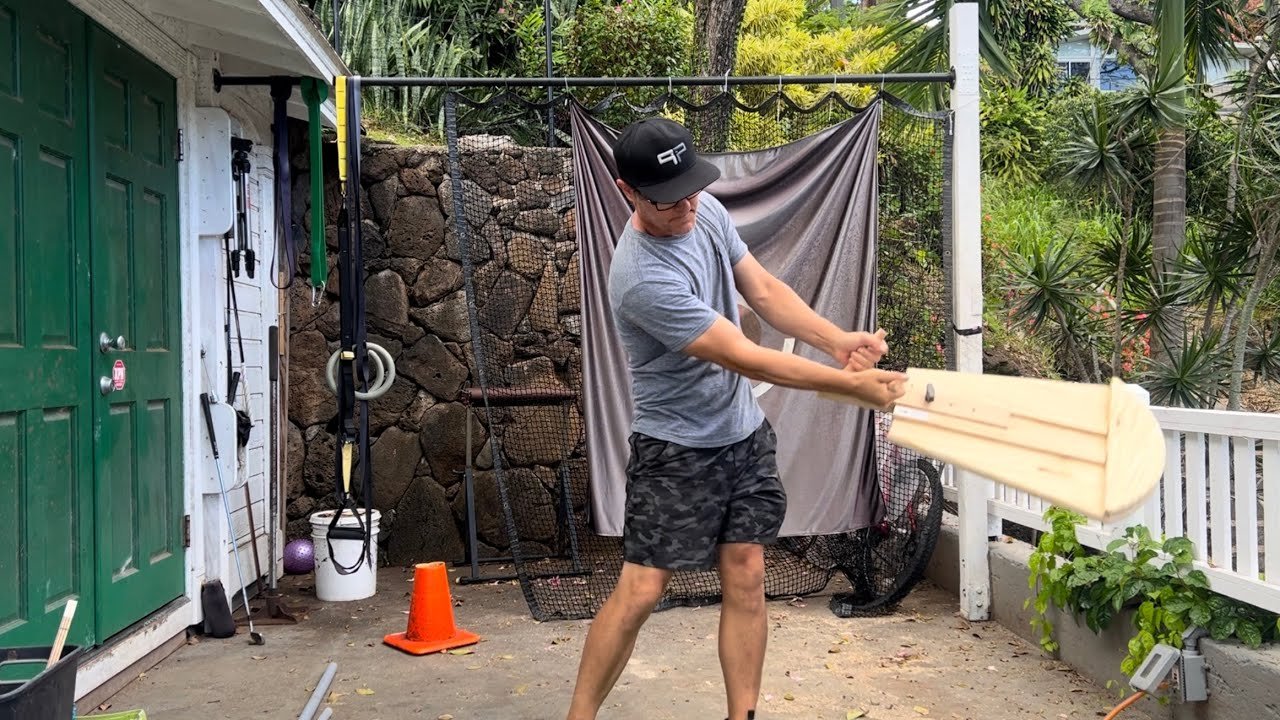
What the poor man's e-bell teaches about the golf swing
The poor man’s e-bell is MIGMATIS GOLF’s low-cost answer to the $275 Erickson e-board. In the opening seconds, the creator compares the commercial training aid with a homemade version that can cost about $40, then sets out to recreate its useful swing-plane feedback with ordinary wood and hardware. Watch the original MIGMATIS GOLF demonstration for the build shown on camera.
The device doesn’t force your body into one mechanically perfect motion. Instead, it gives you an external reference for club direction, body alignment, hand path, and awareness of the swing plane. According to MIGMATIS GOLF, that reference can make setup and slow rehearsals more purposeful because you can feel when the club or hands move too far outside or inside the intended path.
This approach may suit beginners learning address position, intermediate golfers working on an over-the-top transition, seniors who want low-impact repetitions, and players with limited indoor practice space. The board is a feedback aid, not a substitute for an instructor, physical screening, or ball-flight evidence.
TL;DR:
- Estimated build cost: about $40 or less.
- Base: a 24-inch circular wooden board.
- Adjustment: a sliding handle section with three height positions.
- Handle geometry: outward-splayed grips built around approximately 45-degree angles.
The main value of the poor man’s e-bell is repeatable feedback rather than expensive materials. In our experience, a simple visual boundary can be more useful than hitting dozens of unfocused practice swings. The poor man’s e-bell works best when you use it for deliberate rehearsals, then confirm whether the change improves contact and start direction with a club and ball.
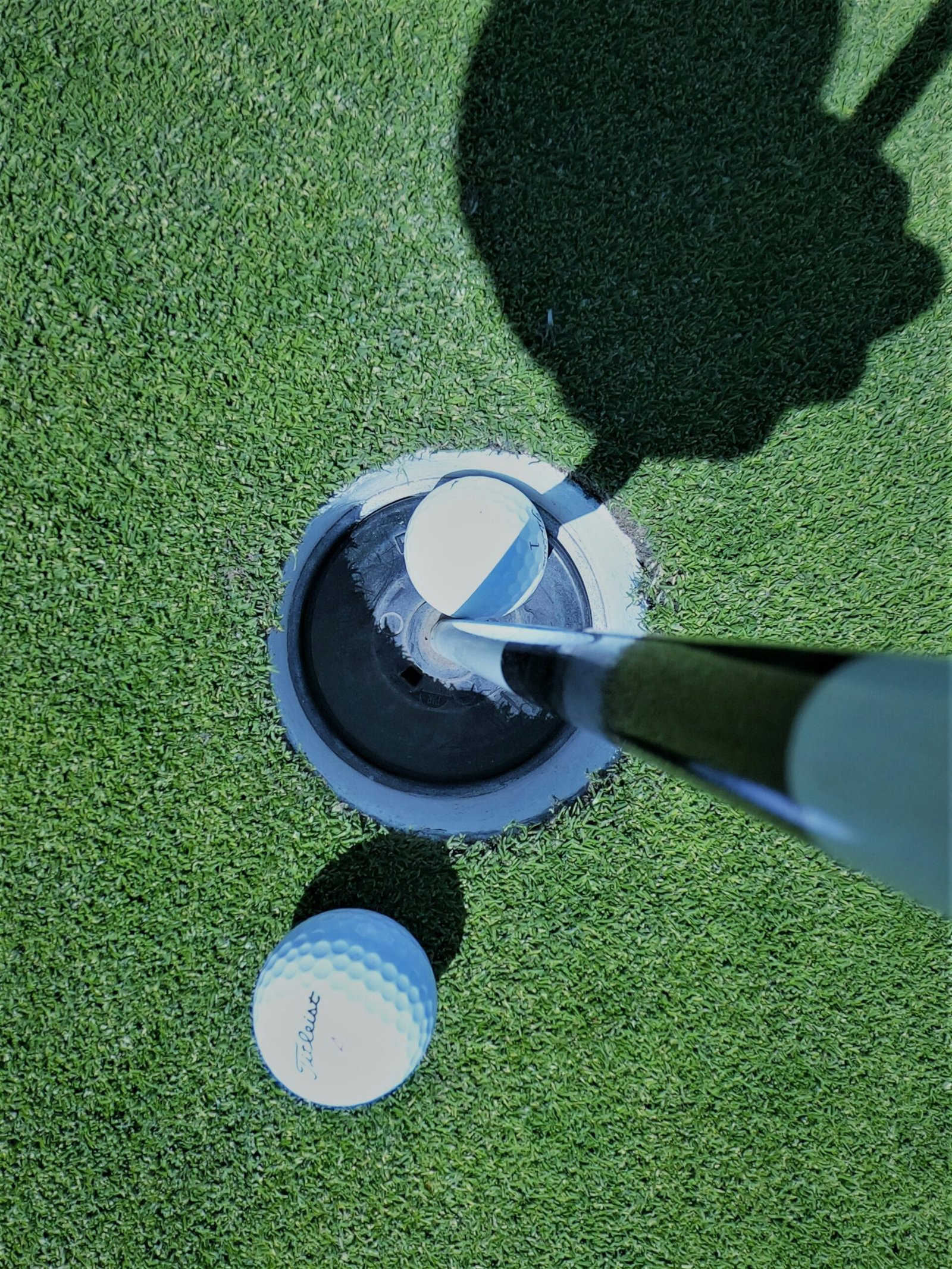
Poor man's e-bell materials, measurements, and budget
MIGMATIS GOLF begins with a 24-inch-diameter wooden round approximately inch thick, available from many big-box hardware stores. The video places its price at about $21, while the commercial Erickson aid is described as $275. A complete homemade version is estimated at $40 or less when you use scrap plywood, leftover hardwood, existing screws, or hardware already in your workshop; actual prices may differ in 2026.
Before shopping, separate the parts that affect function from cosmetic upgrades. The circular base supplies stability, the oak slider creates adjustable reach, and the dowel handles provide the contact points. A router and circular saw can make the work cleaner, but neither is essential: a handsaw, drill, file, and sandpaper are enough for a basic build.
| Part | Approximate size | Purpose | Likely cost |
|---|---|---|---|
| Wooden round | 24 in diameter, in thick | Plane base and ballast support | $21 |
| Oak board | 24 × 2.5 × 0.75 in | Sliding handle carrier | $6–$10 |
| Two slats | 18 × 1.5 × 0.5 in | Channel side rails | $3–$6 |
| Oak dowel | About/8 in diameter | Golf-grip-like handles | $3–$6 |
| Bolt, washer, screws, glue | About 2.5 in bolt | Adjustment and assembly | $5–$10 |
Essential components are the base, slider, rails, dowel, adjustment bolt, and fasteners. Optional additions include tennis-racket grip tape, stain, varnish, a routed channel, and rounded edges. A fixed handle can eliminate the sliding mechanism altogether, and scrap hardwood can replace new oak. The poor man’s e-bell is therefore a design concept, not a shopping list that must be followed exactly.
For the lowest-cost version, measure your available wood first, reuse the cutout as ballast, and buy hardware only after confirming total thickness. According to the creator, simplifying the handle adjustment or using a fixed length can reduce the total below the stated $40. The poor man’s e-bell should be stable and correctly fitted before it is attractive. The poor man’s e-bell doesn’t need premium wood to provide a useful swing reference.
How to cut and shape the poor man's e-bell swing-plane base
The plane-board shape is laid out between approximately 2:20 and 4:10. Start by marking a 10-inch line across the circular board. Find its midpoint, then draw a perpendicular centerline through that point. On the centerline, identify the 18-inch reference using inches on either side of the midpoint, then connect the marked points to define the upper cutout.
- Place the round on a stable work surface and mark the 10-inch chord.
- Use a square to establish the 90-degree centerline.
- Measure inches to each side of the center reference to create the 18-inch layout.
- Connect the points with straight lines or a smooth template.
- Check the drawing twice before cutting; a misplaced line changes the handle path.
The creator leaves the lower curve intact because that rounded section retains weight and helps the board resist tipping. The upper sections are removed to create the plane-board profile. The offcut can become a removable ballast piece, which is particularly useful if the finished aid feels light or rocks during a rehearsal.
Clamp the board securely, wear eye and hearing protection, and keep both hands clear of the blade. Make the straight cuts with a circular saw or handsaw, then sand every exposed edge. At about 4:10–4:45, MIGMATIS GOLF uses a router to round the cut edges; hand sanding is an acceptable substitute and may be safer for a first-time builder.
Before installing any hardware, put the base on the floor and test it with gentle pressure from several directions. A board that rocks will produce misleading feedback and may catch your foot. The poor man’s e-bell needs a stable platform more than a polished finish. Sanding the poor man’s e-bell carefully also reduces the chance of clothing or skin catching on an edge, while the poor man’s e-bell offcut remains available for later weight adjustment.
Building the adjustable poor man's e-bell handle channel
Between approximately 4:45 and 7:15, the video demonstrates a simple sliding channel. Two narrow slats, each about inches long, 1.5 inches wide, and 0.5 inches thick, act as side rails. A 24-inch oak board, about 2.5 inches wide and 0.75 inches thick, slides between them. The final 7-inch section is glued to the end of the oak board, doubling the thickness where the handles will be mounted.
Build the mechanism in this order:
- Dry-fit the rails and slider on the base before applying adhesive.
- Confirm that the oak carrier can travel smoothly through the full intended range.
- Glue the rails in position and tack-nail them temporarily.
- Test the slider again before the glue sets.
- Add screws for strength, keeping screw heads flush and clear of the moving section.
Leave enough clearance for movement, but don’t create excessive side-to-side play. Too little clearance causes binding; too much lets the handle position shift during practice. The video uses a routed channel as a possible alternative, but MIGMATIS GOLF deliberately presents the slat method because many golfers don’t own a router or extensive power tools.
If the slider binds, remove sawdust and inspect for a high spot before forcing it. A small amount of paste wax can reduce friction, as the creator explains, but wax won’t fix misaligned rails. Conversely, a channel that is so loose that the handle moves under pressure defeats the adjustment system. The poor man’s e-bell should move deliberately and stop firmly. In the poor man’s e-bell, the rails guide the feedback; in the poor man’s e-bell, the golfer still controls the motion rather than being locked into a single swing.
Adding height adjustment and ballast to the poor man's e-bell
The video shows three adjustment holes at approximately 7:15–8:45. They are spaced about inches apart, allowing the handle carrier to suit different golfer heights, arm lengths, and rehearsal positions. Three positions won’t fit every golfer perfectly, so treat them as starting points and test the device in address posture before drilling additional holes.
The creator uses an approximately 2.5-inch carriage-style bolt. It passes through the base and oak slider, while the square shoulder bites into the wood and helps stop the bolt from spinning. A washer and adjustable nut secure the selected setting. Measure your actual board thickness before buying the bolt: the example combines a 1-inch base and 0.75-inch oak, for a total near 1.75 inches, but paint, washers, and different lumber can change the required length.
Use this procedure:
- Mark the three holes at 2-inch intervals.
- Drill squarely through the base and carrier.
- Test the bolt without tightening the nut fully.
- Choose the position that lets you stand naturally with relaxed arms.
- Tighten the washer and nut firmly, then check that the slider cannot shift.
The circular-board cutoff can be screwed to the lower section as removable ballast. MIGMATIS GOLF avoids gluing this piece so its weight can be changed later. That detail matters: a heavier base may feel more secure, while a lighter setup may be easier to store or move. The poor man’s e-bell is safer when its center of mass stays low, and the poor man’s e-bell should never slide while you are holding it. If you modify the poor man’s e-bell, retest stability before full-speed practice.

Poor man's e-bell handle angles, grip design, and golfer fit
The handles are the most demanding part of the build, discussed from approximately 8:45 to 11:30. For a right-handed golfer, the lower handle sits roughly degrees to the board and also splays away from the golfer, creating a compound 45-degree-and-45-degree layout. The upper handle follows a similar outward orientation rather than pointing straight toward the body.
MIGMATIS GOLF places the upper and lower grips about inches apart. That spacing suits the creator’s hands, but larger hands may need more room. Oak dowel about/8 inch in diameter offers useful strength and feels similar to a golf grip in the fingers. You can leave it bare for a firm reference or add tennis-style grip tape for comfort; don’t wrap it so heavily that the diameter changes your normal grip.
Fit the device before permanently attaching the dowels:
- Mirror the layout if you swing left-handed.
- Hold the device in a neutral address posture.
- Check that both wrists feel relaxed rather than bent or compressed.
- Make slow takeaway and delivery rehearsals.
- Move the handle height before drilling final holes if your shoulders or elbows feel restricted.
Mark the center of each dowel carefully and pre-drill to reduce splitting. The poor man’s e-bell should support your natural grip, not force your hands into an uncomfortable shape. In our experience, a three-inch gap is only a reference measurement, so the poor man’s e-bell deserves a personal fit check. The poor man’s e-bell is ready for practice only when you can stand freely, maintain balance, and make slow motions without contacting clothing or the floor.
Using the poor man's e-bell to improve swing mechanics
Use the device to rehearse a sequence, not to perform mindless repetitions. Begin with grip, stance, posture, alignment, and ball position. Then work through takeaway, backswing, transition, downswing, impact, and follow-through. As demonstrated in the video, the board gives you an outside reference for the hand and club route, but it cannot diagnose every cause of a slice or hook.
For a neutral setup, stand roughly shoulder-width apart for an iron and a little wider for a driver. Tilt your spine from the hips rather than bending only at the waist, align your feet and shoulders with the target, and keep the hands modestly ahead of the ball for irons. A driver ball position is generally farther forward, near the lead heel, while an iron is closer to the center or slightly forward depending on the club.
Match the rehearsal to the fault:
- Over the top: rehearse a transition in which the hands fall inward and the club approaches from a shallower direction.
- Hook: monitor an excessively inside takeaway or a rapid closing of the face.
- Top: preserve posture and let the low point move ahead of the ball.
- Fat shot: rehearse forward pressure and consistent chest rotation without lunging.
Start with slow-motion rehearsals, half-swings, and controlled full swings. Stop if the board catches clothing, restricts motion, or causes wrist, shoulder, or back discomfort. The poor man’s e-bell is a feedback aid, not professional instruction or a replacement for ball-flight diagnosis. Use the poor man’s e-bell to build awareness, then test the change with real swings. The poor man’s e-bell is most useful when each repetition has one clear purpose.

Club-specific drills and practice plans with the poor man's e-bell
Different clubs require different setup and delivery intentions, so don’t use one identical drill for every shot. For a driver, place the ball forward, rehearse a wide takeaway and shallow approach, and complete slow repetitions before hitting balls. For irons, keep the ball near center or slightly forward, maintain forward shaft lean, and use crisp half-swings that prioritize strike over speed.
- Wedges: shorten the motion, control the low point, and avoid chasing maximum speed. Make waist-high rehearsals before longer swings.
- Hybrids: combine an iron-like ball position with a sweeping takeaway; strike through the ball rather than trying to lift it into the air.
- Drivers: maintain width in the first part of the takeaway and let the body sequence the downswing instead of throwing the hands from the top.
A beginner can train twice per week for minutes: five minutes of setup checks, five minutes of slow rehearsals, and minutes of half-swings. An intermediate player can train three times weekly, dedicating one session to a specific issue such as slicing, hooking, or contact control.
For a senior or physically limited golfer, use the highest comfortable setting, reduce swing length, complete standing or seated mobility work first, and practice in five-minute blocks with rest between them. Record results over balls: solid-contact percentage, start direction, curvature, and perceived effort. The poor man’s e-bell should make practice more measurable, not more tiring. Keep the poor man’s e-bell routine low-impact, and adjust the poor man’s e-bell before adding speed or volume.
Video analysis: checking whether the poor man's e-bell is helping
Film your swing before trusting a new sensation. Put a smartphone at hand height for both face-on and down-the-line views, keep the lens square to the target line, and use or frames per second when your phone supports it. Place the camera far enough away to capture the entire club, feet, and finish; a crooked camera can make a neutral path look faulty.
Capture five swings before using the device and five afterward. Compare takeaway width, shaft position near the top, transition direction, impact posture, head movement, and finish balance. Remove obvious mishits, compare averages rather than the best shot, and repeat the process for at least two weeks. A useful change should improve awareness without producing a rigid or artificial motion.
Optional launch monitors and swing-tracking apps can add club-path direction, face angle, attack angle, carry distance, launch angle, and strike location. Treat those measurements as estimates because consumer devices vary by model, lighting, location, and calibration. Ball flight still matters: a reported face angle should agree reasonably with the ball’s start direction and curvature.
- Record a baseline session of shots.
- Use the device for 20–30 deliberate rehearsals.
- Record comparable shots with the same club and target.
- Note contact, start line, curve, carry, and perceived effort.
- Repeat on two or three later practice days.
According to MIGMATIS GOLF, audience feedback is part of the channel experience, so you can share results through the channel’s comments or related engagement features. The poor man’s e-bell should be judged by repeatable evidence, not one impressive swing. Use the poor man’s e-bell as a controlled variable, and keep the poor man’s e-bell routine consistent while you compare results.
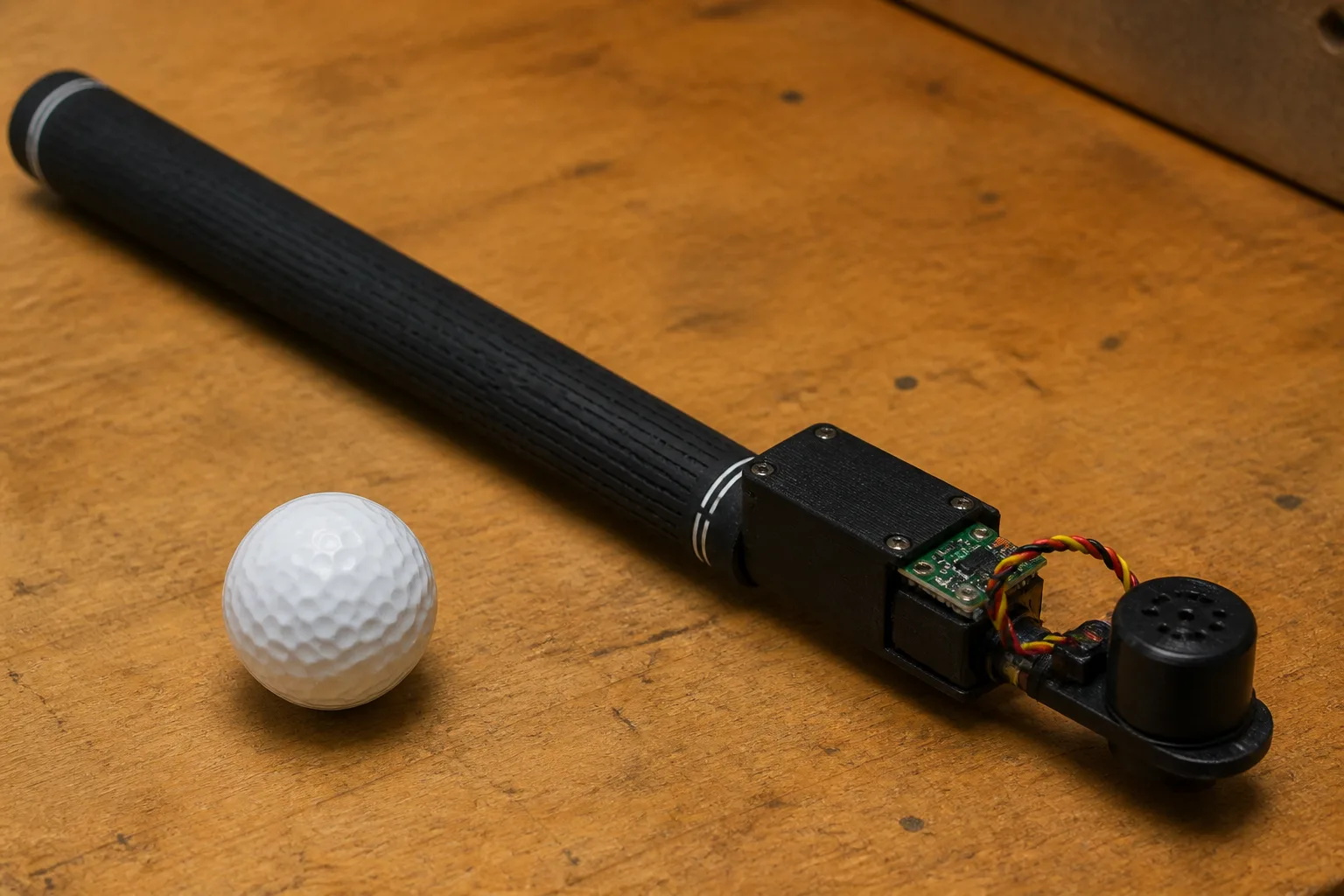
YouTube privacy, recommendations, and viewing the demonstration
Watching the MIGMATIS GOLF demonstration on YouTube can involve cookies, IP addresses, search activity, watch history, and other data processed through Google services. The direct video link is available here. Readers who want the build instructions can open that link directly; readers concerned about data can review Google’s privacy information and YouTube privacy controls first.
Google describes data uses that may include service maintenance, outage tracking, spam prevention, fraud prevention, abuse prevention, audience engagement, site statistics, service improvement, and development of new services. These functions aren’t all the same as advertising. YouTube and Google settings can distinguish advertising from ad measurement, personalized content from non-personalized content, and personalized ads from non-personalized ads.
Your watch history and search activity can influence video recommendations, including what appears on the YouTube homepage. Depending on your settings, cookies and account activity may also help measure ads or tailor content. You can pause watch history, manage cookies through your browser, review ad personalization in your Google account, or watch without signing in where that option is available.
For a practical privacy check, open Google Account activity controls, review YouTube History, and disable or pause the categories you don’t want retained. Privacy choices can affect recommendations and convenience, so choose deliberately rather than assuming every setting has the same result. The poor man’s e-bell video remains accessible without requiring you to adopt personalized recommendations. If you watch the poor man’s e-bell demonstration while signed out, some account-based personalization may be reduced, although YouTube can still process technical data. The poor man’s e-bell instructions and your privacy preferences can be handled separately.
Key takeaways and practical questions for golfers
From approximately 00:00 to 11:30, MIGMATIS GOLF presents a practical alternative to a $275 commercial aid: a device estimated at about $40, built from commonly available wood, with three height holes and carefully laid-out handles using roughly 45-degree compound angles. The creator explains that the circular base, sliding oak carrier, removable ballast, and grip-like dowels are the parts that make the training reference useful; a premium finish is optional.
What is the fastest way to improve your golf swing? Identify one fault with professional feedback or video analysis, practice one corrective movement in short sessions, and measure contact and ball flight rather than relying on feel alone. Ten focused rehearsals can be more informative than hurried swings.
How far should a 60-year-old man hit a 7-iron? There is no universal distance because loft, launch, speed, strike quality, health, and course conditions vary. Measure well-struck shots and use the repeatable carry distance, not total roll, as your playing number.
Who has the smoothest golf swing ever? That’s subjective. Ernie Els, Fred Couples, and Sam Snead are frequently praised for rhythm and tempo, but your best model is a motion you can repeat comfortably under pressure.
What generates the most power in a golf swing? Efficient sequencing from ground pressure through the hips, torso, arms, and club combines with centered contact and an appropriate wrist release. Speed without sequence usually creates poor strikes.
Use this action plan:
- Build or prototype the poor man’s e-bell from available materials.
- Verify that the base is stable and the slider locks securely.
- Film five baseline swings from two angles.
- Practice three short, low-impact sessions focused on one fault.
- Reassess contact and ball-flight data before making permanent modifications.
The poor man’s e-bell is inexpensive enough to revise, so test fit and stability before committing to a final design. The poor man’s e-bell becomes valuable when it turns vague swing thoughts into observable checkpoints.
Key Takeaways
- MIGMATIS GOLF estimates that a homemade swing-plane trainer can cost about $40, compared with approximately $275 for the commercial Erickson e-board.
- A 24-inch circular wooden base, sliding oak carrier, three adjustment holes, and removable ballast provide the device’s main structure and stability.
- The handles require careful fitting: the video uses roughly 45-degree compound angles, about inches of grip separation, and/8-inch oak dowel.
- Practice should progress from setup checks to slow rehearsals, half-swings, and controlled full swings, with safety and comfort taking priority.
- Film baseline and follow-up swings, then judge results through contact, start direction, curvature, carry distance, and repeatability.
Frequently Asked Questions
What is the fastest way to improve my golf swing?
Use video or professional feedback to identify one specific fault, then practice one corrective movement in short, focused sessions. Track contact quality, start direction, curvature, and carry over multiple shots instead of judging progress from feel or a single swing.
How far should a year old man hit a iron?
There is no single correct distance because age, club loft, swing speed, strike quality, launch, and health all vary. Hit solid shots, record carry distance rather than total roll, and use the repeatable average as your personal benchmark.
Who has the smoothest golf swing ever?
Smoothness is subjective, but Ernie Els, Fred Couples, and Sam Snead are often admired for rhythm and tempo. The best swing model for you is one you can repeat comfortably while maintaining balance and solid contact.
What generates the most power in a golf swing?
Power comes from efficient sequencing: pressure from the ground, then the hips, torso, arms, and club, combined with centered contact and a suitable wrist release. Swinging harder without good sequence usually reduces strike quality.
Is the poor man's e-bell a replacement for golf lessons?
No. It provides an external reference for setup, hand path, and swing-plane awareness, but it can’t diagnose every fault or replace professional instruction and ball-flight analysis. Use it alongside smartphone video or qualified coaching.