
Golf swing speed: the core idea and key takeaways
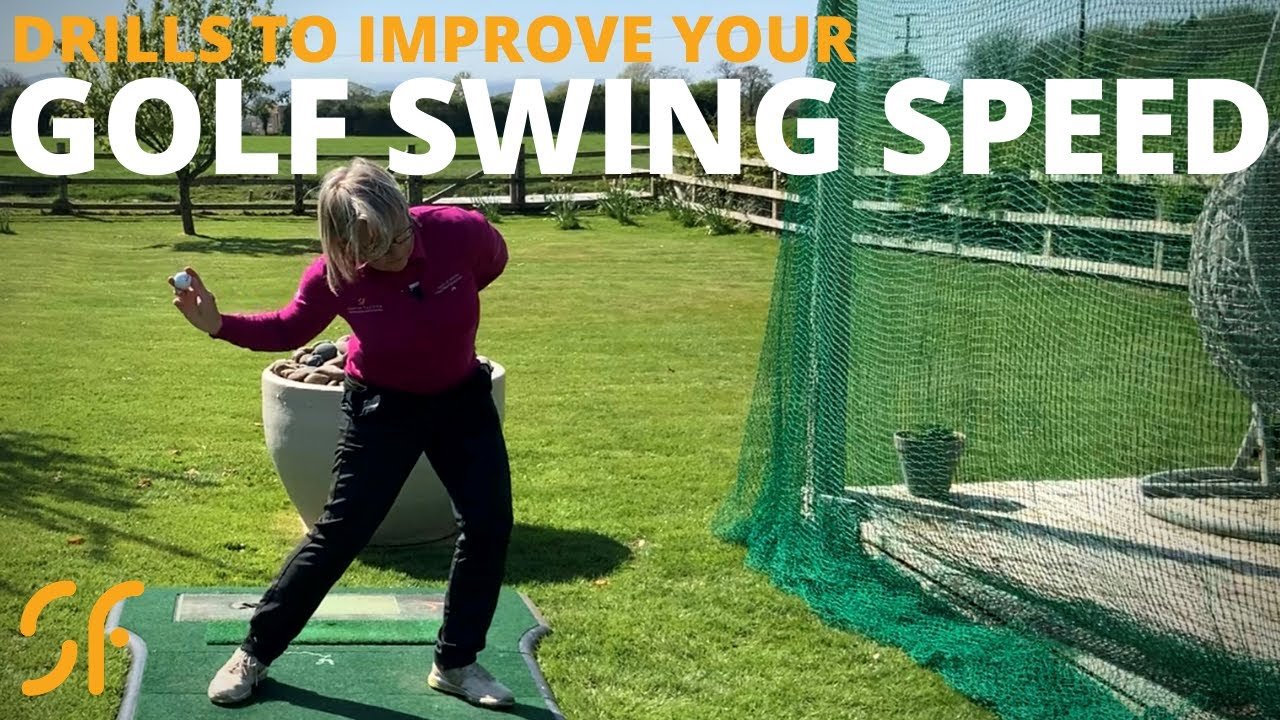
Golf swing speed can help you hit the ball farther, but speed only pays off when it arrives near impact and you can keep the club under control. In the video “Drills to improve your GOLF SWING SPEED”, Natalie Adams of SMASH FACTOR GOLF COACHING demonstrates three ways to practise that combination: one-handed cane swings, a step-and-swing sequence drill, and throwing a ball.
The drills address different pieces of the motion. The light cane makes the swish audible, giving you feedback about where the club accelerates. The step drill rehearses a downswing that starts from the ground up rather than with the arms. Throwing a ball gives you another way to practise sequencing the body and arms together. None of these actions alone guarantees a faster or longer drive; contact, direction, and balance still matter.
Use the routine as a skills practice, not a test of how hard you can swing on every repetition. Establish a baseline, train both sides, and pay attention to the sound, sequence, and strike. Then retest under comparable conditions. The practical aim is to make golf swing speed arrive in a useful place and transfer that golf swing speed to the ball without sacrificing control.
- Measure before and after rather than relying only on feel.
- Practise the drills at a manageable effort before adding speed.
- Judge progress by club speed, ball speed, distance, and contact together.

What creates golf swing speed—and how to measure it
Adams begins by using TrackMan to record club speed, ball speed, and total distance, then says she will repeat the test after the drills. This is a useful model: a speed number describes only one part of the result. Your golf swing speed may rise while ball speed or distance changes less if you strike the ball inconsistently or lose control of the face.
For your own baseline, use a launch monitor or radar device if one is available. Record the club used and take several swings after warming up, rather than treating one unusually good or poor shot as your normal result. Note clubhead speed, ball speed, carry or total distance—whichever the device provides—and a simple measure of strike quality and direction. The video demonstrates TrackMan; other devices are a practical article recommendation, not equipment Adams specifies.
Retest after a block of practice using the same club and, as far as you can, similar conditions and effort. Compare like with like: a driver reading should not be compared with a different club, and a mishit should not be treated as a clean-speed result. This makes changes in golf swing speed easier to interpret and helps you see whether faster motion is producing useful ball speed and distance. Track the trend, not just your best swing.
- Warm up and record the club and conditions.
- Take a consistent set of baseline swings and save the readings.
- Practise the drills, then repeat the test in comparable conditions.
Train golf swing speed at impact with the whoosh drill
The first drill teaches you to hear the cane’s swish as it passes through the impact area, rather than early in the downswing. Adams uses a light garden cane because its sound makes the timing cue easy to notice. If you don’t have one, she says you can hold a club upside down by the shaft so the lighter end moves through the air.
For a right-handed golfer, the target-side cue is on the left side of the body as the implement passes through the ball position. Mirror that for a left-handed action. Begin with a backswing, then swing through and listen: does the whoosh happen near the imagined impact area, or well before it? An early sound can indicate that the wrists released too soon, but the sound is a practice cue—not proof by itself that you have ideal lag, hand path, or impact position.
Follow Adams’s repetition pattern at a controlled pace: swings with the right hand, with the left, and with both hands. She also suggests turning the other way and repeating the set with a left-handed action. Keep your grip secure without squeezing excessively, and let the lead arm and wrists move naturally. The aim is to train golf swing speed through the strike, not to force a wrist position. Use the same cue when you return to a club; the golf swing speed drill is useful only if it supports a balanced swing and better golf swing speed at impact.

Improve the downswing with a step-and-swing sequence drill
In the second drill, Adams focuses on the swing sequence: pressure and lower-body motion move toward the target first, followed by the upper body and club. The arms shouldn’t rush down from the top on their own. Her image is a slingshot or catapult: the lower body begins turning while the club is still completing its backswing, helping the rest of the body follow.
Try the foot-stamp version step by step. Set up as if you were holding a club, make a backswing, and lift your lead foot. Before the club has finished travelling back, set that foot down toward the target. Then let the hips and torso turn and swing through. You can start with your feet together or hold the club out toward the target before rehearsing the movement. Begin slowly enough to stay balanced; speed comes after you can repeat the order.
This ground-up cue connects to pivot, lower-body loading, and pressure moving through the feet. Golfers may also hear terms such as right-leg loading, ground-up force, and ground reaction force when exploring how the body interacts with the ground. Those concepts describe related movement ideas, but they are not measurements supplied in the video. A qualified coach can help you adapt them to your body and swing. If your shoulders or arms start first, or you stumble at the finish, reduce effort and practise the step without a fast swing. Better sequence—not a bigger step—is the purpose of this golf swing speed drill.
Use throwing drills to rehearse speed and timing
Adams’s third drill uses a golf ball to rehearse the same order of movement in a throwing action. Start with the ball and a backswing-like movement. Don’t throw immediately from the top using only your arms: step or stamp toward the target, allow the lower body and hips to turn, then throw through forcefully. The throw gives you a clear task that can make timing and the kinematic sequence easier to feel.
She suggests practising the action on both sides of the body and says you can progress to a light medicine ball. The video does not prescribe a particular weight, so choose an object you can control safely. Use a clear throwing area, check that no one is in its path, begin with a light object, and stop if the movement causes pain. If you have mobility or health concerns, get individual advice before adding forceful throws.
Throwing is a complement to golf practice, not a replacement for swinging a club. A throw can help you rehearse how the lower body, trunk, arms, and hands contribute in sequence, but the club adds its own grip, hand path, face control, and impact requirements. After a few throws, make controlled practice swings and see whether you can keep the same timing without rushing. That bridge helps you apply the feel to golf swing speed while maintaining balance. Don’t assume a harder throw automatically means more distance; the useful transfer is coordinated movement that supports a repeatable golf swing speed and clean contact.

Build a progressive golf swing speed training routine
The video presents sets of for several drills, but it doesn’t prescribe rest periods, a weekly frequency, or a multiweek plan. You can turn the examples into a repeatable template while adjusting the workload to your fitness and how well you maintain balance. Start with a warm-up, then rehearse the cane drill, the step-and-swing, and—if you have space and equipment—the throwing action.
- Warm up: Begin with easy swings and comfortable movement rather than immediately swinging at maximum effort.
- Rehearse the cane: Use the whoosh cue, progressing through right hand, left hand, and both hands if comfortable.
- Practise sequence: Make step-and-swing repetitions slowly enough to feel the lead-foot action and balanced finish.
- Add throws selectively: Use a light ball in a clear area, on both sides if appropriate.
- Blend into golf: Make controlled swings with a club, then test the driver only while contact and direction remain dependable.
For a multiweek progression, begin with comfortable, balanced rehearsals. Add faster repetitions only when you can preserve the sequence, then gradually blend the drills into normal swings. This is an article-created progression, not a schedule Adams gives. Allow recovery between fast sets, and end the session if speed, balance, or contact deteriorates. Adams uses a light cane and throwing action; she does not demonstrate a resistance-training program. Heavy resistance training is a separate choice and is best planned with qualified guidance. Elastic band or Theraband work, an impact bag, and products such as Golf SlingShot are not part of the demonstrated routine; don’t treat them as required substitutes. The same applies to advice associated with coaches such as Cameron McCormick: this video doesn’t quote or endorse him. Keep your golf swing speed practice specific, measured, and repeatable.

Prepare your body and transfer speed to the course
Before her baseline swings, Adams says she had already warmed up and was not hitting her first shot of the day. That detail matters: the TrackMan comparison followed preparation rather than an immediate maximum-effort swing. Before your own high-speed practice, start with easy practice swings, make comfortable mobility movements, and increase effort gradually. The video does not demonstrate a formal warm-up routine, so treat these as cautious preparation suggestions rather than a prescription from the creator.
When you move from drills to a driver, don’t try to reproduce the loudest cane swish by forcing your whole swing. Begin with controlled swings and preserve your tempo and timing. Check where the ball contacts the face and whether it starts in a dependable direction. If contact becomes erratic, return to the drill cue or reduce effort before trying again. Clubhead speed matters, but a faster motion that loses strike quality may not improve driving distance.
Take the skill to the range in stages: first rehearse the step and sequence without a ball; next hit shots at manageable effort; then add speed only while your finish remains balanced and contact and direction stay dependable. If you use a launch monitor, compare readings at each stage. This helps you distinguish a genuine transfer of golf swing speed from a single lucky strike. Your goal is not simply a faster practice swing; it is golf swing speed you can reproduce with a driver and trust on the course. Keep tempo steady enough that you can make the same motion again.
Adapt the drills and troubleshoot common mistakes
Make the drills smaller and slower if you’re new to speed practice, older, or working around mobility limits. Use a shorter step, fewer repetitions, and a comfortable range of motion; individual coaching or medical guidance may be appropriate when you have pain or health concerns. The video doesn’t give these adaptations as a specific prescription, so use them as conservative ways to reduce demand while learning the movement.
Watch for five common problems: the cane whooshes too early, the arms start the downswing, you over-swing, you lose balance, or you chase distance while contact worsens. Correct each with a simple reset. For an early whoosh, return to a slower swing and listen for the sound near the imagined impact area. If the arms rush first, rehearse the lead-foot move and lower-body turn without swinging hard. If you lose balance, shorten the step and finish under control. If strike quality declines, lower the effort rather than trying to rescue the shot with more force.
Adams reports that, in her session, the drills added three or four miles per hour to her swing speed. She also says each mile per hour may be worth three to four yards, and describes gaining more than yards in her test. These are her reported results, not a promise for every golfer; your outcome depends on your motion, contact, and test conditions. Use a consistent baseline and retest rather than expecting the same gain. A useful golf swing speed result is one you can repeat with balance and control, not merely the fastest reading you can produce once.

Conclusion: turn the drills into a measured next step
Adams’s three drills offer distinct practice cues: hear the cane’s whoosh near impact, initiate the downswing with a step and lower-body action, and use throwing to rehearse timing. Together, they encourage speed that arrives at the ball in sequence. They don’t remove the need to manage grip, wrist release, lag, hand path, impact position, and strike quality when you return to a club.
For your next session, record a baseline with the same club and comparable swings, warm up gradually, then practise the drills at a speed you can control. Train both sides where comfortable, rest between fast efforts, and stop when balance or contact slips. Retest after a block of practice and compare club speed alongside ball speed, distance, and strike quality. If a faster swing produces poor contact, return to sequence and timing before adding effort.
Start with the video itself for Adams’s demonstrations: watch the SMASH FACTOR GOLF COACHING lesson. Your next step is straightforward: choose one drill, make a small set of balanced repetitions, and note what changes when you blend that feeling into a controlled driver swing.
Key Takeaways
- Use the cane’s whoosh to practise speed near the impact area, not early in the downswing.
- Rehearse the step-and-swing and throwing actions to coordinate lower-body movement with the upper body and club.
- Warm up, begin at a manageable effort, and stop fast repetitions when balance or contact deteriorates.
- Measure club speed alongside ball speed, distance, strike quality, and direction before and after practice.
- Treat Adams’s reported three-to-four-mile-per-hour gain as her session result, not a guaranteed outcome.
Frequently Asked Questions
How to improve your swing speed?
Practise accelerating through the impact area, rehearse a downswing that starts from the ground up, and use throwing actions to feel the sequence. Measure a baseline and retest, while keeping balance, contact, and direction in view.
What is Rory McIlroy's gym routine?
The video doesn’t describe Rory McIlroy’s gym routine. It focuses on a cane, step-and-swing, and throwing drills rather than a gym or resistance-training plan.
How far should a year old man hit his driver?
There isn’t one distance that every 60-year-old man should hit a driver; the video provides no age-based distance standard. Track your own distance and strike quality with the same club and comparable conditions, and seek individual coaching if you want a tailored target.
What is the/20 rule in golf?
The video doesn’t explain an/20 rule. For this lesson, the practical emphasis is to develop speed while preserving sequencing, contact, and control rather than chasing distance alone.
How can I measure whether speed drills are working?
Record club speed, ball speed, and distance before practice with a launch monitor or radar device if available, then repeat the test after a practice block using comparable clubs and conditions. Also note strike quality and direction, since a speed increase alone may not produce a useful shot.