

Why the Finish Matters in a Full Golf Swing
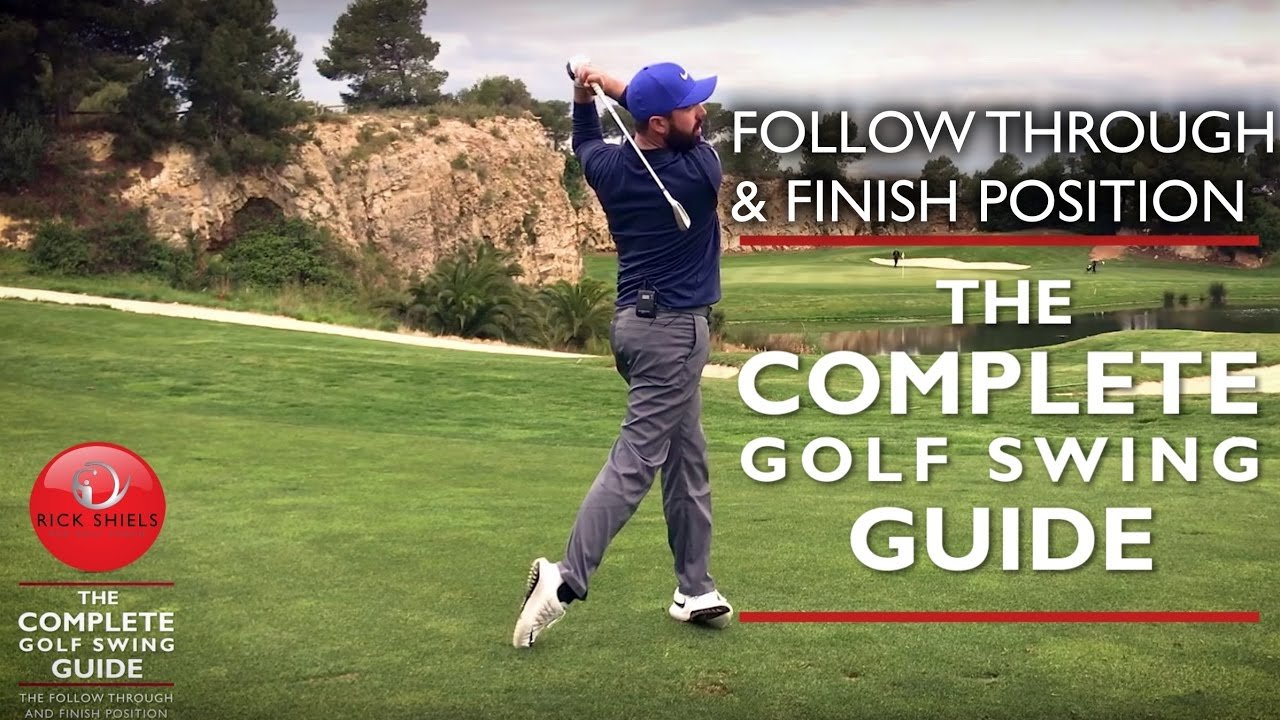
A balanced finish is a useful sign that your full golf swing continued through the shot instead of stopping at impact. In Rick Shiels’ video, he explains that balance after the swing depends on balance earlier, too: your setup needs a stable, wide enough base to let your body turn without losing control. The golf follow-through is therefore more than a pose for the end of a swing. It gives you a checkpoint for how your movement carried through the ball.
Shiels connects a complete turn and controlled finish with the consistency, power, and balance golfers want. That doesn’t mean a polished finish guarantees better ball striking, or that you can fix every miss by posing differently. Rather, the finish can help you notice whether you kept rotating, transferred weight toward your front foot, and remained steady after impact. If you routinely fall away from the target or stop turning, those are clues to investigate earlier movements.
Use your finish as feedback, not as a rigid standard. A golfer’s mobility, body type, club, lie, and intended shot can all affect how the final pose looks. Aim for a comfortable, repeatable position that you can hold without wobbling; don’t copy a professional’s exact shape at the expense of balance. The video is [available here](https://www.youtube.com/watch?v=0hXNXt94hOI) from [Rick Shiels Golf](https://www.youtube.com/@RickShielsPGAGolf). It’s the final chapter of his swing guide, and Shiels also recommends seeking professional coaching if you’re struggling.

Golf Follow-Through: A Beginner-Friendly Progression
To make the golf follow-through easier to learn, break it into a sequence rather than trying to manufacture a finished pose. Shiels’ central instruction is to keep the body rotating after impact. Try these steps at a comfortable speed:
- Continue turning through impact. Don’t treat contact as the end of the motion.
- Let your hips turn toward the target. The hips begin to unwind, and the rest of the body continues around.
- Keep the torso and shoulders turning. Let your chest move toward the target instead of stopping with the hips.
- Extend your hands toward the target. Allow your arms to travel away from your body as rotation continues.
- Let the club finish around you. After the arms extend, they can fold and the club can continue around the body.
- Hold a comfortable finish. Notice whether you can remain steady without stepping or wobbling.
Look for observable results, not a perfectly staged pose: weight moving onto the lead foot, the chest turning toward the target, and the back heel releasing naturally as the body turns. For a right-handed golfer in Shiels’ example, the lead foot is the left foot. A left-handed golfer should mirror the cues.
Shiels describes the right heel lifting as something that happens because the body keeps turning—“something has to give”—not as an isolated action to force. The golf follow-through can also continue after the arms extend: the hands and shaft travel around the body, but the exact club position is not a universal requirement. Finish in balance first; let the club’s final location vary naturally.
Key Golf Follow-Through Checkpoints: Rotation, Posture, and Balance
Use three broad checks to assess your golf follow-through: your body has continued turning, your weight has moved toward the lead foot, and you can hold the finish steadily. In Shiels’ right-handed demonstration, his hips and body turn toward the target, with most of his weight on the left foot. He describes being almost on the outside of that foot while remaining balanced. Treat that as his example, not a demand to place your weight in exactly the same spot.
Weight transfer is easier to judge by what happens at the end than by trying to force a specific percentage during the motion. Do you finish with pressure mainly on the front foot, or does your weight drift backward? Does the back foot release as your body turns, or are you trying to lift its heel independently? A stable base at setup gives you room to pivot through the shot; if you lose your balance, check both your initial base and whether rotation continued.
Posture and spine angle are useful things to observe, but the video doesn’t give a detailed prescription for either. Don’t invent a mandatory spine position from the finish demonstration. Instead, compare your posture before and after impact and notice whether you can turn comfortably without collapsing or bracing.
Your chest may face the target more fully than your shoulders, while your hips and shoulder line finish at slightly different angles. Shiels notes that the shoulders may not turn quite as far as the hips. The golf follow-through can still be controlled when these lines differ: judge the whole movement by comfort and balance, not by demanding that hips, shoulders, and chest all point identically.

Arms Extended After Impact and Club Release
Shiels’ arm cue is straightforward: as your body turns through impact, extend your hands away from your body and toward the target. This gives the arms a role in continuing the motion rather than holding back while the body rotates. In the video, he presents arm extension as a way the arms complement rotation and help avoid keeping power back. It’s a movement cue, not an instruction to lock your elbows or keep your arms straight for a fixed distance.
Think of the golf follow-through as a sequence: the body keeps turning, the hands move outward toward the target, and then the arms can fold as the motion continues. Shiels demonstrates his arms finishing around his head and neck, describing the club’s final wrap as an extra flourish rather than a condition for playing good golf. You don’t need to force arm folding at impact or deliberately drag the club around your neck. Let those actions happen as the swing completes.
When reviewing video, you can observe how your forearms turn, where the club shaft points, and how the club rotates around the body. Those are observations, not specific directions from this transcript: Shiels doesn’t prescribe a forearm action or a required shaft angle. Look for repeatable, comfortable motion rather than copying an exact club shaft position. If your arms stop abruptly or your balance disappears, return to the larger checkpoints—continued body rotation and a stable finish—before trying to alter your hands.

Practice Drills and Measurable Self-Checks
Build your golf follow-through from a slow rehearsal to a normal shot. Shiels demonstrates continued rotation and holding the finish; the following practice sequence turns those ideas into a repeatable check:
- Rehearse slowly without a ball. Turn through to a comfortable finish, noticing your hips, torso, and shoulders.
- Pause with weight on your lead foot. Let the back heel release naturally rather than lifting it as a separate task.
- Make a smooth shot. Keep turning through impact, extend your hands toward the target, and let the club continue around.
- Hold still and assess. Notice whether you step, wobble, or feel weight drifting away from the target.
There’s no balance-hold duration specified in the video, so don’t treat an invented number of seconds as a Shiels benchmark. Your measurable self-check is whether you can remain still long enough to assess your position without having to recover your balance.
As an added assessment method—not a drill shown in the transcript—film swings face-on and down the target line. Review body rotation, posture, arm extension, balance, and the club’s path. A o’clock follow-through position and a 9-to-3 drill can also serve as controlled checkpoints for partial swings; these aren’t named or demonstrated in Shiels’ video. The reverse pump drill is another optional sequencing rehearsal, but it is supplemental advice, not his instruction. Change one variable at a time so you can tell whether the adjustment actually helps.
Adapt the Finish for Clubs, Lies, and Shot Shape
Keep the basic golf follow-through principles—continued rotation and balance—while allowing the finish to vary with the shot. A driver, iron, and wedge needn’t leave you with an identical club shaft position or finish height. Shiels’ video focuses on the shared movement through the shot, not a separate mandatory pose for each club. After a swing, ask whether you turned through comfortably and finished under control rather than judging success by how high the club ended up.
An uneven lie can affect how comfortably you rotate and balance. Don’t force the same pose you can reach from level ground if the slope makes it unstable. Prioritize a safe, controlled finish and adapt your turn to the conditions. Similarly, a draw or fade is a shot-shape intention, not a reason to make a last-second hand or club manipulation just to imitate a particular finish. Keep your finish cues consistent with the swing and target line you intend; avoid changing your hands at the end to chase a shape.
For left-handed golfers, mirror the right-handed example in the video. Shiels describes a right-handed golfer moving weight toward the left, lead foot and turning toward the target. A left-handed golfer should interpret “lead foot” as the front foot for their stance and turn toward their own target. The useful principle is the relationship—weight moving toward the lead side as the body rotates—not the label “left foot” for every golfer.
Common Finish Problems and Safe Modifications
If you fall backward or wobble, use the golf follow-through as a diagnostic rather than trying to hold a prettier pose. First check whether your body kept rotating after impact. Then notice whether your weight moved toward the front foot or drifted away from the target. Shiels emphasizes both the continuing turn and balance; he also connects a stable finish to having a wide enough base at setup. Rehearse slowly and see whether you can turn through and hold your position without stepping.
If your finish stops abruptly, don’t force your arms into a final position. Rehearse hips turning, followed by continued torso and shoulder rotation, then let the arms extend and the club travel on. A finish is the continuation of the swing, not a separate pose to construct after the ball has gone.
Pain, limited mobility, injury, age, and individual flexibility may call for a smaller range of motion. This is safety guidance beyond the transcript: don’t force heel lift, spine angle, or a full wraparound finish. Choose a comfortable turn you can control. Older golfers and anyone returning from injury should prioritize comfort and balance; if movement causes pain, stop and seek individualized advice from a qualified health professional. Shiels recommends professional coaching when golfers are struggling, so a coach can also help assess swing movement and common swing misses. Avoid assuming that a single finish adjustment will automatically improve shot accuracy or swing consistency.

Which Finish Variations Are Normal—and Which Need Attention?
Shiels’ finish is a model of continued rotation, arms extending, and balance—not a demand that every golfer reach an identical pose. In a controlled golf follow-through, your hips and shoulders may turn by different amounts, your arms may fold at a different point, and the club may finish in a different place. Those differences can reflect mobility, body type, club choice, lie, and shot intention. What matters is whether the motion feels comfortable and you can hold the result steadily.
Pay closer attention if you repeatedly lose balance, can’t turn through, feel pain, or finish abruptly as though you’re bracing against the movement. One unusual swing doesn’t establish a fault; look for a pattern. Compare several swings on video from the same angle and examine repeatable checkpoints: did your body keep rotating, did your weight move toward the lead foot, did your chest turn toward the target, and could you remain balanced?
Don’t use a professional’s exact silhouette as the standard. Two golfers may reach different club positions while both completing a comfortable, controlled motion. If the finish changes from swing to swing, first review the quality of the movement rather than forcing a fixed shaft angle or a deeper wrap. If the same balance problem or pain persists, get individualized help rather than practicing through it.
Golf Follow-Through Questions: Finish Position and Practice
What is the ideal finish position in a golf swing? Aim for a comfortable, balanced finish with your body turned toward the target and most of your weight on your lead foot. For right-handed golfers, Shiels’ example uses the left foot; left-handed golfers should mirror that relationship. There isn’t one exact final club position required by the video.
How far should a year old man hit a iron? The transcript provides no distance benchmark, so it can’t give a supported number. Distance varies between golfers, and the video’s finish-position advice doesn’t establish a 7-iron distance target.
What did Tiger Woods say about Moe Norman? This video doesn’t discuss Tiger Woods or Moe Norman, so it provides no quote to attribute to either person.
How do I complete my golf follow-through correctly? Keep your body turning after impact, move weight toward your lead foot, extend your hands toward the target, and let the club continue around your body. Then hold a comfortable finish and check that you’re not wobbling or stepping. Let your back heel release as a consequence of rotation rather than forcing it independently.
Should my finish look exactly like Rick Shiels’? No. Use his demonstration to understand the movement priorities—rotation, extension, and balance—rather than to copy a precise pose. Your mobility, stance, and shot can change how the finish looks.

Put the Finish to Work: A Practical Conclusion
For your next practice session, keep the task simple: make a slow rehearsal, turn through toward the target, let your weight move to the lead foot, and hold the finish long enough to check your balance. Then hit a smooth shot and repeat the same observation. The aim isn’t to force a dramatic wrap or a particular club shaft position; it’s to notice whether the motion carries through impact in a controlled way.
Use three checkpoints after each swing: Did I keep rotating? Did I finish with weight toward my front foot? Could I hold the position without wobbling? If one answer is no, slow down and work on that element before adding more adjustments. Film a few swings if you want to compare posture, arm extension, and club movement across attempts, but judge repeatability rather than resemblance to a model golfer.
Shiels’ final message is practical: the finish belongs to the full swing, and professional coaching is worth seeking if you’re struggling. Keep your movement comfortable, adapt it to the club and conditions, and use balance as feedback—not as proof that every other part of the swing is perfect. That approach makes the finish a useful checkpoint for practice without promising that a pose alone will fix ball striking.
Key Takeaways
- A balanced finish reflects movement continuing through impact; it doesn’t guarantee better ball striking by itself.
- Keep the hips, torso, and shoulders turning, move weight toward the lead foot, and let the back heel release naturally.
- Extend the hands toward the target, then allow the arms and club to continue around without forcing a specific final pose.
- Assess your finish by repeatable checks—rotation, lead-foot weight, and balance—and adapt for comfort, club, lie, and shot.
- Seek qualified coaching when you’re struggling, and don’t force movement that causes pain.
Frequently Asked Questions
What is the ideal finish position in a golf swing?
A comfortable, balanced finish has your body turned toward the target and most of your weight on your lead foot. The exact arm and club position can vary.
How far should a year old man hit a iron?
The video transcript gives no 7-iron distance benchmark. Distance varies between golfers, and no specific number can be supported from this video.
What did Tiger Woods say about Moe Norman?
The video doesn’t discuss Tiger Woods or Moe Norman, so it provides no quote to attribute to them.
How do I complete my golf follow-through correctly?
Continue rotating after impact, shift weight toward your lead foot, extend your hands toward the target, and let the club continue around your body. Finish in a comfortable position you can hold without wobbling.
Should I force my back heel to lift during the finish?
No. In Shiels’ explanation, the back heel releases naturally as the body continues rotating. Focus on turning through rather than lifting the heel as a separate move.