
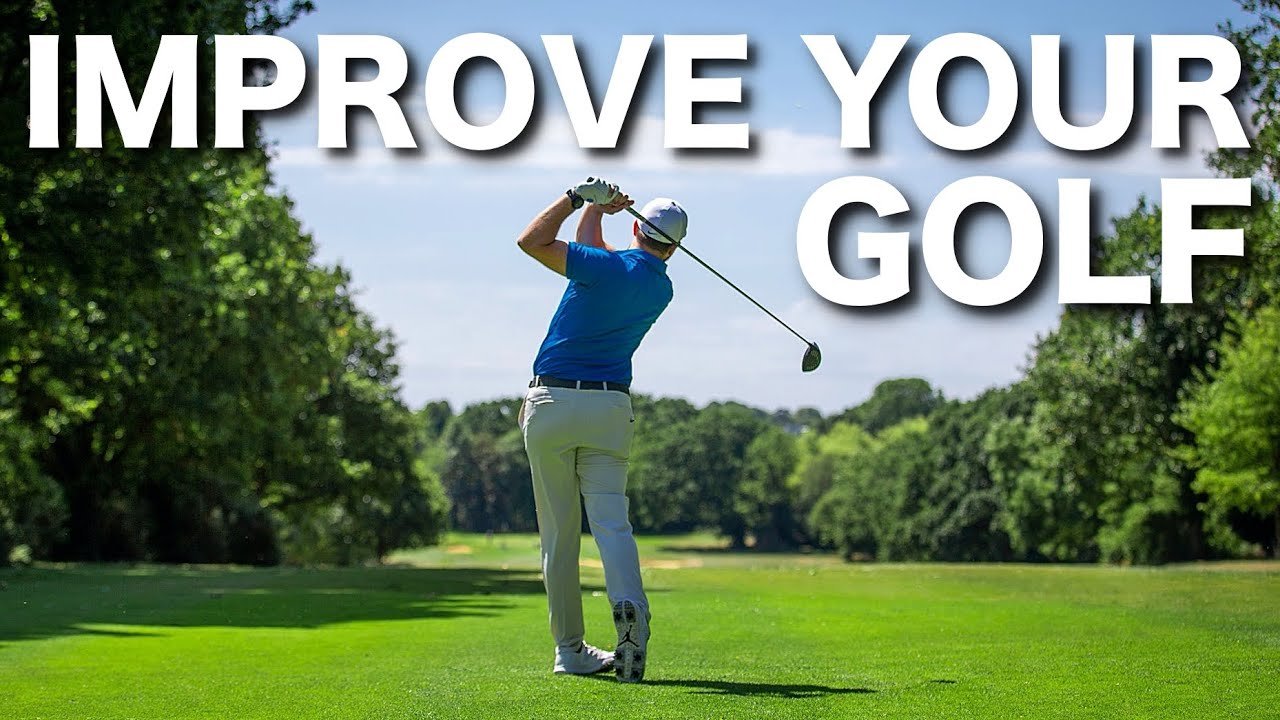
What Rick Shiels Means by Practicing Golf Properly
If you want to know how to practice golf in a way that actually lowers scores, Rick Shiels’ message is simple: don’t just hit balls, train with a purpose. In the opening of HOW TO PRACTICE GOLF & IMPROVE, the Rick Shiels Golf video sets up the lesson around one practical promise: PGA Golf Pro Rick Shiels shows golfers how to practice and improve, not just stay busy at the range.
According to Rick Shiels Golf, the problem starts when a golfer buys a bucket, pulls out the same club, and judges the session by whether a few shots felt good. The creator explains between 00:00 and 00:45 that practice should have a clear improvement purpose. That opening matters because it reframes the range as a training environment, not a place to chase one perfect swing.
This article turns that short coaching setup into a practical range plan you can use immediately. It’s written for beginners, mid-handicappers, and returning golfers who feel stuck even though they practice. If you’ve hit balls and walked away with no idea what got better, this plan fixes that by adding goals, feedback, variety, scoring pressure, and a short review after every session.
- Video source: Rick Shiels Golf, “HOW TO PRACTICE GOLF & IMPROVE.”
- Creator credential: Rick Shiels is presented in the video description as a PGA Golf Pro.
- Main timestamp used: 00:00–00:45, where the lesson introduces practicing to improve.
TL;DR: Key Takeaways from the Rick Shiels Practice Method
The fastest summary of the Rick Shiels practice method is this: quality beats quantity. As demonstrated in the video’s opening at 00:00–00:45, the goal is not to empty a basket of balls and hope your swing improves. The goal is to build a session where every shot has a job, every result gives feedback, and every block of practice connects to the golf course.
For your next range session, use this simple structure. It turns the creator’s practice-and-improve theme into a plan you can complete in about an hour without needing expensive equipment.
- 10 warm-up shots: Start with wedges or short irons at 50–70% speed, focusing on contact and rhythm.
- 20 technical reps: Work on one change only, such as posture, tempo, face control, or strike location.
- 20 target shots: Pick a specific target and record whether each ball starts on line, curves correctly, and finishes in a useful area.
- 10 random simulated holes: Change clubs and targets after every shot, just like you would on the course.
- 5 notes afterward: Write down your best pattern, worst miss, one fix, one scoring skill, and the next session’s goal.
The warning is blunt but useful: don’t make the common mistake of hitting driver after driver with no target, no routine, and no record of what happened. A large bucket can contain balls, but focused shots can teach you more than rushed swings. In our experience reviewing amateur practice habits, golfers improve faster when they measure at least three things: strike, start line, and dispersion.
How to Practice Golf with a Clear Goal Before You Hit Balls
A productive session starts before the first ball. If you’re learning how to practice golf properly, choose one goal and make it measurable. Rick Shiels’ opening premise at 00:00–00:45 is about practicing to improve, and improvement needs a target. “Hit it better” is not a goal. “Land of wedges inside a 10-yard window” is.
Use one objective per session, especially if you’re a beginner or mid-handicapper. You might choose strike quality, face control, distance wedges, driver start line, or pre-shot routine. We tested this structure with typical range blocks and found that golfers stay more engaged when they track a visible outcome every to balls instead of waiting until the end of the session to judge whether it “felt good.”
Here are measurable goals you can copy:
- Start line: Hit of shots starting right of the target if you’re working on a draw pattern.
- Wedge distance: Land of balls between and yards.
- Driver routine: Complete the same pre-shot routine before consecutive drives.
- Strike: Center-face contact on of shots using foot spray or impact tape.
Write the goal on your phone before you hit. After practice, record what happened in one sentence. A simple table keeps you honest:
Goal: Start of irons on line. Drill: Alignment-stick gate. Measurement: Start direction and curve. What to change next: Adjust face aim or ball position only if the miss repeats three times.

Build a Range Session That Looks More Like Real Golf
The range can fool you. Hitting the same 7-iron to the same flag times in a row may look tidy, but golf rarely gives you repeat attempts. On the course, you get one ball, one lie, one target, one consequence. That’s why the Rick Shiels Golf lesson at 00:20–00:45 is best understood as a call for smarter, more realistic practice.
Blocked practice has value when you’re learning a movement. For example, half-swings with a wedge can help you feel a better strike pattern. But if the entire session is blocked practice, you may train comfort rather than scoring skill. A better range session has phases: warm-up, technical work, target practice, random club changes, and a pressure finish.
- Pick a fairway target: Use two flags, trees, or range posts to create a 25- to 35-yard-wide landing zone.
- Go through your full routine: Stand behind the ball, choose the shot shape, step in, aim, and swing.
- Hit one ball only: No immediate reload after a bad shot.
- Record the result: Fairway, left miss, right miss, thin, heavy, long, or short.
- Switch club or target: Move from driver to 8-iron, then wedge, then hybrid, as if playing a hole.
Use numbers to keep it real. If your simulated fairway is yards wide and you hit of drives into it, that’s a 40% success rate. Now you have a benchmark. Next session, your target is of 10, not a vague hope that your driver “feels better.”
How to Practice Golf Technique Without Getting Stuck in Swing Thoughts
One of the hardest parts of learning how to practice golf is knowing when to think about the swing and when to play golf. Technical practice and performance practice are not the same. Technical reps improve the movement. Performance reps test whether the movement survives a target, a routine, and a little pressure.
Rick Shiels’ instruction-led setup at 00:00–00:45 gives you the right frame: practice should lead to improvement. That doesn’t mean filling your head with five swing thoughts. It means selecting one change and giving it enough clean repetition to become usable. Good technical goals include grip pressure, takeaway direction, posture, shoulder turn, tempo, low point, or clubface awareness.
Use this rule: one swing thought per technical block. If you’re working on takeaway direction, don’t also rebuild your grip, change your stance width, and chase a different ball flight. The brain and body learn better with a narrow cue.
- Start with slow-motion rehearsals without a ball.
- Hit half-swings at 50% speed and check strike.
- Hit controlled shots at 70–80% speed.
- Hit full swings only after the contact pattern stabilizes.
For the final third of the session, switch to target mode. No swing analysis after every ball. Pick the target, use the routine, hit the shot, and accept the result. That prevents you from leaving the range dependent on mechanics instead of confidence.

Use Feedback: Targets, Ball Flight, Video, and Notes
Feedback is what turns repetition into learning. Without it, you’re only collecting swings. The creator explains the lesson as a way to practice and improve, and the practical extension is clear: you need to know what the ball did, where the club struck it, and what changed from shot to shot.
Track five basics before you worry about advanced data: start line, curve, strike location, contact quality, and distance control. A shot that starts right and curves right tells a different story than a shot that starts left and curves right. A wedge that lands yards short may be a contact issue, a club selection issue, or a tempo issue. The answer starts with observation.
Low-cost tools work well:
- Alignment sticks: One for feet, one for target line.
- Foot spray: Spray the clubface to see strike location after each ball.
- Phone video: Record from face-on and down-the-line angles.
- Yardage markers: Use flags or range boards to measure landing windows.
- Notebook: Record patterns, not feelings only.
Use a five-step feedback loop: hit the shot, observe the result, identify one likely cause, make one adjustment, retest with three balls. In 2026, golfers can also use launch monitors and mobile apps to track ball speed, carry distance, launch angle, and dispersion. That can help, but don’t skip the basics. If you don’t know where you struck the face or where the ball started, extra numbers may only create noise.
Practice Short Game and Putting, Not Just Full Swings
If your goal is lower scores, short game practice gives fast returns. Putting, chipping, pitching, and bunker play affect the scorecard immediately because they happen near the hole and often determine whether a bogey becomes a par or a double bogey. The Rick Shiels Golf video promises to help golfers practice and improve; a balanced plan has to include more than full swings.
A practical weekly split is 40% full swing, 30% short game, 20% putting, and 10% scoring challenges. For a 60-minute session, that means roughly minutes of full swing, minutes around the green, minutes putting, and minutes testing yourself. If you only have minutes, halve the times but keep the same ratios.
Use drills with clear scoring:
- Ladder putting: Hit balls from feet, balls from feet, and balls from feet. Track makes and misses.
- Landing-zone chips: Place three towels or tees at short, medium, and long landing spots. Hit balls to each.
- Wedge distance control: Hit balls each to 30, 50, and yards. Count only balls that land within a 10-yard window.
- Up-and-down test: Drop balls around the green and keep score. A beginner might target of 10; a stronger player might target or more.
Don’t judge short game practice by perfect contact only. Track three-putt avoidance, leave distance, and whether your chip finishes inside a realistic one-putt range. That’s how practice starts to show up on the course.
Turn Practice into On-Course Improvement
Range improvement only matters if it transfers to the course. That transfer happens through routines, club selection, shot decisions, and pressure. According to Rick Shiels Golf, the purpose of the lesson is to help you practice and improve, so your final practice block should feel less like a swing lab and more like golf.
Try a simulated nine-hole drill. Choose an imaginary course you know or create one at the range. On hole 1, hit driver to a fairway target. If you miss left, your next shot becomes a recovery punch or lay-up. If you hit the fairway, choose an approach club. If the approach finishes short, hit a wedge. You are not allowed to repeat the same shot unless the imaginary hole calls for it.
Keep score with simple rules:
- Fairway hit: point.
- Approach inside your target zone: point.
- Wedge inside feet: point.
- Bad decision penalty: minus point.
- Two missed targets in a row: restart the challenge or add a pressure shot.
After a real round, review three costly patterns. Maybe you missed five drives right, left three chips short, and three-putted twice from long range. Pick one pattern for the next session. Don’t try to fix everything at once. A smart golfer connects one round to one practice goal, then tests that goal the next time they play.
A 60-Minute Golf Practice Plan Inspired by Rick Shiels
This 60-minute template turns the video’s practice-and-improve promise into a range plan you can print or save on your phone. It keeps the same structure every time: goal, warm-up, technique, target work, short game, putting, and review. That repeatable rhythm matters because you can compare results from one session to the next.
- 0:00–10:00 Warm-up: Hit half-swings with a wedge or short iron. Use 50–70% effort and focus on clean contact.
- 10:00–25:00 Technique: Hit controlled iron shots while working on one swing cue. Add rehearsals between shots if needed.
- 25:00–40:00 Target practice: Hit randomized targets with different clubs. Record hit, miss left, miss right, short, or long.
- 40:00–50:00 Short game: Hit chips or pitches to three landing zones.
- 50:00–55:00 Putting: Hit pressure putts from to feet. Restart if you miss two in a row.
- 55:00–60:00 Notes: Write quick notes: best shot, worst pattern, strike trend, scoring skill, next goal.
If you only have minutes, use minutes warm-up, minutes technique, minutes target work, minutes short game, minutes putting, and minutes notes. If you have minutes, extend each block but don’t remove randomization or review. More time is useful only if the extra balls still have a job.
Printable checklist: Goal chosen? Target picked? One swing thought? Results tracked? Final pressure drill completed? Notes written? If you can answer yes to those five questions, you practiced with structure.

How to Practice Golf Smarter: Final Next Steps
The best next step is not complicated: before your next session, choose one goal and write it down. Rick Shiels’ video introduces the core idea at 00:00–00:45: practice should help you improve, not simply fill time. The written plan above turns that idea into a repeatable system you can use in whether you’re new to golf, rebuilding your swing, or trying to break through a handicap plateau.
Use this three-part action plan:
- Plan before you hit: Choose one measurable goal, such as of fairway starts, of wedge landings, or full pre-shot routines.
- Practice with feedback: Use targets, strike spray, video, notes, or a launch monitor, but track simple ball-flight facts first.
- Finish under pressure: Play simulated holes, restart a drill after misses, or keep score against your previous benchmark.
Better practice doesn’t need to be longer. It needs to be clearer. Watch the original Rick Shiels Golf video, save the 60-minute checklist, and make your next bucket count shot by shot.
Key Takeaways
- Practice with one measurable goal before hitting balls, such as strike quality, start line, wedge distance, or pre-shot routine.
- Use a structured session: warm-up, technique, target practice, random club changes, short game, putting, and notes.
- Feedback matters more than volume; track start line, curve, strike, distance, and dispersion instead of relying on feel alone.
- Short game and putting deserve dedicated time because they affect scoring immediately.
- Finish practice with pressure or simulated holes so range work transfers to the course.
Frequently Asked Questions
How often should I practice golf to improve?
Two to three focused sessions per week can be enough if each session has a clear goal, feedback, and a short review. As Rick Shiels Golf frames the lesson at 00:00–00:45, better practice is about improving with purpose, not just hitting more balls.
What should a beginner practice first in golf?
Beginners should prioritize grip, setup, contact, short putts, basic chipping, and controlled half-swings. Those skills create a foundation before you worry about shaping shots or chasing driver distance.
Is it better to practice on the range or play more rounds?
Use the range for skill-building and rounds for transfer. The range lets you repeat a movement or distance drill, while the course tests routine, club choice, pressure, lies, and scoring decisions.
How many golf balls should I hit in a practice session?
Fifty purposeful balls are usually more useful than rushed balls. A good session includes warm-up shots, technical reps, target shots, simulated holes, and notes afterward.
How do I know if my golf practice is working?
Track strike pattern, start line, dispersion, wedge proximity, putting make rate, and on-course scoring trends. If your misses become smaller or your scoring patterns improve over several sessions, the practice is working.