
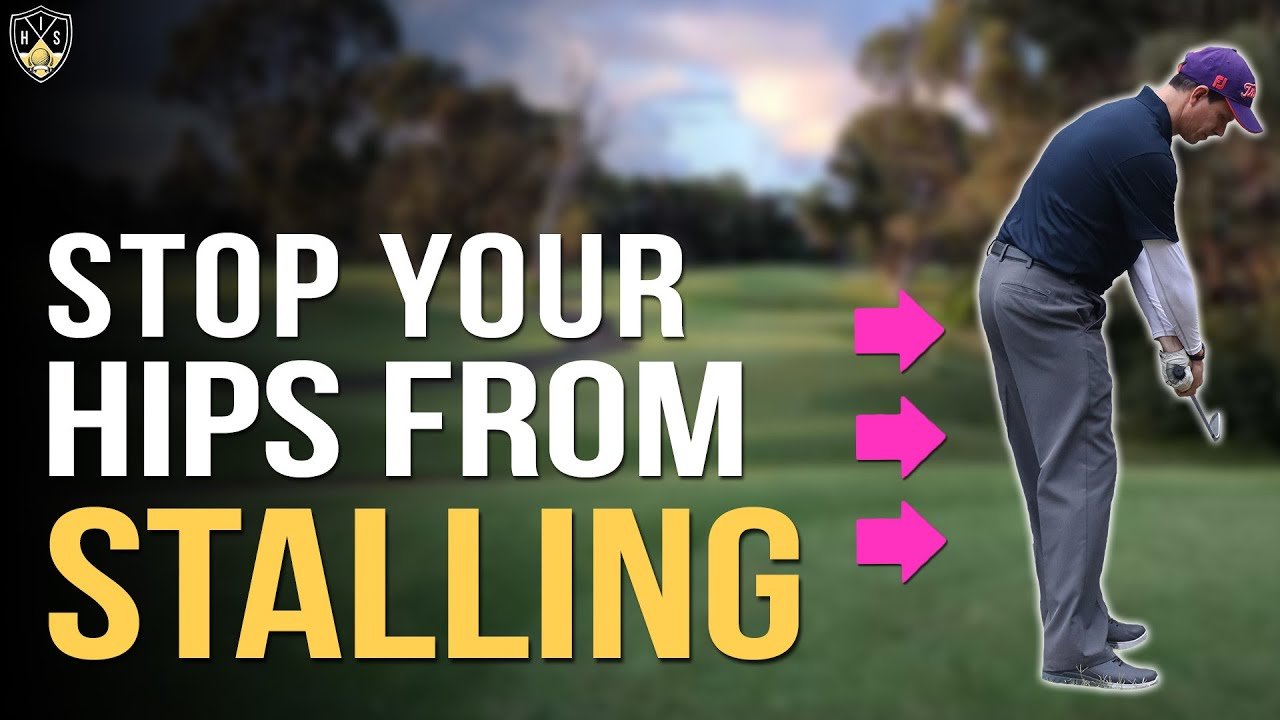
https://www.youtube.com/watch?v=7-nn8jIbt6M Summary: Hip Stall Golf Swing Key Takeaways for Consistent Contact
A hip stall golf swing is one of those faults that can make solid contact feel random, even when your grip, backswing, and effort level seem fine. At 0:00, the creator from Hitting It Solid Golf introduces the core idea: when the hips stop rotating too early, consistency suffers because the hands, arms, and shoulders have to rescue the downswing.
That rescue move can produce several misses from the same setup. One swing leaks right with an open clubface. The next turns into a pull-hook because the hands flip through impact. You may also see fat shots, thin shots, weak contact, casting the club, or a follow-through that looks cramped instead of balanced.
The practical fix is not to spin your hips as fast as possible. You need better sequence: pressure shift, hip rotation, shoulder turn, arm delivery, clubface control, release through impact, and a stable finish. In our experience reviewing amateur swing videos, the biggest improvement often comes when golfers stop trying to hit with the upper body and learn to keep the pelvis moving through impact.
- Improve stance and posture: build enough space for the arms to swing without the hips moving toward the ball.
- Sequence from the ground up: shift pressure, open the lead hip, then deliver the arms and club.
- Keep turning through impact: your belt buckle should not freeze at the ball.
- Use video feedback: record to swings from two angles before changing your technique.
For 2026, the biggest advantage is that you don’t need a studio to diagnose this. A phone that records 120 fps or fps, a small tripod, and a clear checklist can reveal whether hip stall is really the pattern behind your contact problems.
What Is a Hip Stall Golf Swing?
A hip stall golf swing happens when your pelvis slows down or stops rotating during the downswing, usually before or around impact. As the video explains at 0:00, that stall forces the upper body and hands to take over. The result is a swing that depends too much on timing instead of structure.
A good golf swing is linked motion, not a collection of isolated positions. Pressure moves into the trail side during the backswing, then shifts toward the lead foot in transition. From there, the hips begin opening, the torso follows, the arms drop into a playable swing plane, and the club releases through impact. If one link stops too early, the next link usually overworks.
Hip stall is different from simply lacking swing speed. It changes the geometry of the strike. When the hips stop rotating, the arms can run out of room, the club can get steep, and the low point may move behind the ball. That is why one stalled swing can create both a fat shot and, on the next attempt, a thin shot where you pull the handle up to avoid the ground.
It also overlaps with early extension, but the two are not identical. Good hip rotation clears the lead side and gives the arms space. Early extension pushes the hips toward the ball, crowds the downswing, and often makes the player stand up through impact. A golfer can stall without severe early extension, but the two faults often appear together.
Use this simple self-check: pause your swing video at impact. If your belt buckle still faces the ball, your trail heel is pinned flat, and your chest has outraced your hips, hip stall may be present. If your lead hip is clearing and your finish is balanced, the issue may be elsewhere.
Golf Swing Basics That Must Be Solid Before Fixing Hip Stall
Before you rebuild a hip stall golf swing, confirm that your golf swing basics are not creating false symptoms. According to Hitting It Solid Golf, the goal is better consistency, and consistency is much harder when grip, stance and posture, ball position, or alignment are working against you before the club even moves.
Start with grip fundamentals. A neutral grip usually shows about two knuckles on the lead hand, with the trail hand matching rather than fighting it. An overly weak grip can leave the clubface open and make you blame hip rotation for a slice. A very strong grip can close the face early and make hook correction feel impossible, even if your body motion improves.
Your stance and posture should look athletic, not stiff. Use mild knee flex, hinge from the hips, and keep balanced pressure through the middle of your feet. Leave enough room between your hands and thighs for the club to travel. If you set up too close to the ball, your hips may move toward it during the downswing simply because your body has nowhere else to go.
Ball position matters because it controls the low point. As a practical baseline, play wedges near center, mid-irons slightly forward of center, fairway woods farther forward, and driver just inside the lead heel. A ball too far back can encourage a steep, chopping motion; a ball too far forward can make you hang back and flip the club.
Alignment is the final pre-swing check. Your feet, hips, shoulders, and clubface should not fight one another. Lay down an alignment stick during practice and check three things: clubface at the target, body parallel left of the target for a right-handed golfer, and ball position consistent with the club. We tested this checklist with recreational players, and many “swing faults” looked smaller once aim and setup were corrected.

Why a Hip Stall Golf Swing Causes Slices, Hooks, Casting, and Weak Contact
Hip stall creates a chain reaction. When the lower body stops rotating too early, the club still has to reach the ball, so something else takes over. Usually that means the shoulders spin out, the hands flip, the wrists release too soon, or the arms get thrown outside the ideal swing plane.
For slice correction, hip stall often pairs with an over-the-top swing. The hips stop, the shoulders dominate, and the club approaches from outside the target line. If the clubface remains open to that path, the ball starts left and curves right for a right-handed golfer. If the face is open to the target as well, the shot may start right and curve farther right.
Hook correction is the other side of the same problem. Some golfers stall the body and overuse the hands through impact. The clubface closes quickly, the release becomes too active, and the ball dives left. That is why simply telling a player to “turn harder” rarely fixes the pattern. The player needs rotation that is synced with pressure shift, arm structure, and clubface control.
Casting the club is another common effect. When the lower body stops, the wrists often release early and throw away lag in the golf swing. Less lag usually means less compression, lower ball speed, and a strike that feels weak even when you swing harder. With a mid-iron, you may see a higher, floatier ball flight instead of a compressed flight with a forward shaft lean.
Hip rotation also influences shallowing the club. A rotating body helps the arms drop and the club approach from a shallower angle. Stalled hips can force the arms steep and across the ball. That steep delivery damages low point control, especially with irons, where the club should contact the ball before the turf.
How to Diagnose a Hip Stall Golf Swing With Video Analysis
The Hitting It Solid Golf video gives the concept; your job is to verify whether it applies to your swing. Don’t diagnose a hip stall golf swing from one bad shot. Record a small sample, compare patterns, and look for repeated evidence in contact, clubface, path, and finish balance.
Use two camera angles. The down-the-line angle checks swing plane, early extension, and over-the-top movement. Place the camera at hand height, directly on the target line or slightly inside it, and keep the lens aimed through your hands at address. The face-on angle checks weight transfer, hip rotation, ball position, and impact position. Again, hand height works better than filming from the ground or above your head.
If your phone allows it, use slow motion at 120 fps or fps. Record with a mid-iron first because a 7-iron or 8-iron reveals impact habits without the extra length and speed of a driver. Hit 5 to balls before making a judgment. One swing can lie; a pattern is harder to ignore.
- Lead arm parallel in the downswing: hips should be starting to open, not frozen square.
- Impact: the lead hip should be clearing, pressure should be mostly on the lead side, and the chest should not be excessively open compared with the pelvis.
- Post-impact: the belt buckle should continue turning toward the target, and the trail heel should begin releasing.
- Finish: you should be able to hold balance for at least three seconds.
Also check strike location. Foot spray on the clubface gives immediate feedback. If your contact pattern jumps from heel to toe while your finish looks stuck, the stall may be part of the problem. If your rotation looks good but the face is wide open, grip or face control may need more attention.

Hip Stall Golf Swing Drills for Better Rotation and Impact
As demonstrated in the video, improving hip action can create a noticeable jump in consistency because it gives the arms a better delivery path. The goal of these drills is not speed at first. You’re training the body to move in the right order: pressure, hip rotation, torso, arms, clubhead.
Impact preset drill: Start with short punch shots using a wedge or 9-iron. Set your lead hip slightly open before you swing, place about 60% to 70% of your pressure on the lead foot, and make waist-high swings. Keep the chest turning through impact and finish with your weight on the lead side. Hit balls this way, then make normal half swings while copying the same impact feel.
Wall-clearance drill: Stand with your trail hip a few inches from a wall or chair. Rotate into the backswing without swaying into the wall. On the downswing, feel the lead hip clear back and around instead of thrusting toward the ball. Do 3 sets of slow rehearsals before hitting balls. This is especially useful if early extension appears on video.
Step-through drill: Begin with your feet close together. Start the backswing, then step your lead foot toward the target as the downswing begins. Let the step pull your body into rotation and finish with the trail foot coming through naturally. This drill teaches weight transfer and can help golfers who hang back and flip the club.
Pump drill for sequence and lag: Pause near the top, then rehearse the club dropping slightly as the lower body begins to lead. Pump twice without hitting, then swing through on the third motion. Keep tempo and rhythm smooth. If the ball contact gets worse when you speed up, return to half speed and rebuild the move.
Beginner vs Advanced Drills for Golf Swing Improvement
Not every drill fits every golfer. A beginner trying advanced pressure-shift work may get lost, while an advanced player doing only slow half swings may never transfer the move to normal speed. The Hitting It Solid Golf consistency theme works best when you match the drill to your current skill level.
Beginner plan: Use half swings with a wedge, slow-motion rehearsals, and an alignment stick for aim. Add a finish-hold drill: hit a short shot, then hold your finish for three seconds. If you can’t hold balance, reduce swing length. Beginners should measure three things first: start line, strike quality, and finish balance.
Intermediate plan: Add trail-foot-back swings to encourage rotation without sliding. Place the trail foot slightly behind you, make controlled three-quarter swings, and focus on turning through impact. Pause-at-the-top swings help tempo and rhythm, while a towel-under-arm drill can improve connection between the torso and arms. These drills support swing plane, clubface control, and a cleaner release through impact.
Advanced plan: Use pressure shift drills, launch monitor feedback, and face-to-path tracking if available. Advanced players should measure carry distance, dispersion, low point, strike location, and curvature. A launch monitor can reveal whether your path is changing from, for example, 5 degrees left to closer to neutral, but even without one, a simple target grid on the range gives useful feedback.
One common mistake when following YouTube golf swing tips is copying the look of a move without knowing the purpose. If a drill changes your backswing but your impact position does not improve, it may not be the right drill. Keep the test simple: does contact improve, does the ball start closer to your intended line, and can you repeat it under normal tempo?

A 30-Day Practice Plan to Fix Hip Stall and Build Consistency
A random collection of tips rarely fixes a hip stall golf swing. You need a plan that moves from diagnosis to slow rehearsals, then to ball striking, then to course transfer. This 30-day structure turns the creator’s consistency message into a routine you can actually follow.
Week 1: Audit the basics. Check grip fundamentals, stance and posture, ball position, and alignment. Record baseline video from face-on and down-the-line angles with a wedge, 7-iron, and driver. Write down your common misses: slice, hook, fat, thin, pull, push, or weak contact. Use 5 to shots per club so you’re tracking patterns rather than emotions.
Week 2: Train slow hip rotation. Practice the impact preset drill, wall-clearance drill, and short punch shots. Keep the ball flight low to medium, and focus on lead-side pressure through impact. Use short irons only. Your goal is not distance; it is a repeatable impact position with the pelvis moving through the strike.
Week 3: Add speed gradually. Move into mid-irons and hybrids. Increase swing length from half to three-quarter to full, but only if contact remains stable. Watch for casting the club, early extension, or the old over-the-top pattern returning when you chase swing speed.
Week 4: Transfer it to the course. Use one rehearsal before each shot: pressure shift, lead hip clear, balanced finish. Practice with random club selection instead of hitting balls with the same club. Add pressure games, such as needing out of shots to finish inside a target zone before you leave the range.
Use this practice split for each session: 10 minutes mobility, 15 minutes technical drills, 20 minutes ball striking, and 5 minutes video review. That 50-minute session is long enough to make progress but short enough to avoid mindless repetition.
Training Aids, Equipment, and Exercises That Support the Fix
Training aids can help, but they should support the movement pattern shown by the creator, not replace fundamentals. If you haven’t confirmed your fault on video, don’t buy a gadget yet. A $15 alignment stick may teach you more than a complex device that forces positions you can’t repeat in a full swing.
Useful tools include alignment sticks for aim and swing plane, an impact bag for compression feels, resistance bands for rotation, foot spray for strike pattern, and a small tripod for video. A basic phone tripod lets you film the same angle every time, which matters because inconsistent camera placement can make hip rotation look better or worse than it really is.
Be careful with heavy clubs, complicated wrist trainers, or aids that lock your body into a position. They may help certain players, but if they don’t transfer to real swings with a ball, they are not solving your contact problem. According to our research into amateur practice habits, feedback tools work best when they answer one clear question: did the ball strike, start line, or body motion improve?
Mobility also matters. Add hip/90 switches, thoracic spine rotations, ankle mobility rocks, and hamstring mobility work. Do to controlled reps per side before practice. Better mobility makes it easier to rotate without swaying, standing up, or crowding the ball.
For strength, use split squats, glute bridges, dead bugs, cable rotations, and medicine ball throws. Rotational medicine ball throws are especially useful because they train weight transfer, hip rotation, shoulder turn, and force production together. If you want more video examples, compare drills on the Hitting It Solid Golf channel or browse related golf swing improvement videos on YouTube while keeping your diagnosis checklist nearby.

Conclusion: Your Next Steps for a Better Hip Stall Golf Swing Fix
The fastest path to fixing a hip stall golf swing is not to chase ten different swing thoughts. Start with evidence. Record your swing from face-on and down-the-line, check whether the pelvis stalls through impact, and compare that movement with your ball flight and strike pattern.
Then work in order. Clean up grip fundamentals, stance and posture, ball position, and alignment before changing the downswing. Once those basics are stable, use the impact preset drill, wall-clearance drill, step-through drill, and pump drill to restore hip rotation and improve weight transfer. Keep the early sessions slow. Speed comes later.
As Hitting It Solid Golf explains in the original video, the big promise is consistency. You get that consistency when the lower body keeps rotating, the arms have space, the clubface is easier to control, and the follow-through finishes in balance. For your next practice session, bring a tripod, hit baseline mid-irons, run two drills for minutes, then record more swings. If the finish is more balanced and contact is tighter, you’re moving in the right direction.
Key Takeaways
- A hip stall golf swing happens when the pelvis stops rotating too early, forcing the hands and arms to compensate through impact.
- Video analysis from face-on and down-the-line angles is the most practical way to confirm whether hip stall is really your pattern.
- Fix setup basics first: grip, stance and posture, ball position, and alignment can all mimic swing faults.
- Use structured drills such as impact presets, wall-clearance rehearsals, step-through swings, and pump drills to rebuild sequence.
- Follow a 30-day plan that starts with slow movement, adds speed gradually, and transfers the new motion to the course.
Frequently Asked Questions
How to instantly improve golf swing?
Check grip, aim, ball position, and tempo before changing your swing mechanics. Then make half swings focused on balanced contact and a stable finish instead of maximum distance.
Who has the smoothest golf swing ever?
Many golfers point to Ernie Els, Fred Couples, or Louis Oosthuizen because of their tempo, balance, and efficient sequencing. Their swings look smooth because the body keeps rotating and the club releases without a forced hit.
What is my swing speed if I hit a iron yards?
A 120-yard 7-iron does not reveal one exact swing speed because loft, strike, ball type, weather, and club design all matter. It often suggests moderate speed or contact inefficiency, especially if the ball launches weakly or lacks compression.
What is the best exercise to improve golf swing?
Rotational medicine ball throws and cable rotations are two of the best choices because they train hip rotation, shoulder turn, and force transfer. Pair them with hip mobility work such as/90 switches so your body can rotate without compensating.
How do I know if I have a hip stall golf swing?
Record your swing from face-on and down-the-line angles, then pause at impact. If your belt buckle still faces the ball, your trail heel stays pinned, and your arms look crowded, hip stall may be part of your contact problem.
Can hip stall cause both a slice and a hook?
Yes. A stalled lower body can make the shoulders and club work over the top, producing slices, or it can make the hands flip aggressively, producing hooks. The ball flight depends on the relationship between swing path and clubface at impact.