
Why the Feet Together Drill Works
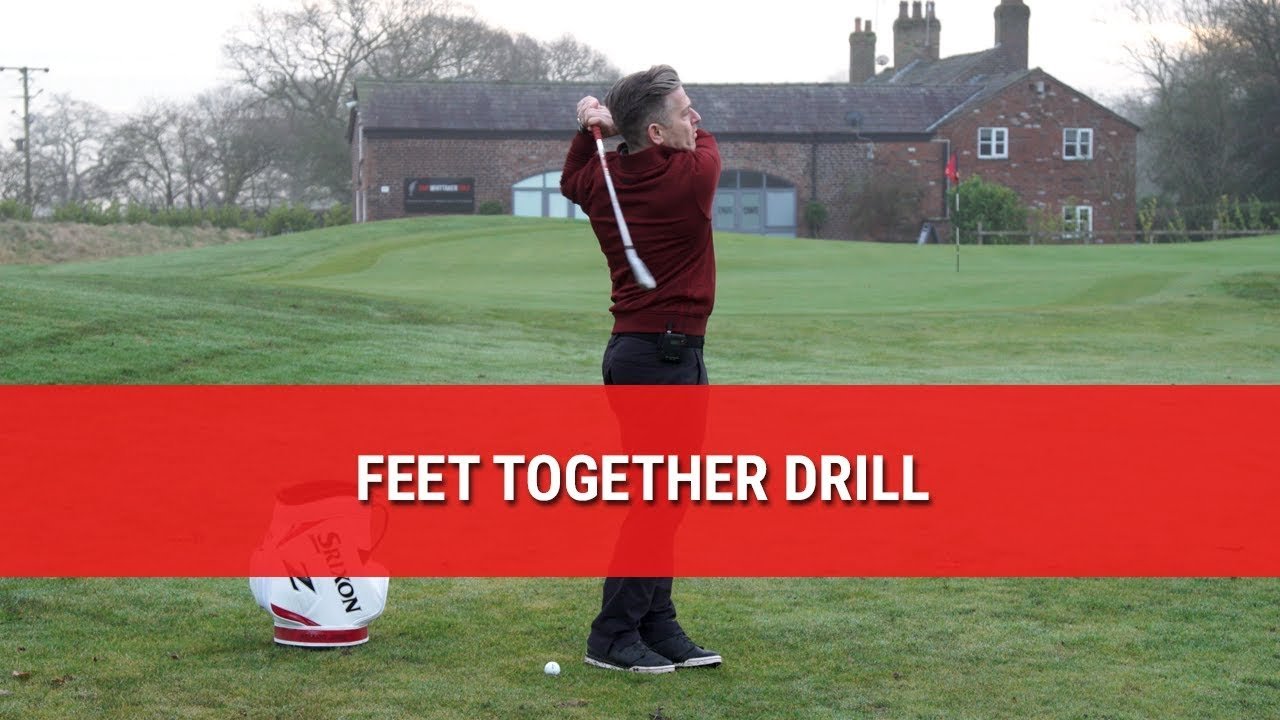
The feet together drill is a purposeful balance and rotation exercise, not a novelty. Dan Whittaker explains in the original Dan Whittaker Golf video that bringing your feet close together exposes swaying, excessive leg action, and a golf swing that loses its centered axis. His channel is available at Dan Whittaker Golf on YouTube.
With a normal golf stance, your wide base can hide movement errors. When the base becomes narrow, you immediately feel whether your golf posture is stable, whether your weight shift is controlled, and whether your hips and shoulders are rotating around the body’s center. If you sway away from the ball during the backswing, you will usually have to recover balance in the downswing. That recovery can produce inconsistent club path, clubface angle, contact, and release.
Balance is not controlled by one system alone. Your vestibular system provides information about head movement, your vision helps orient you to the target, and proprioception tells you where your joints and limbs are positioned. The feet together drill reduces the support available from the ground, making those movement signals easier to notice. According to our research, a narrow base does not automatically improve every swing fault, but it does make unnecessary lateral motion much harder to disguise.
This guide applies the creator’s idea to setup and address position, swing mechanics, ball-flight troubleshooting, warm-up and safety, mobility modifications, coaching choices, and a four-week practice plan for golfers in 2026. The video concentrates on balance and rotation; the added steps here show you how to measure whether those changes transfer to iron striking, driving distance, and on-course performance.
TL;DR: Feet Together Drill Key Takeaways
The central instruction is simple: stand with your feet as close together as comfortably possible, make a centered turn, and allow the feet to spin naturally through the finish. As demonstrated in the video at approximately 00:35-01:25, Dan Whittaker wants the body to rotate around its middle rather than slide from side to side.
The three fastest checks are equally clear. Do not sway away from the ball, do not stop the lower body to manufacture a finish, and let balance reveal whether the motion is coordinated. The drill is particularly useful with half-swing wedges and short irons because a shorter motion lets you feel the pivot without adding maximum speed.
- Hold the finish for three seconds without stepping away.
- Complete 10 balanced repetitions before increasing speed or swing length.
- Record whether the ball starts left, right, thin, or heavy.
- Use a smooth one-two-three rhythm instead of rushing at impact.
In our experience, the feet together drill works best as feedback rather than as a permanent stance. It can reveal poor posture, a stalled rotation, or a moving low point, but it won’t independently fix every grip, alignment, clubface angle, club path, or angle of attack problem. Use it to improve movement awareness, then return to your normal golf stance and test the change with measurable shots.
How to Set Up the Feet Together Drill Safely
Start with a controlled setup and address position. Use a neutral golf grip, stand tall without locking your knees, maintain athletic golf posture, center the ball between your feet for a wedge, and align the clubface before you begin. Your feet should be close enough to expose sway but not so close that your knees touch or your spine collapses.
- Warm up for five minutes by walking at an easy pace.
- Perform bodyweight squats to a comfortable depth and torso rotations.
- Make slow practice swings without a ball.
- Rehearse with a shortened club, such as a wedge gripped down the handle.
- Hit soft half-swing wedges at 30-50 percent effort.
The normal golf stance supplies a broad base for stability. This drill intentionally removes much of that support, so begin on a level surface with modern molded or soft-spike footwear. Dan Whittaker warns at approximately 01:25-02:00 that older metal spikes may catch in the turf and restrict natural rotation. If your feet cannot turn across the ground, your knees and lower back may absorb a twisting force that the exercise is meant to avoid.
The American College of Sports Medicine provides general exercise and warm-up information at ACSM.org. Stop immediately if you feel knee, hip, ankle, back, or surgical pain. After surgery or during rehabilitation, obtain clearance from a qualified medical professional rather than treating discomfort as a mobility challenge.
The Swing Mechanics the Drill Teaches
The backswing should feel like a centered turn, not a slide. Your rib cage and shoulders rotate, while the hips turn enough to support that motion. The pelvis may shift slightly as pressure moves between the feet, but it should not drift dramatically away from the target. The creator explains that the action should wind around the middle of the body and finish facing the target, a principle shown at approximately 00:55-01:25.
This relationship between shoulder turn, hip rotation, and the body’s center helps organize the transition. Instead of lunging toward the ball or throwing the arms independently, your lower body and torso can continue rotating while the arms and club respond. Ground forces still matter: pressure moves through the feet and legs, but you aren’t trying to push sideways so aggressively that your head and torso leave the centered axis.
The feet together drill does not attempt to eliminate wrist hinge. A natural wrist hinge can help create speed and control; the exercise simply makes it harder for the hands to take over when the body stops rotating. At impact, a balanced motion generally gives you a more predictable low point, release, and follow-through. A three-second finish is useful because it tests whether you continued turning through the ball instead of stalling and flipping the clubface.
Try a measured rhythm: count “one” during the takeaway, “two” at the top, and “three” through the finish. The backswing should be controlled, the transition should be unhurried, and the through-swing should complete without a rushed hit.
What Balance and Ball Flight Are Telling You
Balance and ball flight provide useful clues, but neither one diagnoses every fault by itself. The video shows that losing balance exposes side-to-side movement and encourages you to let the body rotate, especially from approximately 01:25-02:20. Pair that sensation with start direction, strike quality, and face-to-path information.
| Pattern | Possible causes | Next test |
|---|---|---|
| Push or push-slice | Sway, open clubface angle, an excessively passive path, or rotation that stalls before impact | Make five rehearsals and hold the finish; then check face direction and start line |
| Pull or pull-hook | Shoulders spinning too early, a closed face, or hand compensation after losing balance | Reduce effort to percent and compare the start line |
| Thin contact | Early extension, lost posture, or a torso that rises through impact | Use half-swing wedges and keep your chest rotating through |
| Heavy contact | Excessive lateral movement, poor low-point control, or a stalled transition | Rehearse centered pressure and brush the ground ahead of the ball |
For inconsistent driving distance, check centered contact before adding speed. A launch monitor can compare ball speed, carry distance, launch angle, and strike location; two shots with identical swing effort can differ substantially when contact moves away from the center. For weak iron striking, use the drill with half-swing wedges and short irons to improve impact position, angle of attack, and low-point control before returning to full-length swings.
Record shots rather than judging one. If seven start right and five are thin, you have a more useful pattern than a single miss, although clubface angle, alignment, grip, and club path still require separate checks.
A Four-Week Practice Plan for Better Balance
A short, measurable plan is more useful than hundreds of fatigued repetitions. Dan Whittaker specifically recommends the drill for wedges and half-swing motions because the shorter swing makes body action and pivot easier to feel, a point emphasized around 02:00-02:25.
Weeks and 2: Build the sensation
During Week 1, complete three sessions. Each session includes no-ball rehearsals and slow swings with the feet together. Hold every finish for three seconds and record the number of repetitions in which you remain balanced. A target of stable finishes out of is a practical starting benchmark.
During Week 2, hit half-swing wedge shots from a narrow stance, followed by shots with the feet together. Work at 30-50 percent effort and aim for a start line inside a 10-yard window. Stop the session if balance deteriorates, since fatigue can replace useful feedback with compensation.
Weeks and 4: Transfer the movement
In Week 3, alternate five feet-together swings with five normal-stance swings for total shots using an 8-iron. Compare strike location, carry distance, and left-right dispersion with phone video or a launch monitor. A balanced finish that disappears as soon as you widen the stance shows that the movement has not transferred yet.
In Week 4, make one feet together drill rehearsal before each approach shot, then hit from a normal golf stance while preserving the same centered rotation. Track these five numbers:
- Balanced-finish percentage
- Solid-contact percentage
- Average carry
- Left-right dispersion
- Perceived effort from 1-10
We tested this type of progression with a simple rule: quality stops when balance or contact clearly declines. That keeps the drill connected to performance rather than turning it into a coordination contest.
Adaptations for Mobility Limits, Injuries, and Different Body Types
Your feet don’t need to touch for the exercise to work. Beginners, older golfers, or anyone with limited balance can place a club across the chest, stand beside a wall or chair, and narrow the feet only slightly. Use the support for light balance assistance; don’t pull against it or let it replace the body’s rotation.
If you have hip, knee, or ankle restrictions, begin with a two-inch gap, reduce the swing length, and allow a smaller hip turn. Pain is a reason to modify or stop, not a test of commitment. Golfers with limited thoracic mobility should keep the pelvis reasonably stable without forcing a large shoulder turn. A comfortable centered rotation and balanced finish are more valuable than trying to match someone else’s range of motion.
Body proportions matter. A taller golfer may need a little more space between the feet to maintain golf posture, while a highly flexible golfer may safely narrow the base further. The correct setup is relative: close enough to expose sway, wide enough to keep the knees soft and the spine athletic.
If medically appropriate, add two simple strength options two or three times per week: two sets of 8-12 supported split squats and two sets of 10-15 standing band rotations. Obtain professional clearance for injury rehabilitation. The Titleist Performance Institute movement resources can provide additional screening context, but an online screen is not a medical diagnosis.
How to Transfer the Drill to Driving and Iron Striking
Transfer the movement gradually rather than copying the exact feet-together stance at full speed. Use this sequence: no-ball rehearsals, feet together with a wedge, a slightly narrow stance with a short iron, a normal stance with a short iron, and finally a driver at reduced speed.
For irons, preserve centered pressure and a controlled release. Your goal is a predictable low point and descending angle of attack, not a dramatic forward lunge. Once you can strike short irons consistently, widen the stance and check whether your club path, face-to-path relationship, and impact position remain stable.
For the driver, restore normal ball position, alignment, golf grip, and a wider golf stance. The drill is a rehearsal for rotation and balance, not a full-power driver setup. More speed helps driving distance only when you can maintain centered contact, a stable clubface angle, and a repeatable club path.
Try a pressure test: hit three balls toward a target, make one rehearsal, then hit three more while imagining a fairway or approach shot. Record carry, start direction, and whether you held the finish. According to Dan Whittaker Golf, allowing the feet to spin naturally helps the body rotate to the finish instead of forcing the knees and hands to absorb a stopped motion, as discussed around 01:25-02:20.
Should You Use a Coach, Online Lesson, or Swing App?
The feet together drill is useful self-feedback, but another set of eyes can separate sway from rotation more reliably. The video demonstrates the exercise as a way to reveal whether your body can rotate without moving excessively sideways. Choose the feedback method that matches the problem you are trying to solve.
| Option | Best for | Limits |
|---|---|---|
| In-person coach | Persistent pain, major inconsistency, or difficulty feeling movement in real time | Higher cost and scheduled appointments |
| Online lesson | Golfers who can provide clear face-on and down-the-line footage plus shot data | Limited ability to test movement or ask immediate questions |
| Swing-analysis app | Head movement, finish balance, tempo, and club-delivery practice checks | Two-dimensional video cannot diagnose every three-dimensional movement |
For useful footage, record swings face-on and down-the-line. Include the entire club and both feet, use consistent lighting, and write down the club, ball position, target, start direction, strike, and result. Add launch-monitor numbers when available: ball speed, carry, launch angle, and dispersion are more informative than appearance alone.
Choose in-person instruction when symptoms or confusion persist. Choose an online lesson when your miss pattern is clear and your camera setup is reliable. Use an app for objective repetition checks, not as a substitute for medical or professional swing assessment.

Conclusion: Make Balance the Test of Your Golf Swing
The feet together drill gives you a clear question to answer: can you rotate around the center of your body without swaying, stalling, or losing balance? Dan Whittaker’s explanation makes the exercise especially useful for golfers who become leggy in the backswing, move excessively sideways, or stop rotating and compensate with the hands.
Start with five minutes of walking and a few slow rehearsals. Use a wedge, swing at half length, allow the feet to turn naturally, and hold the finish for three seconds. After 20-40 quality repetitions, return to a normal golf stance and compare contact, start line, carry, and dispersion. That sequence turns a movement sensation into a measurable golf-swing improvement process.
Your next practice session can follow three steps: complete no-ball feet together drill repetitions, hit soft wedge shots, and finish with normal-stance shots using the same centered rotation. Record the result instead of guessing. If balance improves but the ball still curves, investigate the golf grip, alignment, clubface angle, club path, and angle of attack separately.
Key takeaway: balance is not the whole golf swing, but it is an honest test of whether your swing mechanics remain coordinated through transition, impact, release, and follow-through.
Key Takeaways
- The feet together drill is a balance and rotation exercise that exposes sway, excessive leg action, and a stalled body rotation.
- Stand as close together as comfortable, use half-swing wedges first, and let the feet spin naturally through the finish.
- Hold the finish for three seconds and track balanced repetitions, strike quality, start direction, carry, and dispersion.
- Transfer the centered movement gradually from wedges to short irons, normal stance shots, and reduced-speed drivers.
- Pain is a reason to stop or modify the exercise; use professional medical or coaching guidance when symptoms persist.
Frequently Asked Questions
Can beginners use the feet together drill?
Yes. Start without a ball, use a wedge, make a half-length swing, and hold a stable finish for three seconds. A wall or chair can provide light support while you learn the movement.
Should my feet spin during the drill?
They should turn naturally across the ground as your body rotates. Dan Whittaker warns that metal spikes can catch in the turf and restrict this motion, so modern molded or soft spikes are safer for the exercise.
How close should my feet be?
Bring them as close together as you can while keeping soft knees and athletic golf posture. A small gap is appropriate if fully touching feet causes discomfort or makes you lose posture.
Does the feet together drill fix a slice?
It may expose a sway, stalled rotation, or hand-dominated release that contributes to a slice. It cannot diagnose every slice because grip, alignment, clubface angle, club path, and face-to-path relationships also affect curvature.
Can I use the drill with a driver?
Use it as a slow rehearsal, then hit the driver from a normal setup. Restore the correct ball position, alignment, golf grip, and wider stance before adding speed.
How often should I practice it?
Three short sessions each week are sufficient for most golfers. Aim for 20-40 quality repetitions per session and stop when fatigue causes you to lose balance or contact.
What should I do if the drill causes pain?
Stop, reduce the range of motion, or use a supported version with a small gap between your feet. Persistent symptoms or post-surgical concerns require advice from a qualified medical professional or physical therapist.