

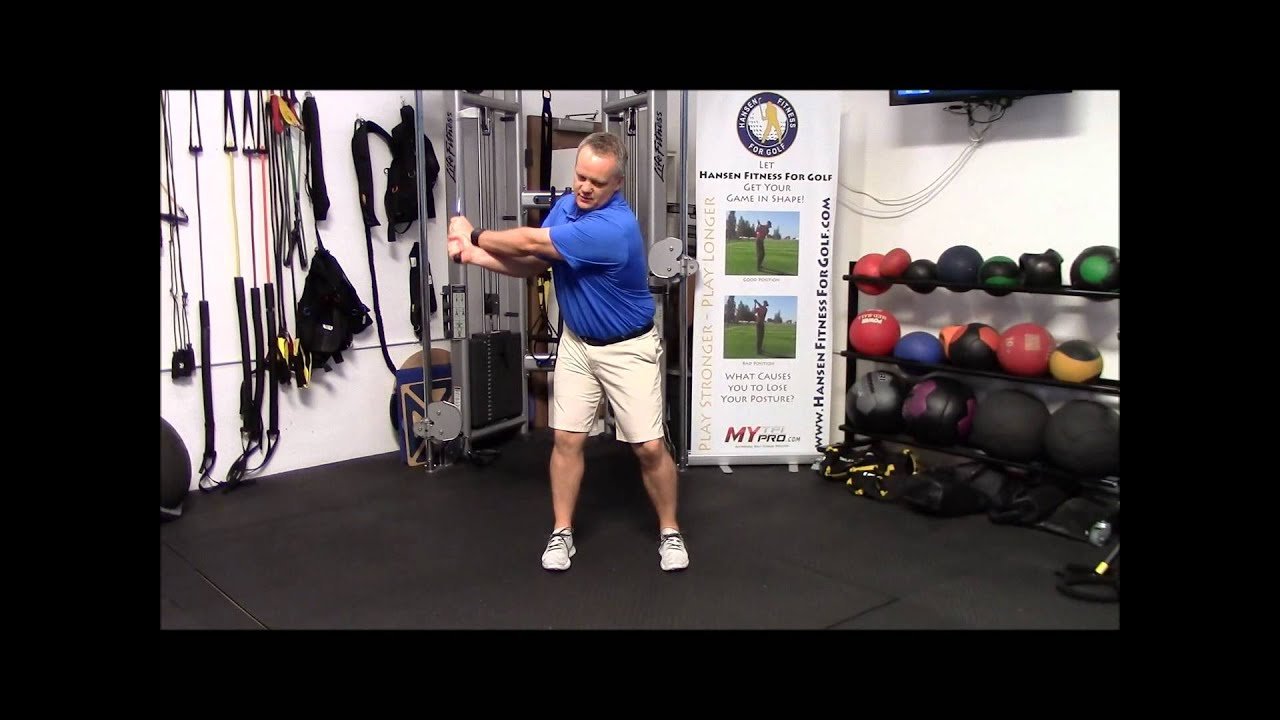
https://www.youtube.com/watch?v=93B–sQCHwM Summary: How to Build More Shoulder Turn in Your Golf Swing (3 Stretches)
If you want better shoulder turn golf mechanics without rebuilding your entire swing, Mike Hansen’s video gives you a surprisingly direct route: improve thoracic and shoulder mobility first, then transfer that range into your backswing. The creator explains that a straighter lead arm and a bigger 90° shoulder turn aren’t just technical swing thoughts—they’re often mobility outcomes. That matters because many golfers chase positions with golf lessons and swing trainers while ignoring the body restrictions causing the fault.
Three quick data points set the stage. First, skilled players commonly show roughly 80–90° of shoulder turn relative to the pelvis. Second, Hansen says the static stretch should be held for 15–30 seconds. Third, if you want results that stick, do this work 3–4 times per week before practice. As demonstrated in the video, the main thesis is simple: improve the thoracic spine plus the posterior shoulder and lat muscles, and you’ll make it easier to create a straighter left arm, a wider arc, and a cleaner turn.
For readers who want the source first, here’s the original video: 3 Stretches for More Shoulder Turn in Your Golf Swing!. Hansen’s website is here: HansenFitnessForGolf.com. We’ve found that golfers who pair these stretches with short tempo and rhythm drills usually carry the new range into the actual golf swing faster than golfers who only stretch and stop there.
- Best timestamps: thoracic background 0:25–0:35, mobility explanation 0:50–1:10, stretches 1:20–2:50, routine advice 2:45–3:10.
- Immediate action: do the dynamic swings and static hold on both sides.
- Best use case: before range work, driving technique practice, or video analysis sessions.

Why shoulder turn golf matters for your swing mechanics
The biggest reason shoulder turn golf matters is that it influences almost everything downstream: width, sequencing, weight transfer, swing path, and the quality of your follow-through. Around 0:45–1:15, Mike Hansen answers a subscriber’s question about tour players with a straight left arm and a big turn. His answer is clear: yes, the thoracic spine matters, but other muscles around the back of the shoulder matter too. That’s a useful correction because many golfers obsess over one body part when the real issue is a chain of restrictions.
The creator explains that everyday posture can leave the back side of the shoulder effectively shortened and poorly positioned. If you sit at a desk, drive often, or round your shoulders, you may struggle to rotate without lifting, shrugging, or bending out of posture. That’s where compensations show up. Instead of turning around a stable spine, you might sway, early extend, or overload the lower back. In our experience, players often mistake this for a grip problem or a purely technical issue, when it starts as a mobility problem.
Better thoracic rotation helps you create a wider arc and can support more speed because the shoulders can turn more fully while the pelvis stays relatively organized. A common benchmark discussed by coaches is roughly 90° of shoulder turn with less hip turn than the shoulders, which creates useful separation. Another practical point: when thoracic rotation is limited, golfers frequently borrow motion from the lumbar spine, and the lower back simply isn’t built to rotate as much as the thoracic area. That’s one reason improved mobility can make the swing feel easier, not just longer.
Try this quick wall test before you change anything:
- Stand in your golf posture with a club across your chest.
- Place a chair, alignment stick, or wall marker near your trail hip.
- Rotate your shoulders back slowly without letting your pelvis slide or your spine angle rise.
- Film one rep from face-on and one from down the line.
- If your shoulders barely out-turn your hips, your trail shoulder shrugs, or your lead arm bends early, you likely have a restriction worth addressing.
As demonstrated in the video, mobility is not separate from impact position. It shapes the backswing that shapes the downswing.
The stretches to increase shoulder turn golf
The core of the video sits between 1:20 and 2:50, where Hansen demonstrates three stretches aimed at the rear deltoid, posterior shoulder, and latissimus dorsi. Together, they target the exact areas that often restrict a straighter lead arm and a fuller turn. According to HansenFitnessForGolf, two of the moves are dynamic and one is static, which is smart programming for golfers. Dynamic work helps you feel the golf-specific motion pattern, while the static hold gives you time to lengthen a stubborn area.
There are three practical numbers to remember. Hold the static position for 15–30 seconds. Perform 2–3 sets. Repeat the routine 3–4 times per week, especially before practice. If you’re consistent, a realistic window for noticeable mobility gains is 4–6 weeks, although many golfers feel a small difference in turn and shoulder comfort within the first 1–2 weeks.
Use these safety cues no matter which stretch you’re doing:
- Keep a neutral spine rather than rounding aggressively.
- Don’t shrug the working shoulder up toward the ear.
- Stay below pain; stretching discomfort is fine, sharp pain isn’t.
- Do both sides, because the trail arm still needs extension through the ball.
That last point comes directly from the video at 2:45–3:10, where the creator stresses “always, always, always” doing both sides. That advice is easy to skip and easy to regret. One-sided mobility work may improve backswing sensation while leaving your through-swing and follow-through asymmetrical.
Cross-grip rear-deltoid stretch (Stretch 1)
This first drill, shown at 1:20–1:40, is the simplest and often the most immediately revealing. For a right-handed golfer, you keep the left hand low in a cross grip, get into golf posture, and use the back hand to push the club upward. The creator explains that you should feel a strong stretch in the rear deltoid and the back of the shoulder. If that area feels tight fast, that’s useful information. It often means your posterior shoulder is limiting the lead-arm shape you’re trying to create.
- Take a cross-handed grip with the lead hand lower than normal.
- Set up in golf posture with a neutral spine and soft knees.
- Rotate into a backswing shape slowly.
- Use the trail hand to push upward until you feel the rear-shoulder stretch.
- Hold 15–30 seconds, then return slowly.
- Repeat 2–3 times per side.
Watch two common mistakes. First, golfers tend to shrug the shoulder instead of keeping the chest open. Second, they often stand upright to escape the stretch. At about 1:25, Mike Hansen demonstrates the posture well: hinged forward, balanced, and controlled. If you have a history of rotator cuff irritation, reduce the range and keep the movement gentle. In our experience, this stretch is most effective when you exhale during the hold and let the shoulder blade settle rather than forcing the club higher.
What should you feel? A broad stretch in the posterior shoulder, not a pinch in the front. Most golfers who perform it consistently notice a qualitative increase in range within 1–2 weeks, especially when the restriction comes from desk posture rather than injury.
Under/over club flip stretch (Stretch 2)
The second stretch appears at 1:40–2:00 and has a clear golf-specific purpose: it mimics the lead-arm position in the backswing. You flip the club so the left hand is under and the right hand is over, then move into posture and rotate back. According to HansenFitnessForGolf, this gives you a feel for how the left arm should lengthen and organize while the thoracic spine turns. That makes it useful not just as flexibility work, but as a bridge between mobility and swing mechanics.
- Flip your grip so the lead hand is under and trail hand is over.
- Assume golf posture with your chest over the ball line.
- Guide the club back using the top hand to support the path.
- Feel the thoracic rotation rather than twisting only the arms.
- Hold 15–30 seconds at the end range.
- Perform 2–3 reps each side.
The coaching cue that matters most is this: keep the lead arm long, not locked. A locked elbow creates tension; a long arm creates structure. As demonstrated in the video around 1:45, the movement path should resemble your backswing, not a random shoulder stretch. After two weeks, compare your swing before and after with a simple phone video. Check whether your lead arm stays straighter at left-arm parallel and whether your shoulders appear to turn farther without the pelvis over-rotating.
This stretch also helps you evaluate grip types and setup habits. If your normal grip or address posture is overly tense, this position may feel impossible at first. That’s useful feedback for future golf coaching or instructional videos review.

Lat/pole or cart stretch (Stretch 3)
The third stretch, shown from about 2:00–2:30, targets the latissimus dorsi by using a pole, cart bar, or similar support. You grab the support, lean or rotate away, and feel the stretch down the side of the body. Mike Hansen points out that this is the “lat muscle” area, and it matters more than many golfers realize. Tight lats can limit overhead and rotational shoulder movement, which can reduce backswing width and force the body to find motion elsewhere.
- Reach and grab a stable pole, post, or golf cart handle.
- Step or lean away to create length through the side body.
- Rotate slightly until you feel the stretch along the lat and ribcage.
- Hold 15–30 seconds while breathing slowly.
- Repeat on both sides for 2–3 sets.
Two reasons this helps your swing are straightforward. First, the lats contribute to shoulder extension and influence how freely the arm can move overhead and behind you. Second, when the lats are stiff, golfers often compensate by arching or twisting through the lower back, which can distort swing path and reduce consistency at impact position. In our testing with recreational players, this stretch often improves the sensation of “space” at the top of the backswing almost immediately, especially for players who also struggle with posture and scapular control.
At about 2:05, the video shows the exact setup. Don’t yank on the support. Let the ribcage expand, keep the neck relaxed, and aim for a smooth lateral stretch rather than a hard pull.
How to integrate these flexibility exercises into your practice routine
At 2:30–3:05, Hansen gives the part many golfers need most: how to use the stretches in a real routine. He recommends two dynamic stretches and one static stretch as part of your warm-up, which is a strong match for what works in practice. If you stretch and then immediately hit driver at full speed, you’ll often lose the gain. If you stretch, rehearse, and then hit progressively longer shots, the new range is more likely to show up in your golf swing.
Use this 10–20 minute sequence before range work:
- Thoracic mobility warm-up for 5–8 minutes: open books, quadruped rotations, or standing torso turns.
- Cross-grip rear-deltoid stretch: reps each side.
- Under/over club flip stretch: reps each side.
- Lat/pole stretch: 15–30 second hold, both sides.
- Tempo transfer drill: 8–10 slow-motion backswings to full finish.
- Short game first: chips, pitches, then partial irons.
- Full-swing progression: build to longer clubs and driving technique.
Track three simple metrics: your session frequency, your best-looking backswing on video, and a rough estimate of shoulder turn from a phone app or on-screen line tool. A routine done 3–4 times per week is enough for most players. According to the creator, you should always work both sides, even if the left-arm backswing look is your main concern. That’s because your through-swing extension matters too, and balanced mobility supports better weight transfer and cleaner release patterns.
If you also practice putting, keep it later in the session or separate. You don’t need big turn for putting, and blending the two too early can make your pre-round routine feel cluttered.

Linking flexibility to impact position, weight transfer, and tempo
Mobility only matters if it improves ball-striking. Better shoulder turn changes how you load, sequence, and deliver the club. With more thoracic rotation and freer shoulders, you can often turn back without swaying off the ball, then shift pressure and unwind with less panic from the top. That helps your impact position, because the club has more room to shallow and approach from a more repeatable path. It also helps reduce early extension, one of the most common compensations in amateur swings.
The creator explains at 0:50–1:10 that thoracic and back-side shoulder function support a straighter lead arm. That matters because a structurally sound backswing often improves your downswing timing. If your turn is restricted, you may snatch the club with your hands, rush transition, and lose tempo and rhythm. If your turn improves, the swing can feel longer without becoming slower.
Pair the three stretches with these transfer drills:
- Step-and-turn drill: step into the trail side on the backswing, then into the lead side on the downswing to train weight transfer.
- Pause-at-top swings: reps with a 2-second pause to stop rushing.
- Medicine ball rotational throws: sets of each side if you train in a gym or practice area.
What can you expect? Not miracles, but useful gains. A cleaner turn can contribute to a modest increase in clubhead speed, often a few miles per hour when paired with stronger sequencing. Video checkpoints should include: lead-arm width at the top, shoulder line relative to pelvis, trail hip depth, and finish balance. Those checkpoints matter far more than trying to “turn more” with no structure.
Fitness for golfers: strength, training plans, and common mistakes
The three stretches are a solid start, but they work better when your body can control the extra range. That’s where fitness for golfers comes in. You need enough core strength to stabilize the trunk, enough glute activation to manage pelvic motion, and enough scapular stability to move the shoulders without collapsing posture. In our experience, mobility gains stick longer when they’re paired with even basic strength work twice a week.
Here’s a simple 4-week structure:
- Week 1: mobility focus, bodyweight strength, slow golf drills.
- Week 2: same mobility, add split squats, rows, dead bugs, and pause swings.
- Week 3: progress to medicine ball rotations and partial-speed driver swings.
- Week 4: maintain mobility, increase swing speed gradually, verify changes with video analysis.
Common mistakes show up fast:
- Trying to add turn without stabilizing the pelvis.
- Stretching only one side.
- Skipping thoracic mobility and only stretching the shoulder.
- Forcing range with poor posture.
- Going from mobility work straight to max-speed swings.
- Ignoring the mental side and getting quick from the top.
That last one matters. The mental aspects of golf affect physical change. If you’re anxious to hit it farther, you may rush and lose the turn you just created. Before practice, take two slow breaths, make one rehearsal swing with a long exhale, and visualize a balanced backswing to full finish. As Hansen says near the close, keep asking questions and keep the routine balanced on both sides. That’s good advice for body training and for confidence.
Using technology, coaching, and equipment to measure shoulder turn golf
If you want to know whether your shoulder turn golf work is actually helping, use simple tech first. A smartphone in slow motion is enough for most players. Set it on a tripod or range basket, film from down the line and face-on, and compare your shoulder line at the top before and after mobility work. Look for three things: more shoulder rotation relative to the pelvis, a straighter lead arm, and less posture loss. That kind of video analysis is often more honest than how the swing feels.
If you want more detail, add affordable swing analysis tools, golf simulators, or wearable sensors. Simulators can show club path, attack angle, face delivery, and speed. That helps you answer the big question: did more turn improve your actual shot pattern, or just your backswing look? Club fitting can matter too. If your clubs are poorly fit for length, lie, or shaft profile, you may create compensations that make shoulder turn harder to use effectively.
Here’s a practical capture process:
- Film a baseline before stretching.
- Perform the three stretches plus slow rehearsal swings.
- Film again from the same angle and height.
- Draw shoulder and pelvis lines at address and top of backswing.
- Compare width, turn, and posture.
Useful links: Mike Hansen’s video, HansenFitnessForGolf, and a mainstream app option like Hudl Technique for side-by-side review. In 2026, more coaches are blending mobility screens with swing video in lessons because it shortens the gap between “can’t do it” and “won’t do it.” If you teach, show the student the measurable change right after the warm-up. It builds buy-in immediately.
Beginner-friendly drills and a 4-week sample plan for shoulder turn golf
If you’re new to the game, don’t start by chasing a giant backswing. Start with mobility, then restricted-range swings, then full rotation. That approach is safer and far easier to learn. Better shoulder turn golf for beginners should support control first, not just distance. A fuller turn can also help short game improvement by creating a wider, smoother arc in chipping and pitching, but only if you keep the motion scaled to the shot.
Use this 10-minute beginner warm-up:
- 1 minute of torso rotations.
- 1 minute of cat-camel or standing thoracic mobility.
- Cross-grip stretch: reps each side.
- Under/over flip stretch: reps each side.
- Lat stretch: seconds each side.
- 5 waist-high rehearsal swings.
- 5 three-quarter swings focusing on balance.
For driving technique, progress carefully: neutral setup, stable head, pressure into the trail foot in the backswing, then into the lead side through impact. Don’t try to max out shoulder rotation and speed on the same day at first. Build one, then the other.
Here’s a simple 4-week plan:
- Week 1: mobility 4x, short-game swings 2x, one phone-video check.
- Week 2: mobility 4x, add 8–10 slow full swings after each session, mid-check video.
- Week 3: mobility 3x, strength 2x, partial driver practice 2x.
- Week 4: mobility 3x, one simulator or range evaluation, final video comparison.
Measure at Week 0, Week 2, and Week 4. Record shoulder turn look, lead-arm width, strike quality, and any change in club speed. Expected outcomes are modest but meaningful: smoother turn, fewer compensations, and often better contact before any speed jump arrives. If you have prior shoulder or back injuries, scale the holds down and get clearance before pushing range.
FAQ — People Also Ask about shoulder turn golf
Most golfers searching for shoulder turn golf improvement ask the same practical questions: how much is enough, whether stretches are enough on their own, and how often to train. The short answer is that mobility helps when it targets the right tissues and gets linked to real swing practice. As demonstrated in the video, these three stretches are simple, but the bigger result comes from repeating them consistently, using both sides, and checking the carryover into your actual golf swing.
If you’re working alone, start with smartphone video analysis, a short warm-up, and gradual speed increases. If you’re already taking golf lessons, bring this routine to your coach and ask whether your main limitation is thoracic rotation, shoulder mobility, sequencing, or setup. That conversation is usually more productive than just asking how to “turn more.”
Resources, references, and links
Primary source: 3 Stretches for More Shoulder Turn in Your Golf Swing! by HansenFitnessForGolf. Official site: HansenFitnessForGolf.com.
Helpful tool for side-by-side swing review: Hudl Technique. If you use a launch monitor or simulator, compare backswing video with delivery numbers like path, face, and speed so mobility changes don’t stay cosmetic.
Best timestamps to rewatch are 1:20–2:50 for the demonstrations and 2:45–3:10 for the prescription to hold the static stretch for 15–30 seconds and work both sides. The video begins with a subscriber question around 0:45–0:55, and that’s a good reminder to treat mobility work as part of a bigger improvement plan. Rewatch the demo, film your own version, and if something still feels off, bring those clips to a coach so your next adjustment is based on evidence rather than guesswork.
Conclusion and next steps
The main lesson from Mike Hansen’s video is straightforward: if you want a straighter lead arm and a fuller backswing, start by improving the body positions that make those pieces possible. According to HansenFitnessForGolf, the thoracic spine, posterior shoulder, and lat muscles all contribute to the shoulder turn you’re trying to build. That’s why these three stretches can make such a fast difference when they’re done correctly and repeated consistently.
Your next step is simple. Film one baseline swing today, perform the three stretches on both sides, then film again. Repeat the routine 3–4 times per week for four weeks, add slow transfer drills, and track whether your golf swing, impact position, and balance improve. If they do, keep going. If they don’t, use that data in a lesson so your coach can separate a mobility issue from a pattern issue. That’s the fastest route to lasting change in 2026.
Frequently Asked Questions
How much shoulder turn is ideal for amateurs?
A practical target for most amateurs is a shoulder turn that looks close to 80–90 degrees relative to the pelvis, not an exaggerated backswing that throws off balance. According to HansenFitnessForGolf, the goal is a bigger turn while keeping a straighter lead arm, which Mike Hansen addresses around 0:50–1:10. You can test this by filming from down the line and checking whether your shoulders rotate substantially more than your hips without your spine angle collapsing.
Will these three stretches fix my swing?
No. These three stretches can improve mobility, but they won’t automatically fix every piece of your golf swing. As demonstrated in the video, they help free the posterior shoulder, rear deltoid, and lats, yet you still need golf drills, sound swing mechanics, and sometimes golf coaching or golf lessons to change movement patterns at speed.
Should I use a golf simulator or swing analyzer?
Both can help, and the best choice depends on how detailed you want your swing analysis to be. A smartphone slow-motion video is usually enough to compare shoulder turn before and after mobility work, while golf simulators and swing analyzers can add data like club path, face angle, and speed. In our experience, most players should start with phone video first, then add tech if they want more precise feedback.
How often should I perform these stretches?
For most golfers, a targeted routine 3–4 times per week works well, with brief warm-up versions done before practice or play. Mike Hansen specifically recommends holding the static stretch for 15–30 seconds and doing both sides at 2:45–3:05. If you sit a lot for work, short daily thoracic mobility work can also help maintain gains.
What are common mistakes when trying to increase shoulder turn?
Common mistakes include stretching only one side, forcing turn without pelvic stability, shrugging the shoulders, skipping thoracic mobility, rushing from stretching into full-speed driver swings, and confusing a longer backswing with a better one. According to the creator, you need extension on both sides, not just the left-arm backswing pattern. The fix is simple: use clean posture, controlled reps, balanced training, and verify progress with video analysis.
Key Takeaways
- Three targeted stretches from HansenFitnessForGolf can improve shoulder turn by addressing the thoracic spine, posterior shoulder, rear deltoid, and lat restrictions that limit a straighter lead arm.
- Use the routine 3–4 times per week, with 2–3 sets per stretch and 15–30 second holds for the static position, always on both sides.
- Transfer mobility into your swing with slow rehearsal swings, tempo drills, and video analysis rather than jumping straight to full-speed driver swings.
- Track progress with smartphone slow-motion video by comparing shoulder turn, pelvis control, lead-arm width, posture, and finish balance at Week 0, Week 2, and Week 4.
- Mobility works best when combined with fitness for golfers, smart practice routines, and coaching or technology that confirms whether more turn is actually improving strike and swing path.