
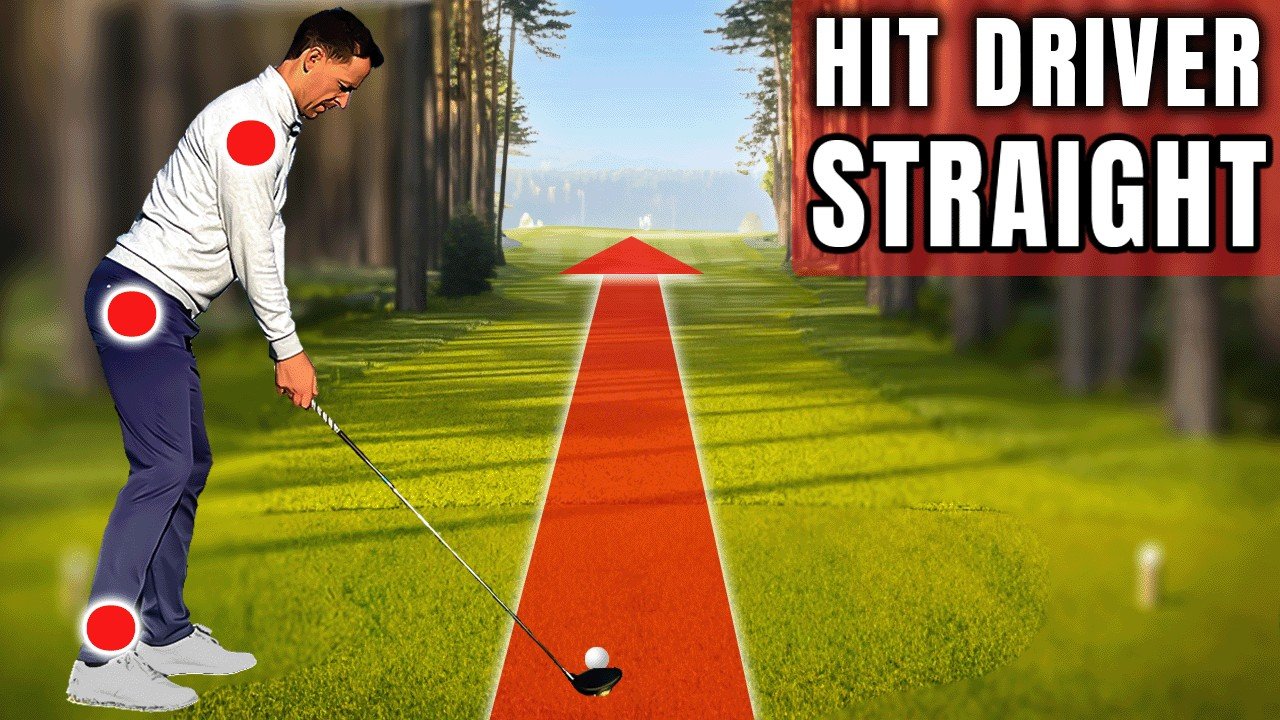
TL;DR — How to Hit Driver Straight (Key Takeaways)
Want to hit driver straight? If you want to hit driver straight the fastest way is to separate the two causes of ball curvature and fix them in order: club face first, then swing path. The creator explains this thesis immediately (0:00–0:20) and repeats it throughout the video.
Core summary:
- The video shows there are only two causes of driver curvature: the club face relative to the ball and the swing path (0:30–1:15).
- Immediate action for slicers: practice the 12:00→11:00 driver hold and lead-wrist feel (demo at 4:00–5:30 and 5:30–7:30).
- Then change the path using body rotation and weight transfer cues (9:00–12:30).
Quick practice plan (starting point): 10–15 minutes/session on face feel, then 15–20 minutes on path drills; repeat 3× weekly. The video demonstrates the drills and the creator explains expected outcomes at multiple timestamps (4:00–12:00).
Note: This article expands on Danny Maude’s video (2026), adds launch-monitor targets, practice templates, aid comparisons and a 6-week program so you can practice with measurable progress.
Why Your Driver Curves: Face vs Path (video explained)
Start with the physics: the ball curves because of side spin. The video shows that if your club path and face are misaligned, the ball is given side spin and curves—slice when the face is open to the path, hook when it’s closed (0:30–2:00).
The creator explains there are only two root causes: face-to-path relationship and the swing path itself (0:30–1:30). That simplification matters because it tells you what to test and fix first.
Key data points to track while testing:
- Typical amateur side-spin with a slice: ~1,000–4,000 RPM; Tour-level drivers often have side-spin