
https://www.youtube.com/watch?v=tGTLxIC66WE Summary & Key Takeaways — Master Essential Golf Shots for Lower Scores
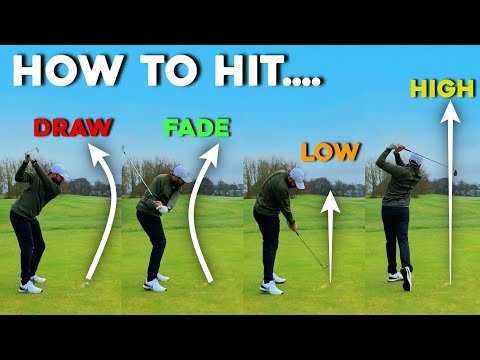
If you want to learn golf shots that actually help you score better, Rick Shiels’ video is a smart place to start. In You NEED to learn these golf shots!, the creator breaks the game down into four practical ball flights you can use immediately: low, high, fade, and draw. That matters because better golf rarely comes from one perfect stock swing. It comes from having options.
As demonstrated in the video, Rick uses a 7-iron for all four examples so you can isolate setup, swing path, tempo, and follow-through changes without adding club-selection confusion. The result is a simple framework for golf swing improvement: change loft, speed, body alignment, and face-to-path relationship to control trajectory and shape. The creator explains this in a way that makes the mechanics usable on the range and on the course.
This article turns that lesson into a more practical written guide for 2026, with drills, swing analysis checkpoints, golf coaching cues, training aids, golf fitness ideas, and course-management advice that go beyond the original video.
TL;DR — Key Takeaways
The fastest summary of Rick Shiels’ lesson is this: if you can hit one low shot, one high shot, one fade, and one draw, you give yourself far more ways to handle real golf-course problems. The creator explains that these aren’t trick shots. They’re scoring shots [0:00–0:40]. Wind, firm greens, tucked pins, and awkward approach angles all become easier when you can control ball flight instead of reacting to it.
- Low shot: less loft, forward shaft lean, ball just back of center, and about 80% speed [1:10–2:30]. Rick’s memorable rule is that speed and loft equal height.
- High shot: more loft, more speed, ball slightly forward, and a high-hands finish to help shallow the strike [2:30–4:00].
- Fade: body aligned left, swing path moving out-to-in, and clubface slightly open to that path [5:10–6:50].
- Draw: body aligned right, swing path in-to-out, and clubface slightly closed to that path [6:50–9:00].
A simple practice routine works best. Start on the range with a 7-iron, hit 10–15 focused reps per shot, and then take three pressure attempts on the course the next time you play. According to Rick Shiels Golf, these shots are worth learning because they improve access to flags, wind control, and stopping power on greens. Watch the full lesson here: original video. For more tutorials, visit the Rick Shiels Golf channel.
Why you should learn golf shots for lower scores
The core thesis of the video is straightforward: you should learn golf shots because golf isn’t played in a vacuum. The course changes. Wind changes. Green firmness changes. Pin positions change. The creator explains this in the opening minute [0:30–1:00], and it’s one of the clearest course-management points in the whole lesson. If you only own one stock shot, you’re forced to make the course fit your swing. Better players do the opposite.
Rick demonstrates the four ball flights using a 7-iron, which is a useful middle-iron baseline because it reveals trajectory changes clearly without needing driver-level speed or wedge-level loft. In practical scoring terms, a lower shot can reduce the effect of a headwind; a higher shot can land steeper and stop faster on firm greens; a fade can work into left-side pin locations; and a draw can help attack right-side holes or recover yardage with a more chasing flight. Those are not abstract golf techniques. Those are scoring tools.
Use these four situations as your on-course decision chart:
- Into wind: choose the low shot to lower launch and control spin.
- Firm or elevated green: choose the high shot to create a steeper descent angle.
- Flag on the left side: choose a fade that starts left and falls softly to target.
- Flag on the right side: choose a draw that starts right and curves back.
Want these shots to show up under pressure? Add a mental game layer. Before every ball, picture the full start line and finish window, take one slow breath to regulate tempo and rhythm, then commit to a single swing thought. Don’t stack five thoughts at once. In 2026, many golfers use shot-planning apps and GPS, but the basic principle hasn’t changed: clear intention improves swing mechanics. As demonstrated in the video, setup changes work best when your decision is already made before you start the down swing.
For context, you can watch the original lesson at You NEED to learn these golf shots! and browse more video tutorials on Rick Shiels Golf.

Learn golf shots: How to hit a low shot
The low shot is the first one Rick covers, and the message is simple: take loft off and take a little speed off [1:10–1:40]. The creator explains it with a line that’s easy to remember: speed and loft equal height. So if your goal is a flatter flight, especially into the wind, you need less dynamic loft and less effort. That’s a core piece of golf swing improvement because many players try to hit low shots by just punching harder. That usually adds tension, disrupts balance and posture, and hurts strike quality.
As demonstrated in the video, your setup is the biggest adjustment. Start with the shaft leaning slightly forward at address. That preset makes it easier to return the club with forward shaft lean at impact. Move the ball just back of center, not excessively off your back foot unless your swing mechanics really require it. Rick uses a 7-iron, but he also notes that you can club up to a 6-iron if you want an even lower launch without forcing the motion.
Use this 3-step drill:
- Set the address position: hands slightly ahead, shaft leaning forward, ball a touch back of center.
- Swing at 80%: either reduce backswing length or keep length normal and lower speed by about 20%.
- Check impact evidence: look for forward shaft lean, a compressed strike, and generally more roll after landing.
If you have a launch monitor or other swing analysis tool, compare your standard 7-iron to your low version. A good low shot should show lower launch angle, often reduced spin, and a flatter peak height. Even without tech, you can still judge performance with three visible clues: lower start window, more penetrating flight, and extra bounce-and-roll on landing.
Common mistakes? If the ball still launches too high, add a little more shaft lean and make sure you’re not releasing the club early. If the strike turns thin, move the ball slightly forward and shorten the swing. According to Rick Shiels Golf, the low shot isn’t about violence. It’s about control, club selection, and clean impact [1:10–2:30].
Learn golf shots: How to hit a high shot
The high shot is almost the mirror image of the low one. As demonstrated in the video, the formula is add loft, add speed, and finish with high hands [2:30–3:40]. That’s useful when you need the ball to land steeper on firmer greens or carry trouble without releasing too much. A higher shot can also help when you need more stopping power with a mid-iron, which is one reason this is such a useful performance skill rather than a range-only trick.
Rick’s setup changes are clear. Keep the shaft more level at address instead of leaning it heavily forward. Move the ball slightly forward of center. Then commit to speed. The creator explains that you don’t want to back away from this shot, because speed helps increase launch and overall height. The final cue is a hands-high finish, which tends to promote a shallower angle of attack and a taller, softer flight. In the video, Rick compares divots and points out that the high shot creates a shallower divot than the low shot [around 3:30]. That’s a great feedback tool.
Try this 3-step drill:
- Ball forward: set the ball just ahead of your normal 7-iron position.
- Fuller speed: make a committed swing with steady tempo, not a rushed transition.
- Finish high: hold your follow-through and check that your hands finish visibly higher than on a stock shot.
If you measure it, expect a launch angle perhaps 4–8 degrees higher than your lower flight version, depending on your delivery and golf equipment. You should also see a steeper landing pattern and less release after the first bounce. If you’re topping or thinning the ball, don’t automatically swing harder. First, move the ball a fraction more forward and make sure you’re not dropping your chest through impact. If the shot still flies flat, open your stance a touch and maintain that high-finish feel. The video shows that small setup tweaks can create major trajectory changes without rebuilding your whole golf swing [2:30–4:00].

Learn golf shots: Fade basics and drills
The fade section is where body alignment and swing path become the main story. Rick describes the fade as the shot that starts left of target and moves back toward it [5:10–6:20]. To make that happen, you need an out-to-in swing path with the clubface slightly open to that path. That face-to-path relationship is one of the most useful concepts in modern golf coaching. It explains why so many players struggle with curve: they try to shape the ball using hands alone instead of changing the relationship between path and face.
According to Rick Shiels Golf, the simplest setup change is to align your feet, hips, and shoulders left of the target. That encourages the club to move more across your body. Then make sure the face doesn’t roll over too quickly through impact. The creator explains that your hands and arms should feel passive, with body rotation controlling the motion. That’s why a good fade often looks controlled and repeats well under pressure.
Use these two drills:
- Alignment-gate drill: place one alignment stick at your target and another slightly left for your body line. Set your body to the left stick, but keep the clubface slightly right of that body line.
- Phone-video path check: record slow-motion swings from down the line and check whether the club is moving left through impact rather than excessively inside.
Most fades fly a little higher and release less than draws, especially with irons. That makes them useful to left-side pins or shots that need a softer landing. If the ball hooks instead, your face is too closed relative to the path. If it starts straight and cuts too much, your path may be too far left or your face too open. As the video demonstrates [5:10–6:50], start with a gentle fade, not a big curve. A 5-yard movement is plenty for most golfers focused on improving accuracy.
Learn golf shots: Draw basics and drills
The draw is one of the most desirable shots in golf, especially for players who fight a slice. Rick says exactly that in the video [6:50–8:30], and the reason is easy to understand: many golfers naturally throw the club over the top, producing an out-to-in path and a right-curving ball. Learning the draw teaches you how to neutralize that pattern. To hit it, you need an in-to-out swing path with a clubface slightly closed to that path but still not wildly shut to the target.
As demonstrated in the video, setup does most of the early work. Align your feet, hips, and shoulders slightly right of the target. Then preset the clubface a little left of your body alignment, while still generally right of the final target line. That gives you the relationship needed for the ball to start right and curve back. This is classic body alignment work, and it’s one of the clearest examples of how golf techniques become easier when your address supports the shot you’re trying to hit.
Use this 3-step practice routine:
- Set alignment sticks: one at target, one slightly right for your body line.
- Make half-swings: feel the club approach from the inside during the down swing.
- Add speed gradually: keep the same path and only add speed once the start line is predictable.
For many players, a moderate draw can reduce excessive cut spin and add a bit of distance. That’s one reason it shows up so often in golf coaching and video tutorials. But don’t chase a hook. If the ball overdraws, your face is too closed relative to the path. Open it slightly or reduce how much you swing from the inside. Record yourself if possible. A quick slow-motion check often reveals whether your golf grip, release pattern, or shoulder alignment is forcing the shape too much. Rick’s demo [6:50–9:00] is a good reminder that a draw is a controlled curve, not a rescue move.

Swing mechanics, posture, balance, and weight transfer behind these shots
All four shots in the video rely on the same foundation: swing mechanics, balance and posture, weight transfer, and tempo. The creator doesn’t stop to deliver a full technical lecture, but the lesson makes it obvious that small changes only work when the rest of your motion is stable. Forward shaft lean, high hands, and path changes all depend on a repeatable setup. If your posture changes from swing to swing, the ball-flight changes become guesswork.
Start with address. You want an athletic posture with your chest tilted from the hips, arms hanging naturally, and weight roughly 50/50 at setup. Through impact on iron shots, many pro instructors teach that you should feel roughly 60% or more pressure into your lead side. That pressure shift helps low-point control, clean contact, and a more consistent follow-through. In practical terms, better weight transfer usually means fewer fat shots, fewer thin shots, and more predictable launch.
Use this fundamentals checklist before you try to learn golf shots:
- Posture check: stand tall, hinge from the hips, soften the knees, and maintain spine angle.
- Balance check: feel centered at address and avoid getting stuck on your trail foot.
- Weight-transfer drill: rehearse a step-through swing or pause at the top, then move pressure into the lead foot before impact.
- Video review: use slow motion to see whether your head and chest are staying stable enough to control strike.
Golf fitness matters here too. Tight hips and poor thoracic rotation can wreck path and posture, especially when you’re trying to shape shots. A 10–15 minute pre-range routine with hip rotations, thoracic turns, and light glute activation can improve repeatability and reduce strain. For measurable feedback, tools like TrackMan can help you compare launch, path, and impact consistency. As the creator demonstrates between [1:10–4:00] and [5:10–8:30], even small setup changes work best when your base mechanics are stable.
Technology, swing analysis, and training aids that speed improvement
Rick’s lesson is very feel-based, which is part of why it’s easy to follow. But if you want faster improvement, adding technology is one of the best upgrades you can make in 2026. To learn golf shots efficiently, you need feedback you can trust. Feel and real are rarely the same. A shot that feels low may still launch too high. A draw that feels from the inside may still have a neutral path. This is where swing analysis tools become useful rather than gimmicky.
The most helpful tools are simple:
- Launch monitor: TrackMan or FlightScope to measure launch angle, spin rate, club path, and face-to-path.
- High-frame-rate phone camera: fps is enough to check shaft lean, release, and follow-through.
- Alignment sticks: essential for body alignment and swing-path drills.
- Impact tape or face spray: confirms strike pattern on the clubface.
- Mirror: helpful for setup, posture, and high-hands finish rehearsals.
Use tech in a specific way. First, hit stock 7-irons to establish your baseline. Then hit low shots and compare launch angle and spin. Then high shots and compare again. For fades and draws, focus on start line, club path in degrees, and face-to-path. You don’t need perfect numbers. You need predictable differences. The creator demonstrates the feels; technology tells you whether those feels are producing the right ball flight.
A practical benchmark looks like this: low shot = lower launch and lower peak height; high shot = higher launch and steeper descent; fade = path left with face slightly right of path; draw = path right with face slightly left of path. Start with the same 7-iron Rick uses in the video, then expand to other clubs once the pattern repeats.

Common mistakes, troubleshooting, and injury prevention
Most players don’t struggle because the ideas are complicated. They struggle because they overdo the changes. The common mistakes in this lesson are easy to spot: too much shaft lean, poor ball position, overactive hands, weak weight transfer, and inconsistent tempo. The creator hints at several of these risks in the video, especially when discussing lower speed for the low shot and passive hands for the fade [1:30–3:40 and 5:10–8:30]. Small setup errors become big ball-flight misses.
Use this troubleshooting list:
- Low shot still flies high: add a touch more forward shaft lean and make sure speed is truly around 80%, not 100%.
- High shot gets topped or thinned: move the ball slightly forward, keep chest rotation moving, and don’t lunge from the top.
- Fade turns into a hook: quiet the hands and let the body keep the face more neutral through impact.
- Draw becomes a snap hook: face is too closed relative to path; reduce the inside path or open the face slightly.
- Random contact: revisit posture, golf grip pressure, and lead-side weight at impact.
Injury prevention matters too, especially when you’re changing mechanics. Forcing extra rotation without pelvic stability can stress the lower back. Trying to hold off the face with stiff wrists can irritate the forearms and wrists. A simple 5-minute activation routine helps: glute bridges, band-resisted rotation, hip openers, and shoulder circles. Build intensity gradually, especially if you’re older or returning after time off.
A good rule is this: if your body starts fighting the motion, stop chasing shape and return to a neutral stock shot. Better golf performance comes from repeatability, not hero swings. As demonstrated in the video, these are controlled adjustments, not max-effort experiments.
Practice routines, drills, and on-course integration
If you want these shots to transfer from the range to the course, you need a practice routine with structure. Randomly hitting one low shot, one high shot, then a driver won’t do much for performance. According to Rick Shiels Golf, the 7-iron is the ideal starting point because it lets you feel trajectory and curve changes clearly. Build your session around that club first, then branch out.
Try this 30–60 minute range plan:
- Warm-up — minutes: hip rotations, thoracic turns, light wedges, and balance drills.
- Low shots — reps: focus on forward shaft lean and 80% speed.
- High shots — reps: ball slightly forward, full speed, hands high in the finish.
- Fades — reps: alignment left, passive hands, path moving left.
- Draws — reps: alignment right, inside path, face slightly closed to path.
- Pressure set — balls: pick one target and call the shot before every swing.
Track your progress with a notebook or app. For each cluster of balls, write down launch window, curve direction, strike quality, and dispersion. If you have tech, also record launch angle and club path. Your goal isn’t perfection on day one. It’s predictable change. Can you make the ball fly lower on command? Can you make it start left and fade softly? That’s the real benchmark.
Then take the practice to the course. Pick one or two holes where a shaped shot makes sense. Maybe it’s a low 6-iron into the wind on a long par 3, or a fade into a left pin. Add a pre-shot routine: visualize the start line, take one breath, say your cue word, and swing. This is where mental game and course management meet swing mechanics. As the creator demonstrates throughout the video [1:10–9:00], better golf doesn’t come from more thoughts. It comes from clearer intentions and repeatable routines.

FAQ — People also ask
These are the questions golfers usually ask after watching a lesson like this, and they’re the same issues that show up in real practice sessions. The video gives strong starting answers, but the key is applying them in a measurable way.
First: if you’re trying to stop slicing, start with your setup before you rebuild your whole golf swing. Rick’s draw section [6:50–8:30] shows how body alignment and path influence shape more reliably than hand action alone.
Second: if you’re trying to hit lower or higher shots, don’t assume you always need a different club. As demonstrated in the video [1:10–3:40], setup, shaft lean, speed, and ball position do most of the work. Club selection becomes the support system, not the first move.
Third: use metrics when possible. Launch angle, spin, start line, face-to-path, and strike location tell you whether your changes are improving accuracy and consistency. That’s especially helpful if you’re using training aids, launch monitors, or recording video tutorials of your own swings for review.
You’ll find direct answers to the most common questions below, each tied back to the original timestamps and paired with a drill or benchmark you can actually use.
Resources, references, and links
Primary source:
- Rick Shiels Golf — “You NEED to learn these golf shots!”
https://www.youtube.com/watch?v=tGTLxIC66WE - Rick Shiels Golf channel
https://www.youtube.com/@RickShielsGolf
Technology and training aids mentioned in this article:
- TrackMan for launch, spin, path, and face data:
https://trackman.com - FlightScope as another launch monitor option:
https://flightscope.com
Useful add-ons for your own practice:
- Alignment sticks for body alignment and swing path
- Impact spray for strike pattern
- Phone slow-motion video for follow-through, down swing, and face rotation checks
- Mirror work for posture, golf grip, and setup rehearsals
If you’re publishing this article on your own site, good next steps include embedding the full video, adding a printable drill sheet, and offering a 4-week practice plan PDF. That would make the lesson even more useful than the original watch-through because readers could take the plan straight to the range.
Conclusion — Your next steps to learn golf shots that hold up on the course
Rick Shiels’ video succeeds because it turns ball-flight control into something manageable. You don’t need a new golf swing. You need four reliable patterns: low, high, fade, and draw. The creator explains each one through simple setup and motion changes, and that’s the real takeaway. Better scores often come from better options, not prettier swings.
Start small. Use a 7-iron. Build one stock low shot and one stock high shot before you chase big curves. Then add a gentle fade and a gentle draw using alignment sticks and slow-motion feedback. Measure progress with launch, start line, and strike quality. Keep your posture, balance, and weight transfer stable so the changes don’t get lost in compensation.
If you want the biggest improvement, combine what the video shows with three habits: structured practice, smart course management, and basic golf fitness. That’s where many players separate range progress from scoring progress. Watch the original video again, rehearse one shot at a time, and take your best two patterns onto the course this week. That’s how you learn golf shots that actually lower scores.
Frequently Asked Questions
How do I stop slicing and start hitting a draw?
According to Rick Shiels Golf, the fastest way to stop slicing and start hitting a draw is to change three things together: body alignment, swing path, and face angle [6:50–8:30]. Set your feet, hips, and shoulders slightly right of the target, then feel the club travel in-to-out with the face a touch closed to that path. Start with half-swings using two alignment sticks, and track whether the ball starts right and bends back gently rather than snapping left.
Should I change clubs to hit lower or higher shots?
Yes, sometimes you should change clubs. The creator explains that for a lower shot you can use the same 7-iron with more forward shaft lean and about 80% speed, but clubbing up to a 6-iron can make the flight easier to keep down [1:10–2:10]. For higher shots, Rick demonstrates that you can often keep the same club and change setup—ball slightly forward, shaft more neutral, and faster speed [2:30–3:40].
How much should I reduce speed for a low shot?
Rick Shiels’ cue is to swing at roughly 80% feel for a low shot [1:20–1:50]. That can mean either an 80% backswing length or a full-length swing at 80% speed, depending on your tempo and rhythm. If you use a launch monitor, compare your normal carry and launch angle with your knockdown version and look for a clear drop in height without losing strike quality.
What swing metric best shows a successful high shot versus a low shot?
The best swing analysis metric is usually launch angle, followed by spin rate. A successful high shot should launch several degrees higher and often spin more, while a successful low shot should launch lower with a flatter flight and more roll after landing. As demonstrated in the video [1:10–4:00], divot depth also helps: lower shots tend to show more downward strike, while higher shots often produce a shallower divot.
What club should I use first to learn these golf shots?
Start with a 7-iron, just as the video demonstrates, because it gives you a clear middle ground for testing trajectory and shape. Hit to low shots, to high shots, then fades and draws, recording launch, start line, and curvature if possible. As the creator explains throughout the video, small setup changes—not wholesale swing rebuilds—are the key to learning these four stock flights.
Key Takeaways
- Mastering four stock flights—low, high, fade, and draw—gives you practical scoring options for wind, firm greens, and tucked pins.
- For low shots, reduce loft and speed with forward shaft lean, ball slightly back, and about 80% effort; for high shots, add loft, add speed, and finish with high hands.
- Fade and draw control come from face-to-path relationship and body alignment, not hand manipulation alone.
- Use a 7-iron first, track launch and start line, and practice in structured sets of 10–15 reps before testing the shots on the course.
- The fastest improvement comes from combining Rick Shiels’ setup cues with swing analysis tools, basic mobility work, and clear pre-shot decisions.